

































London, England, United Kingdom
2014
Space Science, Astronomy, Astrophysics, Satellite Manufacturing, Scientific Research, Aerospace Engineering, Space Infrastructure, Higher Education, Scientific Data Services, Planetary Science
Blue Skies Space is a British space technology company developing and operating commercial satellites for astronomical research. Its spacecraft carry telescopes and spectrometers designed to observe stars, exoplanets, and other celestial objects. The company provides scientific institutions with access to space-based observations through subscription-based research programmes, combining satellite engineering, optical instrumentation, orbital operations, and scientific data services. Its approach focuses on dedicated astronomy missions that complement observations collected by larger government-funded space telescopes.
Blue Skies Space develops specialized astronomy satellite missions and distributes scientific observations to universities, research groups, and other institutions. It collaborates with spacecraft manufacturers and instrument suppliers to integrate telescopes, spectrometers, and supporting systems into satellites designed for specific research objectives.
Its Mauve satellite collects ultraviolet and visible-light measurements of stellar activity, including magnetic phenomena, radiation variability, and stellar flares. These observations help researchers investigate how stars evolve and how their radiation influences orbiting planets.
The company is also developing Twinkle, a planned observatory for visible and infrared spectroscopy of exoplanets and Solar System objects. Its research programmes allow participating scientists to access observation data and collaborate on scientific investigations.
Through Stardrive, researchers can access datasets, plan observations, use instrument simulation tools, and collaborate with other programme members.
Blue Skies Space develops scientific observation systems combining small satellite platforms, optical telescopes, and astronomical spectroscopy. Its spacecraft measure light from celestial objects across selected wavelength ranges, allowing researchers to investigate stellar activity, atmospheric composition, and other physical properties.
The Mauve satellite carries a 13-centimeter Cassegrain telescope connected through optical fibres to ultraviolet-visible spectrometers. Its instruments observe wavelengths between 200 and 700 nanometers, enabling measurements of stellar radiation, magnetic activity, and flares. The satellite operates in a sun-synchronous low Earth orbit at approximately 510 kilometers and uses star trackers and gyroscopic attitude measurements for precise telescope pointing.
Twinkle is being developed with a larger 45-centimeter telescope and visible-infrared spectroscopic instruments covering approximately 0.5 to 4.5 micrometers. Its planned observations will investigate exoplanet atmospheres, brown dwarfs, planetary discs, asteroids, and comets. Spectroscopy enables researchers to analyze how different wavelengths interact with atmospheric gases and other materials.
The company’s Stardrive scientific data platform provides an interface between satellite observations and research workflows. It incorporates data access, observation planning, instrument simulations, and collaboration tools.
Blue Skies Space works with established satellite manufacturers to integrate scientific instruments into flight-proven spacecraft architectures, supporting dedicated astronomy missions without developing every spacecraft subsystem independently.
Space-based astronomy has traditionally depended on publicly funded observatories, where observation time is limited and research teams compete for access. Some investigations, particularly those involving variable stars and planetary atmospheres, require repeated observations over extended periods.
Blue Skies Space introduces a commercial model for accessing dedicated astronomical satellite observations. Its Mauve mission provides a specialized source of ultraviolet-visible measurements that can complement data from larger observatories.
The company’s technology is relevant to time-domain astronomy, stellar astrophysics, and exoplanet science, where consistent observations help researchers investigate changing radiation environments and atmospheric processes.
Its broader significance lies in demonstrating how commercially developed small satellites and subscription-based data services can expand the infrastructure available for scientific research beyond traditional government-operated space missions.
Mauve is Blue Skies Space’s operational ultraviolet-visible astronomy satellite. It carries a 13-centimeter telescope and spectrometers observing wavelengths between 200 and 700 nanometers. Launched in November 2025, the satellite began providing scientific data to its research programme in July 2026. Its observations support long-duration studies of stellar activity, including magnetic phenomena, powerful flares, and radiation variability that can influence planetary environments.
Twinkle is a planned visible-infrared space telescope designed to investigate exoplanets and Solar System objects. Its proposed 45-centimeter telescope and spectroscopic instruments will collect measurements across approximately 0.5 to 4.5 micrometers. The mission is intended to support exoplanet atmospheric characterization, alongside investigations of brown dwarfs, planetary discs, asteroids, and comets.
Mauve Plus is a proposed higher-resolution ultraviolet-visible spectroscopy satellite focused on stellar research. The concept extends the observational capabilities explored through Mauve by investigating more detailed spectral measurements of stars and their activity. It forms part of the company’s proposed expansion of specialized astronomy satellites.
RadioLuna is an Italian Space Agency-funded research project investigating a constellation of small lunar-orbiting radio astronomy satellites. The proposed spacecraft would observe faint low-frequency radio signals associated with the early universe. The project explores the potential advantages of conducting radio astronomy near the Moon, where observations could experience less interference from terrestrial radio transmissions.
Stardrive is Blue Skies Space’s scientific data access and collaboration platform. It provides researchers with satellite datasets, observation planning tools, instrument simulations, and resources for collaborative investigations. The platform connects the company’s astronomy missions with participating scientific institutions and supports the preparation and analysis of observational programmes.
Stellar Astrophysics: Monitoring magnetic activity, ultraviolet radiation, stellar flares, and changes in stellar brightness over extended periods.
Exoplanet Research: Investigating planetary atmospheric composition and the effects of radiation from host stars on exoplanet environments.
Solar System Science: Using spectroscopy to investigate the mineralogy and physical characteristics of asteroids, comets, and planetary objects.
Brown Dwarf Research: Studying atmospheric chemistry, clouds, and other characteristics of objects between stars and planets.
Early-Universe Cosmology: Investigating lunar-orbit radio astronomy systems for detecting faint signals associated with the universe’s earliest periods.
Academic Research: Providing universities and research institutions with astronomical datasets, observation planning resources, and collaborative scientific programmes.
Mauve is a compact commercial observatory dedicated to ultraviolet-visible observations of stars. Unlike larger multipurpose observatories, its scientific programme concentrates on stellar activity, magnetic phenomena, and long-term monitoring. Participating research institutions can access observations through a subscription-based model. Its smaller spacecraft architecture also allows specialized astronomical measurements to be collected using commercially established satellite components.
Universities and research institutions can participate in the company’s collaborative science programmes through membership arrangements. Researchers gain access to observations collected by the satellites and can use supporting resources for scientific investigations. The Stardrive platform provides an online environment for accessing datasets, preparing observation plans, using simulation tools, and collaborating with other programme participants.
Twinkle is designed to conduct visible and infrared spectroscopy of exoplanets, measuring how light interacts with planetary atmospheres. These observations can reveal information about atmospheric gases, chemical composition, temperature structures, and clouds. Its planned instruments will also support investigations of brown dwarfs, planetary discs, and objects within the Solar System.
Stellar flares and ultraviolet radiation can influence the atmospheres of planets orbiting active stars. Repeated exposure to energetic radiation may alter atmospheric chemistry and contribute to atmospheric loss under certain conditions. Mauve collects measurements of stellar activity that help researchers investigate these interactions and improve models of planetary environments.
Yes. Blue Skies Space launched Mauve on November 28, 2025, aboard a SpaceX Falcon 9 rocket. The satellite achieved its first stellar observations in February 2026 and began delivering scientific datasets to its research programme in July 2026. Mauve is the company’s first operational commercial astronomy satellite.
Have an update, correction, or additional information about this company? Help us keep the futureTEKnow company database up to date by submitting the latest company information.

Turion Space has raised more than $75 million in Series B funding to scale its Starfire platform and satellite fleet, betting that space domain awareness is the next critical defense infrastructure layer. The piece unpacks Turion’s business model, contracts, and risks for operators and investors watching the new space intelligence stack.

Pulsar Fusion’s Sunbird fusion rocket has achieved first plasma, validating its exhaust architecture and edging a reusable “space tug” concept toward sub‑six‑month Mars transfers. Drawing on multiple reports, this piece breaks down how the Dual Direct Fusion Drive works, what the 2027 in‑orbit demo must prove, and which technical and regulatory hurdles still stand between Sunbird and operational deep‑space logistics.
Aetherflux is betting that orbital data centers can power the next wave of AI, shifting from laser power beaming to space-based compute as it targets a $2 billion valuation. For founders and investors, the company’s 2027 satellite plans highlight how quickly space infrastructure is converging with AI demand and reshaping the deep-tech funding landscape.
Sierra Space’s $550 million Series C round, valuing the company at $8 billion, signals a decisive shift toward defense-tech space. This feature unpacks the hardware, strategy, and risks shaping the next decade of orbital infrastructure.

Axiom Space has locked in a fresh $350M raise to push its commercial space station and NASA lunar spacesuits toward launch, signaling growing investor faith in private orbital infrastructure.
Morpheus Space secures $15M funding for GO-2 electric propulsion mass production. Learn how this boosts satellite mobility with efficient thrusters.

Stoke Space extended its Series D funding to $860 million, fueling Nova’s full-reuse rocket production at Cape Canaveral. Backed by founders from Blue Origin, this pushes total capital to $1.34B.

Tomorrow.io has closed a $175 million equity round to deploy DeepSky, its AI-native weather satellite constellation designed to make global atmospheric data far more precise, frequent, and useful for businesses, governments, and communities facing extreme weather.

Stay ahead of AI and space tech wars: OpenAI vs Google AI, SpaceX and Blue Origin’s race for orbital data centers, Meta’s AI strategy shift, and key robotics breakthroughs reshaping industry.

Bridgit Mendler’s Northwood Space is pioneering mass-produced ground stations, enabling scalable, high-speed connectivity for the new era of satellite networks and megaconstellations.
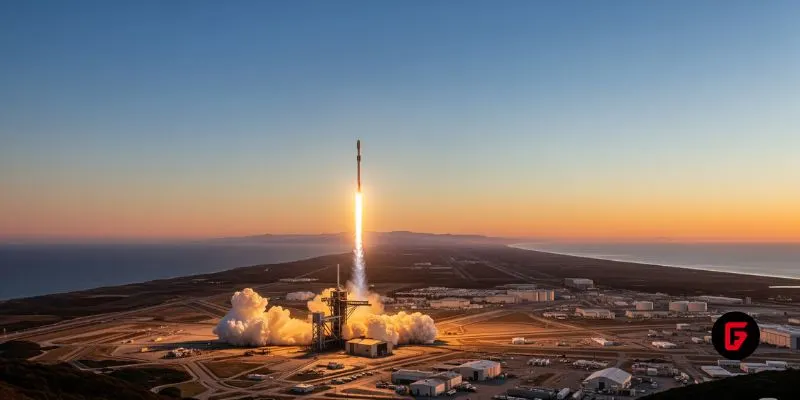
SpaceX aims to nearly double launches from Vandenberg in 2025, facing support from federal agencies but strong objections from the state and local communities.

NASA and Google’s AI-powered Crew Medical Officer Digital Assistant enables autonomous diagnoses for astronauts on Mars missions, redefining remote healthcare for space and Earth.
futureTEKnow is focused on identifying and promoting creators, disruptors and innovators, and serving as a vital resource for those interested in the latest advancements in technology.
© 2026 All Rights Reserved.