


































Cardiff, Wales, UK
2018
Space Industry, Semiconductor Manufacturing, Advanced Materials, Aerospace, Electronics, Telecommunications, Quantum Computing, Energy, Defense, Advanced Manufacturing
Space Forge is a space technology and advanced materials company developing orbital manufacturing platforms for high-performance semiconductor materials. Its technology uses the microgravity, vacuum, and thermal conditions available in space to investigate manufacturing processes that are difficult to reproduce on Earth. The company is developing reusable spacecraft capable of supporting material production in orbit and eventually returning manufactured products to Earth. Its work connects spacecraft engineering, semiconductor manufacturing, and materials science to improve the performance of electronic components used across multiple industries.
Space Forge designs and operates satellite-based manufacturing systems that investigate the production of semiconductor materials in low Earth orbit. Its ForgeStar spacecraft provides a controlled environment for conducting material growth experiments using the physical conditions available in space.
The company focuses on wide-bandgap and ultra-wide-bandgap semiconductor materials, including gallium nitride, silicon carbide, aluminium nitride, and diamond. These materials are used in applications involving power electronics, communications, sensing, and high-performance computing.
Space Forge also develops atmospheric re-entry and spacecraft recovery technologies intended to enable future manufacturing missions to return materials to Earth. Its engineering activities extend to terrestrial semiconductor research, where laboratory facilities support material development, testing, and preparation for larger-scale manufacturing.
Space Forge develops technology that combines microgravity semiconductor manufacturing, autonomous spacecraft operations, and atmospheric re-entry systems. Its approach uses the environment of low Earth orbit to investigate the growth of advanced crystalline materials with fewer manufacturing defects.
On Earth, semiconductor crystal growth can be affected by gravity-driven convection, contamination, and thermal instability. Microgravity reduces buoyancy-driven fluid movement, while the vacuum environment of space provides conditions that may support more controlled material growth. Space Forge is investigating how these conditions affect semiconductor purity, crystal structure, and electrical performance.
The company’s ForgeStar orbital manufacturing platform incorporates high-power electrical systems, thermal management, autonomous payload operations, and manufacturing equipment. Its ForgeStar-1 satellite successfully generated plasma in orbit in December 2025, demonstrating a critical process associated with gas-phase semiconductor crystal growth. By March 2026, the mission had generated plasma more than 100 times, providing experimental data for future manufacturing systems.
Space Forge is also developing Pridwen, a deployable atmospheric re-entry heat shield, to protect future spacecraft and manufactured materials during their return to Earth. Its Aether software supports orbital tracking and predictive re-entry analysis.
Complementing its orbital systems, the company’s National Microgravity Research Centre supports terrestrial development of semiconductor materials and manufacturing processes. This combined approach connects experimental production in orbit with material processing and industrial scale-up on Earth.
Advanced semiconductor materials are increasingly important for power electronics, telecommunications, quantum technologies, and energy-efficient computing. Their performance depends on precise control of material composition and crystal structure, which can be difficult to achieve using conventional manufacturing processes.
Space Forge is investigating whether orbital manufacturing can overcome some of these limitations by using microgravity and vacuum conditions to produce higher-quality semiconductor materials. Improvements in material purity and crystal growth could contribute to more efficient electronic devices and systems.
Its work on returnable and reusable manufacturing satellites also addresses a central challenge of commercial production in space: transporting finished materials back to Earth. By developing both orbital manufacturing equipment and recovery technology, Space Forge is building the technical foundation for a potential space-to-Earth semiconductor supply chain.
ForgeStar is Space Forge’s orbital manufacturing spacecraft platform, designed to support the production and processing of advanced materials in microgravity. The spacecraft architecture incorporates high-power systems, thermal control, and autonomous manufacturing capabilities to provide controlled operating conditions for semiconductor growth experiments.
The platform is being developed for future returnable and reusable missions, allowing manufactured materials to be transported back to Earth. Its potential applications include semiconductor crystal growth, pharmaceutical research, and other manufacturing processes that benefit from microgravity and vacuum conditions.
ForgeStar-1 is a free-flying satellite launched in June 2025 to demonstrate semiconductor manufacturing processes in low Earth orbit. The spacecraft carries an internally developed growth chamber designed to create and control plasma conditions used in gas-phase crystal growth.
In December 2025, the satellite successfully generated plasma in orbit. By March 2026, Space Forge reported more than 100 plasma-generation events. These experiments provide data for developing future orbital semiconductor manufacturing systems. ForgeStar-1 is a demonstration mission and is not designed to return manufactured materials to Earth.
Pridwen is Space Forge’s deployable atmospheric re-entry protection technology, developed to support the recovery of spacecraft and manufactured materials from orbit. The system uses a deployable heat shield to increase the surface area available for atmospheric deceleration and thermal protection during re-entry.
The technology is intended to enable future ForgeStar spacecraft to return to Earth for material recovery, refurbishment, and potential reuse. Space Forge has conducted deployment testing under reduced-gravity conditions as part of its development program.
Aether is a software system supporting spacecraft tracking and predictive atmospheric re-entry analysis. It combines orbital information with modeling capabilities to help evaluate spacecraft trajectories during the final stages of orbital missions.
The software supports Space Forge’s development of controlled spacecraft return and end-of-life mission procedures, complementing its hardware research into atmospheric re-entry systems.
The National Microgravity Research Centre is Space Forge’s terrestrial semiconductor materials development facility at Swansea University. It supports research into semiconductor crystal growth, materials processing, and the development of manufacturing methods that can be connected to future orbital production.
The facility conducts research involving materials such as gallium nitride, silicon carbide, and diamond. Its laboratory infrastructure supports semiconductor experimentation, manufacturing process development, and industrial partnerships.
Space Forge’s technologies have applications in semiconductor manufacturing, advanced electronics, telecommunications, and quantum computing. Its orbital manufacturing research investigates whether microgravity can improve the crystalline quality of materials used in power electronics, radio-frequency components, sensors, and specialized computing systems.
Higher-quality wide-bandgap semiconductor materials could contribute to improved power conversion efficiency, thermal performance, and electrical reliability in industrial and electronic systems. Potential applications extend to electric vehicles, renewable energy infrastructure, defense electronics, and high-frequency communications.
The ForgeStar platform also supports research into microgravity materials processing and pharmaceutical experimentation. Its re-entry and recovery technologies could enable future missions to return experimental samples and manufactured products to Earth for analysis, processing, and commercial use.
Microgravity reduces gravity-driven convection, while the vacuum environment of space can provide conditions favorable to certain crystal growth processes. Space Forge is investigating whether these conditions can produce semiconductor materials with fewer defects and improved electrical properties compared with conventional manufacturing methods.
ForgeStar-1 launched in June 2025 and successfully generated plasma in orbit in December 2025. By March 2026, the spacecraft had generated plasma more than 100 times, demonstrating controlled operating conditions relevant to gas-phase semiconductor crystal growth.
Space Forge focuses on wide-bandgap and ultra-wide-bandgap semiconductor materials, including gallium nitride, silicon carbide, aluminium nitride, and diamond. These materials are relevant to power electronics, advanced communications, sensing, and quantum technologies.
Space Forge is developing the technology required to return manufactured materials to Earth, including its Pridwen deployable heat shield and Aether re-entry analysis software. ForgeStar-1 is not a recoverable manufacturing mission. Material return and spacecraft reuse are objectives for future ForgeStar missions.
Yes. Space Forge operates terrestrial materials research and manufacturing activities through its National Microgravity Research Centre at Swansea University. In 2026, the company reported work involving semiconductor growth, materials processing, and research partnerships focused on gallium nitride, silicon carbide, and related advanced materials.
Have an update, correction, or additional information about this company? Help us keep the futureTEKnow company database up to date by submitting the latest company information.

Turion Space has raised more than $75 million in Series B funding to scale its Starfire platform and satellite fleet, betting that space domain awareness is the next critical defense infrastructure layer. The piece unpacks Turion’s business model, contracts, and risks for operators and investors watching the new space intelligence stack.

Pulsar Fusion’s Sunbird fusion rocket has achieved first plasma, validating its exhaust architecture and edging a reusable “space tug” concept toward sub‑six‑month Mars transfers. Drawing on multiple reports, this piece breaks down how the Dual Direct Fusion Drive works, what the 2027 in‑orbit demo must prove, and which technical and regulatory hurdles still stand between Sunbird and operational deep‑space logistics.

Aetherflux is betting that orbital data centers can power the next wave of AI, shifting from laser power beaming to space-based compute as it targets a $2 billion valuation. For founders and investors, the company’s 2027 satellite plans highlight how quickly space infrastructure is converging with AI demand and reshaping the deep-tech funding landscape.

Sierra Space’s $550 million Series C round, valuing the company at $8 billion, signals a decisive shift toward defense-tech space. This feature unpacks the hardware, strategy, and risks shaping the next decade of orbital infrastructure.

Axiom Space has locked in a fresh $350M raise to push its commercial space station and NASA lunar spacesuits toward launch, signaling growing investor faith in private orbital infrastructure.
Morpheus Space secures $15M funding for GO-2 electric propulsion mass production. Learn how this boosts satellite mobility with efficient thrusters.

Stoke Space extended its Series D funding to $860 million, fueling Nova’s full-reuse rocket production at Cape Canaveral. Backed by founders from Blue Origin, this pushes total capital to $1.34B.

Tomorrow.io has closed a $175 million equity round to deploy DeepSky, its AI-native weather satellite constellation designed to make global atmospheric data far more precise, frequent, and useful for businesses, governments, and communities facing extreme weather.

Stay ahead of AI and space tech wars: OpenAI vs Google AI, SpaceX and Blue Origin’s race for orbital data centers, Meta’s AI strategy shift, and key robotics breakthroughs reshaping industry.

Bridgit Mendler’s Northwood Space is pioneering mass-produced ground stations, enabling scalable, high-speed connectivity for the new era of satellite networks and megaconstellations.
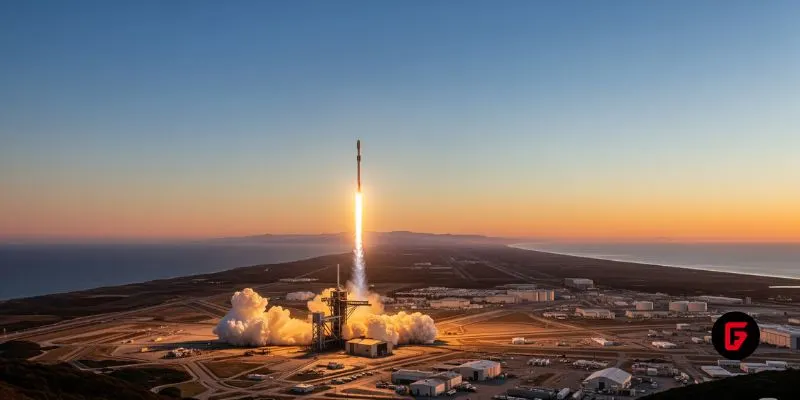
SpaceX aims to nearly double launches from Vandenberg in 2025, facing support from federal agencies but strong objections from the state and local communities.

NASA and Google’s AI-powered Crew Medical Officer Digital Assistant enables autonomous diagnoses for astronauts on Mars missions, redefining remote healthcare for space and Earth.
futureTEKnow is focused on identifying and promoting creators, disruptors and innovators, and serving as a vital resource for those interested in the latest advancements in technology.
© 2026 All Rights Reserved.