































Palaiseau, France
2021
Space Launch Services, Spaceport Infrastructure, Aerospace, Rocket Propulsion Testing, Ground Support Equipment, Cryogenic Engineering, Industrial Automation, Aerospace Manufacturing, Space Transportation
SpaceDreamS is a space infrastructure company developing modular and interoperable rocket launch facilities for launch vehicle operators, spaceports, and propulsion testing organizations. Its technology combines standardized ground support equipment, fluid handling systems, automated control software, and digital twins. The company’s principal infrastructure concept, NuPad, is designed to accommodate different launch vehicles and operate across multiple approved launch sites. SpaceDreamS also develops rocket engine test facilities and provides engineering services covering the design, commissioning, and operation of launch infrastructure.
SpaceDreamS designs and delivers ground infrastructure required to test, prepare, and launch rockets. Its engineering activities cover launch pad architecture, cryogenic propellant systems, mechanical structures, electrical equipment, control software, and ground operations.
The company develops modular ground support equipment that can be configured for different launch vehicles rather than requiring an entirely separate launch facility for each rocket. Its NuPad concept incorporates standardized equipment modules and centralized control systems.
SpaceDreamS also provides rocket engine test facilities and digital twin technology for system qualification, operator training, and simulation of ground operations.
Its documented projects include propulsion testing infrastructure for HyPrSpace, methane handling systems for MaiaSpace, and preliminary engineering for high-thrust engine test facilities. Services extend from initial requirements and facility design to commissioning, operations, maintenance, and infrastructure upgrades.
SpaceDreamS develops modular launch infrastructure that combines physical ground support systems with digital control and simulation technologies. Its NuPad architecture uses standardized equipment modules to provide the fluid, electrical, communications, and operational services required by launch vehicles. The system is designed to support different rocket configurations and allow selected equipment to be deployed across multiple launch sites.
Its ground support portfolio includes LOXBox and MethaneBox, which provide equipment for handling liquid oxygen and methane in rocket testing and launch environments. Additional modules cover electrical distribution, alternating-current services, communications, and related ground functions. This modular approach allows infrastructure components to be adapted to individual launcher requirements while retaining common interfaces.
SpaceDreamS also develops TwinPad, a digital twin for launch ground systems. The software models equipment and operational sequences while interacting with real control-command systems. This enables virtual commissioning, operator training, process verification, and simulation of launch preparation activities. TwinPad can also represent ground infrastructure not manufactured by SpaceDreamS.
The company’s TestPad systems provide facilities for rocket engine development and qualification. These installations integrate mechanical support structures, propellant delivery, instrumentation, safety functions, and automated control systems. Test configurations can be adapted to different propulsion technologies and engine performance requirements.
SpaceDreamS has demonstrated its ground systems in propulsion testing projects, including the HyPrSpace TERMINATOR hybrid rocket engine program. Its equipment contributed liquid oxygen handling, launcher simulation, and control-command capabilities during engine tests.
Further engineering activities include methane ground processes for MaiaSpace’s launch facility in French Guiana and design studies for high-thrust engine test infrastructure. These projects demonstrate the application of its technology to both emerging launch providers and established aerospace facilities.
Rocket launches depend on complex ground infrastructure for propellant handling, electrical power, communications, testing, and operational control. Building separate facilities for individual launch vehicles can increase development costs and limit the flexibility of spaceport operations.
SpaceDreamS addresses this infrastructure challenge through standardized, interoperable launch pad systems that can support different rocket operators and site configurations. Its approach enables greater sharing of ground equipment and reduces the need to develop every launch support system independently.
Its digital twin and automated control technologies also support virtual qualification and operational preparation before physical launch activities begin.
The company’s projects with propulsion developers and launch infrastructure operators demonstrate a growing market for specialized ground systems. As commercial launch activity expands, adaptable launch facilities and engine test infrastructure become important components of space transportation capacity.
NuPad is SpaceDreamS’ modular, mobile, and interoperable launch pad concept designed to accommodate multiple launch vehicles and approved launch sites. It combines standardized ground equipment modules, control-command systems, and digital simulation technology. The architecture allows spaceports to share selected infrastructure components across different launcher programs, reducing the need for separate ground installations.
TwinPad is a digital twin for rocket launch ground systems that connects virtual models with operational control-command equipment. It simulates launch preparation procedures, equipment behavior, and ground infrastructure interactions. The software supports operator training, virtual commissioning, system qualification, and operational planning. It can also represent infrastructure supplied by other manufacturers.
TestPad provides rocket engine testing infrastructure for propulsion development and qualification. Its facilities integrate propellant handling, mechanical structures, instrumentation, safety systems, and control-command technology. TestPad configurations support ground testing activities required before rocket engines progress toward flight qualification.
LOXBox and MethaneBox are modular cryogenic ground support systems for handling liquid oxygen and methane during rocket testing and launch preparation. These standardized equipment modules are designed to integrate with other launch pad infrastructure. SpaceDreamS has supplied liquid oxygen handling equipment for HyPrSpace propulsion testing and undertaken methane ground-system development for MaiaSpace.
Rocket Launch Infrastructure: Designing and integrating modular launch pads that support multiple rocket configurations and spaceport operations.
Rocket Engine Testing: Providing ground facilities, propellant systems, and control equipment for propulsion development and qualification.
Cryogenic Ground Operations: Developing equipment for storing, transferring, and managing liquid oxygen and methane during rocket preparation and testing.
Digital Twin Simulation: Modeling launch pad operations for virtual commissioning, operator training, and equipment validation.
Spaceport Modernization: Adapting existing launch infrastructure to accommodate additional launch vehicles and standardized ground systems.
Launch Operations and Maintenance: Supporting ground equipment commissioning, operational procedures, infrastructure maintenance, and system upgrades.
No. SpaceDreamS specializes in ground infrastructure for rocket launches and propulsion testing rather than manufacturing complete launch vehicles. Its products include modular launch pads, cryogenic propellant equipment, engine test facilities, and digital control systems used by rocket manufacturers and spaceport operators.
NuPad is designed as an interoperable launch pad architecture that can accommodate different launch vehicles through standardized ground support modules and configurable interfaces. Individual installations still require engineering adaptations, compatibility assessments, and safety qualification for the rockets they support.
SpaceDreamS supplied liquid oxygen handling equipment, a launcher mock-up, and control-command systems for HyPrSpace’s TERMINATOR hybrid rocket engine testing program. It has also received contracts involving ground infrastructure for HyPrSpace’s planned suborbital and orbital launch activities.
SpaceDreamS is developing methane ground-handling processes for MaiaSpace’s launch pad at the former Soyuz launch complex in French Guiana. The work concerns ground infrastructure needed to support the methane-fueled Maia launch vehicle and its launch preparation activities.
Yes. SpaceDreamS has received support through France 2030 programs for launch infrastructure technologies, including the TwinPad digital twin project and MethaneBox ground equipment development. The company has also participated in projects involving CNES, ESA, and French aerospace and defense organizations.
Have an update, correction, or additional information about this company? Help us keep the futureTEKnow company database up to date by submitting the latest company information.

Turion Space has raised more than $75 million in Series B funding to scale its Starfire platform and satellite fleet, betting that space domain awareness is the next critical defense infrastructure layer. The piece unpacks Turion’s business model, contracts, and risks for operators and investors watching the new space intelligence stack.
Pulsar Fusion’s Sunbird fusion rocket has achieved first plasma, validating its exhaust architecture and edging a reusable “space tug” concept toward sub‑six‑month Mars transfers. Drawing on multiple reports, this piece breaks down how the Dual Direct Fusion Drive works, what the 2027 in‑orbit demo must prove, and which technical and regulatory hurdles still stand between Sunbird and operational deep‑space logistics.
Aetherflux is betting that orbital data centers can power the next wave of AI, shifting from laser power beaming to space-based compute as it targets a $2 billion valuation. For founders and investors, the company’s 2027 satellite plans highlight how quickly space infrastructure is converging with AI demand and reshaping the deep-tech funding landscape.
Sierra Space’s $550 million Series C round, valuing the company at $8 billion, signals a decisive shift toward defense-tech space. This feature unpacks the hardware, strategy, and risks shaping the next decade of orbital infrastructure.
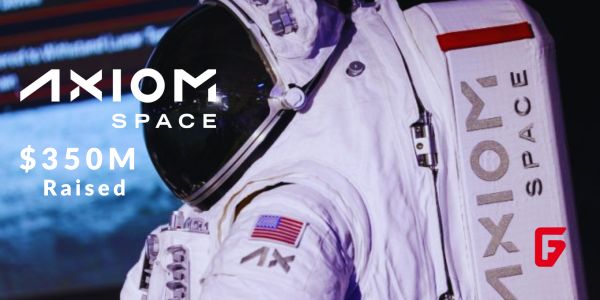
Axiom Space has locked in a fresh $350M raise to push its commercial space station and NASA lunar spacesuits toward launch, signaling growing investor faith in private orbital infrastructure.
Morpheus Space secures $15M funding for GO-2 electric propulsion mass production. Learn how this boosts satellite mobility with efficient thrusters.

Stoke Space extended its Series D funding to $860 million, fueling Nova’s full-reuse rocket production at Cape Canaveral. Backed by founders from Blue Origin, this pushes total capital to $1.34B.

Tomorrow.io has closed a $175 million equity round to deploy DeepSky, its AI-native weather satellite constellation designed to make global atmospheric data far more precise, frequent, and useful for businesses, governments, and communities facing extreme weather.

Stay ahead of AI and space tech wars: OpenAI vs Google AI, SpaceX and Blue Origin’s race for orbital data centers, Meta’s AI strategy shift, and key robotics breakthroughs reshaping industry.

Bridgit Mendler’s Northwood Space is pioneering mass-produced ground stations, enabling scalable, high-speed connectivity for the new era of satellite networks and megaconstellations.
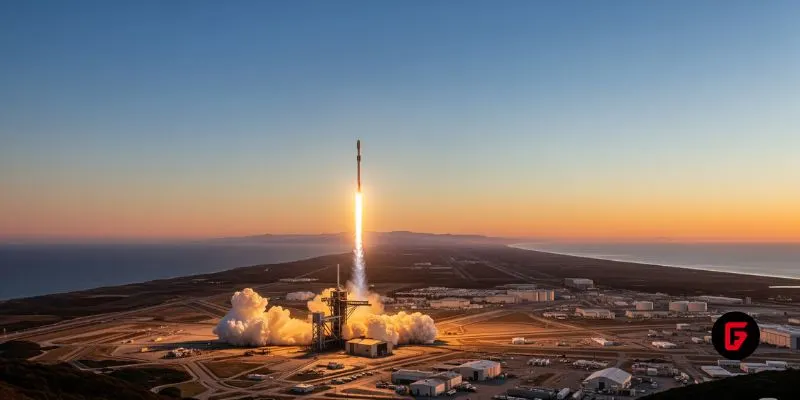
SpaceX aims to nearly double launches from Vandenberg in 2025, facing support from federal agencies but strong objections from the state and local communities.
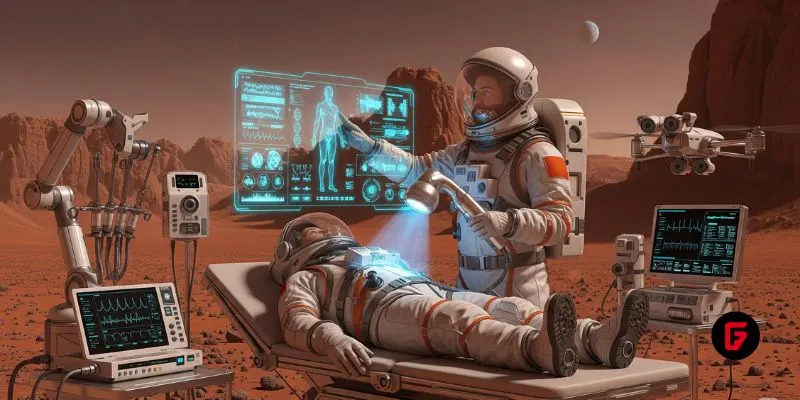
NASA and Google’s AI-powered Crew Medical Officer Digital Assistant enables autonomous diagnoses for astronauts on Mars missions, redefining remote healthcare for space and Earth.
futureTEKnow is focused on identifying and promoting creators, disruptors and innovators, and serving as a vital resource for those interested in the latest advancements in technology.
© 2026 All Rights Reserved.