
































Ahmedabad, India
2022
Space Launch Services, Aerospace, Rocket Manufacturing, Satellite Deployment, Space Transportation, Propulsion Systems, Space Infrastructure, Advanced Manufacturing, Space Exploration
SpanTrik is a space technology company developing fully reusable orbital launch vehicles and rocket propulsion systems. Its flagship project, Raven, is a proposed medium-lift rocket designed to transport commercial and institutional satellite payloads into Earth orbit. The vehicle incorporates a two-stage architecture in which both stages are intended to return to their launch site for recovery and reuse. SpanTrik’s engineering activities focus on cryogenic rocket propulsion, vertical landing technology, and reusable launch systems, with subsystem testing supporting the development of its future orbital launch vehicle.
SpanTrik designs and tests rocket propulsion systems, launch vehicle structures, and flight-control technologies for reusable space transportation. Its development program centers on Raven, a two-stage rocket designed to deliver satellites into low Earth orbit and other orbital destinations.
The company has conducted rocket engine testing involving solid-propellant motors, cryogenic propulsion, restart-capable ignition systems, and throttle-control components. Its published milestones include a 5 kN cryogenic engine test and development of a pintle injector intended to regulate thrust during flight and landing.
SpanTrik also develops vertical takeoff and vertical landing technology to support controlled rocket recovery. Its engineering work includes landing-leg structures, propulsion control, avionics, and experimental flight systems.
These activities support its planned commercial launch service, which would transport satellite payloads using rockets designed for repeated flights. The company remains in the technology development and validation stage rather than operating a demonstrated orbital launch service.
SpanTrik is developing a two-stage reusable rocket architecture for its Raven launch vehicle. The proposed system uses liquid natural gas and liquid oxygen propulsion, with both rocket stages designed to return to their launch site after completing their respective flight phases. This architecture requires coordinated propulsion, flight guidance, structural design, and recovery systems.
The company’s propulsion research includes cryogenic rocket engine development. In September 2024, SpanTrik reported successfully testing its Eureka engine at approximately 5 kilonewtons of thrust. The company stated that the test program demonstrated engine restart and throttle-control capabilities. These features are important for reusable rockets because propulsion systems must operate during ascent and potentially restart to support controlled descent and landing.
SpanTrik has also developed a pintle injector, a rocket engine component that regulates propellant delivery into the combustion chamber. Its design supports variable thrust operation, which is relevant to engines requiring controlled throttling during landing maneuvers.
Earlier engineering work included testing solid rocket motors with reported thrust levels ranging from approximately 200 newtons to 2.5 kilonewtons. The company also reports launching more than 100 high-powered experimental rockets, with some reaching altitudes exceeding one kilometer.
For vehicle recovery, SpanTrik has developed vertical takeoff and vertical landing hardware, including landing-leg assemblies and tank structures. Its development activities also include guidance, avionics, flight computers, and propulsion-control testing.
Raven’s published design specifies a payload capacity of up to 22 metric tons to low Earth orbit. This remains a projected capability of the proposed vehicle, and no full-scale Raven orbital flight or successful two-stage recovery has been independently confirmed.
Reusable launch vehicles have changed the economics of satellite deployment by allowing selected rocket hardware to fly multiple missions. However, achieving full reusability requires both propulsion stages to survive flight, return safely, and undergo preparation for subsequent launches.
SpanTrik is investigating full two-stage rocket reusability as an alternative to launch systems that recover only their first stages. Its approach combines cryogenic propulsion, restart-capable engines, and vertical landing technology.
The company’s subsystem testing program contributes to the development of domestic rocket propulsion and recovery technologies. Its reported engine tests and experimental launches provide preliminary engineering milestones, although they do not establish the performance of a complete orbital vehicle.
If successfully developed and qualified, Raven could provide an additional launch option for satellite operators requiring medium-lift capacity and flexible orbital deployment. Its commercial significance will depend on demonstrating orbital flight, reliable recovery, refurbishment, and repeat launches.
Raven is SpanTrik’s proposed fully reusable medium-lift orbital rocket, designed to carry payloads of up to 22 metric tons into low Earth orbit. The two-stage vehicle is intended to use liquid natural gas and liquid oxygen propulsion, with both stages returning to their launch site for recovery and reuse. Its planned architecture supports multiple orbital destinations and rapid preparation for subsequent missions. Raven remains in development, and its advertised payload capacity, recovery performance, and launch frequency have not been demonstrated through orbital flights.
Eureka is an experimental cryogenic rocket engine developed as part of SpanTrik’s reusable propulsion research. The company reported a successful 5 kN thrust test in September 2024, including engine restart and throttle-control demonstrations. Its propulsion development includes a torch ignition system and pintle injector technology for regulating thrust. These tests contribute to the development of engines capable of operating during different phases of a reusable rocket mission.
SpanTrik is developing vertical takeoff and vertical landing experimental hardware to evaluate rocket recovery technologies. Its published development milestones include landing-leg assemblies, tank structures, propulsion-control components, and guidance systems. These technologies are intended to support controlled descent and landing for future reusable launch vehicles. Publicly documented testing does not yet establish a successful full-scale Raven landing.
Commercial Satellite Launches: Developing reusable orbital transportation for commercial satellite operators requiring access to low Earth orbit and other orbital destinations.
Reusable Rocket Propulsion: Testing cryogenic engines, restart-capable ignition systems, and thrust-control technologies intended for repeated rocket flights.
Satellite Constellation Deployment: Designing medium-lift launch capacity that could support the deployment of multiple satellites during a single mission.
Rocket Recovery Systems: Developing vertical landing hardware, guidance systems, and propulsion controls for reusable launch vehicle stages.
Aerospace Research and Development: Conducting experimental rocket launches, propulsion tests, and flight-control evaluations to validate reusable launch technologies.
Space Transportation Infrastructure: Investigating launch vehicle architectures that could reduce the amount of hardware discarded after individual missions.
As of November 2026, no successful orbital launch of Raven has been independently confirmed. SpanTrik has reported propulsion tests, experimental high-powered rocket launches, and development of vertical landing hardware. These activities support its reusable rocket program but do not establish the performance of a complete orbital launch vehicle.
SpanTrik advertises a payload capacity of up to 22 metric tons to low Earth orbit for its proposed Raven launch vehicle. This figure represents a design target rather than demonstrated flight performance. Actual payload capacity will depend on the final rocket configuration, propulsion performance, orbital destination, and recovery requirements.
Raven is designed to use liquid natural gas and liquid oxygen as propellants. SpanTrik is developing cryogenic engine technology, including restart-capable ignition and thrust-control systems, to support this propulsion architecture. The company reported testing a 5 kN Eureka engine in September 2024.
SpanTrik’s proposed Raven architecture incorporates full reusability, with both the first and second stages designed to return to their launch site. This would require controlled reentry, propulsion-based landing, and refurbishment for subsequent flights. The company has reported development of relevant subsystems, but successful recovery of both stages has not been demonstrated.
SpanTrik reports testing solid rocket motors producing approximately 200 newtons to 2.5 kilonewtons of thrust. In September 2024, it announced a successful 5 kN cryogenic Eureka engine test with restart and throttle-control capabilities. It has also tested torch ignition systems and developed a pintle injector for variable-thrust operation.
Have an update, correction, or additional information about this company? Help us keep the futureTEKnow company database up to date by submitting the latest company information.

Turion Space has raised more than $75 million in Series B funding to scale its Starfire platform and satellite fleet, betting that space domain awareness is the next critical defense infrastructure layer. The piece unpacks Turion’s business model, contracts, and risks for operators and investors watching the new space intelligence stack.

Pulsar Fusion’s Sunbird fusion rocket has achieved first plasma, validating its exhaust architecture and edging a reusable “space tug” concept toward sub‑six‑month Mars transfers. Drawing on multiple reports, this piece breaks down how the Dual Direct Fusion Drive works, what the 2027 in‑orbit demo must prove, and which technical and regulatory hurdles still stand between Sunbird and operational deep‑space logistics.

Aetherflux is betting that orbital data centers can power the next wave of AI, shifting from laser power beaming to space-based compute as it targets a $2 billion valuation. For founders and investors, the company’s 2027 satellite plans highlight how quickly space infrastructure is converging with AI demand and reshaping the deep-tech funding landscape.
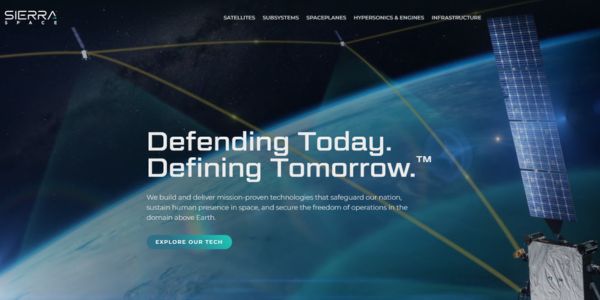
Sierra Space’s $550 million Series C round, valuing the company at $8 billion, signals a decisive shift toward defense-tech space. This feature unpacks the hardware, strategy, and risks shaping the next decade of orbital infrastructure.

Axiom Space has locked in a fresh $350M raise to push its commercial space station and NASA lunar spacesuits toward launch, signaling growing investor faith in private orbital infrastructure.
Morpheus Space secures $15M funding for GO-2 electric propulsion mass production. Learn how this boosts satellite mobility with efficient thrusters.

Stoke Space extended its Series D funding to $860 million, fueling Nova’s full-reuse rocket production at Cape Canaveral. Backed by founders from Blue Origin, this pushes total capital to $1.34B.

Tomorrow.io has closed a $175 million equity round to deploy DeepSky, its AI-native weather satellite constellation designed to make global atmospheric data far more precise, frequent, and useful for businesses, governments, and communities facing extreme weather.

Stay ahead of AI and space tech wars: OpenAI vs Google AI, SpaceX and Blue Origin’s race for orbital data centers, Meta’s AI strategy shift, and key robotics breakthroughs reshaping industry.

Bridgit Mendler’s Northwood Space is pioneering mass-produced ground stations, enabling scalable, high-speed connectivity for the new era of satellite networks and megaconstellations.

SpaceX aims to nearly double launches from Vandenberg in 2025, facing support from federal agencies but strong objections from the state and local communities.

NASA and Google’s AI-powered Crew Medical Officer Digital Assistant enables autonomous diagnoses for astronauts on Mars missions, redefining remote healthcare for space and Earth.
futureTEKnow is focused on identifying and promoting creators, disruptors and innovators, and serving as a vital resource for those interested in the latest advancements in technology.
© 2026 All Rights Reserved.