





























McLean, Virginia, USA
2001
Aerospace, Satellite Communications, Satellite Telecommunications, Low Earth Orbit Satellite Networks, Internet of Things, Maritime Communications, Aviation Communications, Defense & Security, Emergency Communications, Satellite Navigation, Positioning Navigation & Timing, Autonomous Systems, Transportation & Logistics, Energy & Utilities, Remote Asset Monitoring
Iridium is a satellite communications company operating a global low Earth orbit satellite network that provides voice, data, messaging, and connectivity services. Its constellation connects users, equipment, and remote sensors in locations where conventional cellular and terrestrial communications infrastructure is unavailable or unreliable.
The company’s services support maritime operations, aviation, emergency response, industrial equipment, government communications, and remote asset monitoring. Its satellite infrastructure also supports positioning and timing services and space-based aircraft surveillance through its Aireon subsidiary.
Iridium operates a constellation of 66 interconnected low Earth orbit satellites that provide communications coverage across the Earth’s surface, including polar regions and remote oceans. The network enables satellite telephone calls, data transmission, machine-to-machine messaging, and connectivity for equipment operating outside terrestrial network coverage.
The company provides satellite communication services through its Iridium Certus platform, portable satellite devices, embedded communication modules, and Internet of Things technologies. These systems allow organizations to connect ships, aircraft, vehicles, industrial machinery, and environmental monitoring equipment to communications networks.
Iridium also develops standards-based satellite connectivity through Iridium NTN Direct, designed to extend mobile and IoT communications to compatible devices beyond cellular coverage. Its positioning, navigation, and timing services provide an additional source of location and timing information when conventional satellite navigation systems are disrupted.
Following its acquisition of Aireon in July 2026, Iridium also provides global aircraft surveillance using space-based receivers that collect aircraft position broadcasts, including over oceans and other areas beyond conventional ground-based radar coverage.
Iridium’s communications infrastructure is built around a low Earth orbit satellite constellation with inter-satellite crosslinks. Its 66 operational satellites travel in near-polar orbits, allowing the network to provide continuous coverage across the planet. Unlike satellite systems that depend on a ground gateway within the coverage area of each spacecraft, Iridium satellites can relay communications between one another before transferring traffic to ground infrastructure.
The constellation operates primarily using L-band radio frequencies, which are suitable for mobile satellite communications and relatively resistant to rain-related signal attenuation. This enables connectivity through compact antennas installed on handheld devices, vehicles, aircraft, vessels, and industrial equipment.
Iridium’s network supports multiple communications architectures. Iridium Certus provides IP data and voice services through compatible terminals, while Short Burst Data and Iridium Messaging Transport enable remote devices to transmit telemetry, sensor measurements, and other information using satellite IoT protocols.
Iridium NTN Direct extends the network toward standards-based device connectivity through 3GPP non-terrestrial network specifications. The technology is designed to allow compatible chipsets and communication modules to connect to satellites using Narrowband IoT protocols, supporting integration with mobile operator networks.
The company’s positioning, navigation, and timing technology uses satellite-transmitted signals and specialized receiver processing to provide an additional source of timing and location information. Its Aireon subsidiary adds space-based ADS-B receivers, allowing the same satellite infrastructure to support aircraft surveillance as well as communications.
Terrestrial communications networks depend on towers, cables, and other infrastructure that cannot economically cover every location. Remote oceans, polar regions, deserts, and isolated industrial sites create communications challenges for organizations that require reliable access to operational data and emergency services.
Iridium addresses these limitations through a globally interconnected satellite communications network that supports voice, messaging, and data transmission without relying on nearby cellular infrastructure. Its network is used in transportation, maritime safety, emergency response, industrial monitoring, and government operations.
The development of standards-based satellite IoT and resilient positioning services expands the role of its constellation beyond traditional satellite telephones. Iridium NTN Direct is intended to integrate satellite connectivity into compatible everyday devices and industrial sensors, while Iridium PNT provides an additional timing and positioning capability for critical systems.
The acquisition of Aireon also connects satellite communications with global aircraft surveillance. Together, these technologies demonstrate how an established low Earth orbit network can support multiple infrastructure services, including communications, remote monitoring, navigation resilience, and aviation safety.
Iridium operates a constellation of 66 operational low Earth orbit satellites providing global mobile satellite communications. The network uses inter-satellite crosslinks to route communications between spacecraft and ground gateways. Its L-band radio frequencies support voice, data, and messaging services across land, maritime, and aviation environments.
Iridium Certus is a satellite communications platform supporting broadband data, voice, and critical communications services. It provides several service classes, including Certus 100, Certus 200, and Certus 700, designed for different bandwidth and equipment requirements. The platform is used in maritime communications, aviation, industrial operations, and government applications requiring connectivity beyond terrestrial networks.
Iridium NTN Direct is a standards-based non-terrestrial network service designed to connect compatible Internet of Things and direct-to-device equipment through Iridium’s existing satellite constellation. The technology incorporates 3GPP Release 19 standards and Narrowband IoT communications, enabling device manufacturers and mobile network operators to extend connectivity into areas without cellular coverage. The service was undergoing testing and commercialization activities during 2026.
Iridium Short Burst Data is a satellite messaging service designed for transmitting small packets of information between remote devices and centralized systems. It supports asset tracking, equipment monitoring, sensor reporting, and machine-to-machine communications where continuous broadband connectivity is unnecessary.
Iridium Messaging Transport is a satellite IoT messaging service designed to handle larger data payloads and more flexible messaging workflows than traditional short-message systems. It supports industrial monitoring, remote telemetry, and connected equipment through compatible communication modules, including the Iridium Certus 9704.
Iridium GO! exec is a portable satellite communications device that provides voice and data connectivity for smartphones, tablets, and laptops. It combines a satellite terminal with a battery-powered Wi-Fi access point, allowing users to make calls, send messages, and access selected internet applications while operating outside cellular coverage.
Iridium PNT provides resilient positioning, navigation, and timing services using signals transmitted through the company’s low Earth orbit constellation. The technology provides an alternative or complement to conventional global navigation satellite systems and is designed to support critical infrastructure, telecommunications, and other systems vulnerable to signal interference, jamming, or spoofing.
The Iridium 9604 is a hybrid communications module combining satellite connectivity, cellular communications, and GNSS positioning capabilities. Introduced in 2026, it allows equipment manufacturers to integrate multiple connectivity technologies into a single module for industrial IoT, remote tracking, and asset monitoring applications.
Aireon operates a global space-based Automatic Dependent Surveillance-Broadcast (ADS-B) system using receivers hosted aboard Iridium satellites. The system collects aircraft position broadcasts and delivers surveillance data to air navigation service providers, airlines, and other aviation organizations. Aireon became a wholly owned Iridium subsidiary in July 2026.
Maritime Communications: Providing satellite voice, data, distress communications, and operational connectivity for ships operating across international waters and polar regions.
Industrial IoT and Asset Tracking: Connecting remote sensors, vehicles, equipment, and infrastructure for telemetry, location reporting, and equipment monitoring.
Aviation Communications and Surveillance: Supporting aircraft communications and global flight tracking, including oceanic and remote airspace, through satellite services and Aireon’s surveillance network.
Emergency Response: Providing communications for disaster recovery teams, humanitarian organizations, and first responders operating where terrestrial networks are damaged or unavailable.
Defense and Government Communications: Supporting secure and resilient communications for military personnel, government agencies, and operations in remote environments.
Critical Infrastructure Timing: Providing alternative positioning and timing signals for telecommunications networks, industrial systems, and other infrastructure dependent on accurate synchronization.
Remote Environmental Monitoring: Transmitting information from scientific instruments, weather stations, ocean buoys, and environmental sensors deployed outside terrestrial network coverage.
Iridium operates a constellation of 66 active low Earth orbit satellites, supported by additional orbital spares. The satellites use inter-satellite crosslinks to route communications across the network and provide continuous global coverage, including polar regions.
Iridium Certus provides established satellite voice and data services through compatible terminals and communication equipment. Iridium NTN Direct is a developing standards-based service intended to connect compatible IoT and direct-to-device equipment using 3GPP non-terrestrial network specifications. Both use Iridium’s satellite constellation but serve different device and connectivity requirements.
Yes. Iridium’s near-polar satellite orbits provide coverage across the planet, including the Arctic and Antarctic. This makes the network suitable for scientific expeditions, maritime operations, aviation, and remote monitoring in high-latitude regions.
Iridium PNT provides positioning, navigation, and timing information through Iridium’s low Earth orbit satellite network. It is designed as an alternative or complement to conventional GNSS services such as GPS, particularly for applications requiring resilience against signal interference, jamming, spoofing, and timing disruptions.
No. As of November 2026, Rocket Lab’s proposed acquisition of Iridium remains pending. Iridium shareholders approved the transaction in September 2026, and the companies expect completion by mid-2027, subject to remaining regulatory approvals and closing conditions.
Have an update, correction, or additional information about this company? Help us keep the futureTEKnow company database up to date by submitting the latest company information.

Turion Space has raised more than $75 million in Series B funding to scale its Starfire platform and satellite fleet, betting that space domain awareness is the next critical defense infrastructure layer. The piece unpacks Turion’s business model, contracts, and risks for operators and investors watching the new space intelligence stack.

Pulsar Fusion’s Sunbird fusion rocket has achieved first plasma, validating its exhaust architecture and edging a reusable “space tug” concept toward sub‑six‑month Mars transfers. Drawing on multiple reports, this piece breaks down how the Dual Direct Fusion Drive works, what the 2027 in‑orbit demo must prove, and which technical and regulatory hurdles still stand between Sunbird and operational deep‑space logistics.

Aetherflux is betting that orbital data centers can power the next wave of AI, shifting from laser power beaming to space-based compute as it targets a $2 billion valuation. For founders and investors, the company’s 2027 satellite plans highlight how quickly space infrastructure is converging with AI demand and reshaping the deep-tech funding landscape.
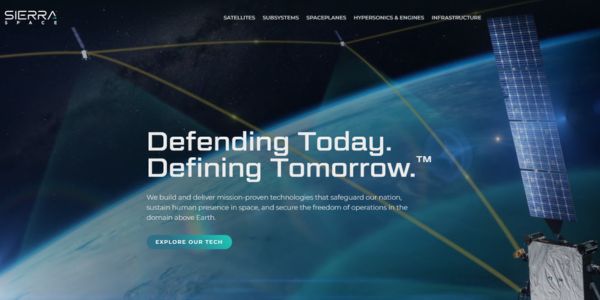
Sierra Space’s $550 million Series C round, valuing the company at $8 billion, signals a decisive shift toward defense-tech space. This feature unpacks the hardware, strategy, and risks shaping the next decade of orbital infrastructure.

Axiom Space has locked in a fresh $350M raise to push its commercial space station and NASA lunar spacesuits toward launch, signaling growing investor faith in private orbital infrastructure.

Morpheus Space secures $15M funding for GO-2 electric propulsion mass production. Learn how this boosts satellite mobility with efficient thrusters.

Stoke Space extended its Series D funding to $860 million, fueling Nova’s full-reuse rocket production at Cape Canaveral. Backed by founders from Blue Origin, this pushes total capital to $1.34B.

Tomorrow.io has closed a $175 million equity round to deploy DeepSky, its AI-native weather satellite constellation designed to make global atmospheric data far more precise, frequent, and useful for businesses, governments, and communities facing extreme weather.

Stay ahead of AI and space tech wars: OpenAI vs Google AI, SpaceX and Blue Origin’s race for orbital data centers, Meta’s AI strategy shift, and key robotics breakthroughs reshaping industry.

Bridgit Mendler’s Northwood Space is pioneering mass-produced ground stations, enabling scalable, high-speed connectivity for the new era of satellite networks and megaconstellations.

SpaceX aims to nearly double launches from Vandenberg in 2025, facing support from federal agencies but strong objections from the state and local communities.

NASA and Google’s AI-powered Crew Medical Officer Digital Assistant enables autonomous diagnoses for astronauts on Mars missions, redefining remote healthcare for space and Earth.
futureTEKnow is focused on identifying and promoting creators, disruptors and innovators, and serving as a vital resource for those interested in the latest advancements in technology.
© 2026 All Rights Reserved.