

































Tukwila, Washington, USA
2018
Aerospace, Small Satellite Manufacturing, Earth Observation Satellites, Satellite Constellations, Low Earth Orbit Satellites, Spacecraft Design, Satellite Integration and Testing, Spacecraft Manufacturing, Geospatial Intelligence, Defense & Security
LeoStella was fully acquired by BlackSky in November 2024 and now operates as BlackSky Satellite Systems, a wholly owned subsidiary of BlackSky.
LeoStella is a satellite manufacturing company specializing in the design, production, integration, and testing of small satellites and spacecraft platforms. Its manufacturing systems support satellite constellations used for Earth observation, remote sensing, and government missions. The company produces spacecraft for BlackSky’s satellite network, including its second- and third-generation imaging satellites. Originally established as a joint venture, LeoStella became a wholly owned subsidiary of BlackSky in November 2024.
LeoStella designs and manufactures satellites for organizations that require multiple spacecraft operating as coordinated constellations. Its work covers spacecraft architecture, subsystem integration, manufacturing, environmental testing, and delivery for launch.
The company develops small satellite buses that integrate spacecraft structures, electrical power, communications, attitude control, and onboard computing. These systems provide the infrastructure required to operate Earth observation sensors and other mission payloads.
LeoStella manufactures satellites for BlackSky’s Earth observation constellation. These spacecraft collect imagery used for monitoring geographic locations and supporting geospatial intelligence services. Its manufacturing activities include BlackSky’s Gen-2 and Gen-3 satellite platforms.
The company also developed the LS-300 satellite bus, incorporating spacecraft technologies intended for higher-performance imaging and other low Earth orbit missions. Its engineering work includes integration of navigation receivers, communications equipment, and mission-specific payload interfaces.
LeoStella’s manufacturing approach emphasizes repeatable production and standardized spacecraft designs. This allows satellites with similar architectures to be assembled and tested in series, supporting the deployment and replacement of spacecraft within larger constellations.
LeoStella develops spacecraft manufacturing and integration technologies for small satellite constellations. Its capabilities include satellite structures, avionics integration, electrical power systems, communications, attitude determination and control, thermal management, and environmental qualification.
A central capability is small satellite bus design. The satellite bus provides the mechanical and electronic infrastructure that supports a spacecraft’s payload. LeoStella integrates onboard computers, power distribution, navigation equipment, attitude control components, and communications interfaces into spacecraft configurations suited to different missions.
The company uses repeatable satellite manufacturing processes to produce spacecraft for constellation deployments. Its production model is designed to reduce the engineering and integration work required for each successive satellite while maintaining consistent hardware configurations and testing procedures.
LeoStella has manufactured BlackSky’s Gen-2 Earth observation satellites and supported the development and production of its Gen-3 spacecraft. The Gen-3 architecture supports higher-resolution imaging and improved collection capabilities for BlackSky’s geospatial intelligence operations.
Its LS-300 satellite platform incorporates navigation and spacecraft control technologies for low Earth orbit applications. Safran announced in January 2024 that its N-SPHERE GNSS receivers would be integrated into the LS-300 bus, supporting spacecraft positioning and navigation.
LeoStella’s spacecraft engineering also includes attitude determination and control systems. These systems allow imaging satellites to orient their sensors toward designated locations and maintain the pointing accuracy required for Earth observation missions.
The company performs spacecraft integration and testing to evaluate mechanical, electrical, and operational performance before launch. Qualification activities address the vibration, thermal, and vacuum conditions that satellites experience during launch and orbital operations.
LeoStella’s manufacturing capabilities also support defense-related satellite development. In 2024, the company was selected for the Space Development Agency’s HALO program vendor pool, making it eligible to compete for rapid satellite prototype opportunities. This selection was not itself an award for a specific satellite flight mission.
Satellite constellations require manufacturers to produce multiple spacecraft with consistent performance and predictable integration schedules. These requirements differ from traditional programs centered on a small number of individually engineered satellites.
LeoStella’s small satellite production systems support the manufacture and replenishment of Earth observation constellations. Its approach combines standardized spacecraft platforms with manufacturing and testing processes designed for repeated production.
Its role in BlackSky’s satellite supply chain connects spacecraft design and manufacturing with an operational geospatial intelligence network. This arrangement gives BlackSky direct control over a substantial portion of its satellite production process.
LeoStella also contributes to the broader market for compact spacecraft and proliferated satellite architectures. Its work demonstrates how satellite manufacturing can support frequent Earth observation, government monitoring, and other missions requiring coordinated fleets of spacecraft.
LS-300 is a small satellite bus developed by LeoStella for low Earth orbit missions. The platform integrates spacecraft structures, avionics, electrical power, navigation, communications, and attitude control systems. Its architecture supports Earth observation and other payloads requiring precise spacecraft positioning and reliable onboard operations. The LS-300 incorporates N-SPHERE GNSS receiver technology supplied by Safran’s Syrlinks business.
LeoStella manufactures the second-generation satellites used in BlackSky’s Earth observation constellation. These spacecraft carry optical imaging payloads and operate in low Earth orbit to collect imagery of geographic locations. The Gen-2 architecture supports frequent observation and rapid delivery of imagery for geospatial intelligence applications. The satellites provide flight-proven manufacturing heritage for LeoStella’s spacecraft production systems.
LeoStella manufactures BlackSky’s third-generation Earth observation satellites, which provide higher-resolution imaging and increased collection capabilities compared with the earlier constellation. The Gen-3 spacecraft support 35-centimeter-class optical imagery, agile satellite pointing, and high-frequency monitoring. BlackSky commissioned its fourth Gen-3 satellite in March 2026 and reported first-light imagery from its fifth satellite in September 2026.
LeoStella provides spacecraft design, manufacturing, integration, and testing services for small satellite missions. Its production facilities support repeated assembly of satellites using standardized platforms and mission-specific payload configurations. The manufacturing process includes subsystem integration, electrical testing, mechanical verification, and preparation for launch. These capabilities support satellite constellation production and replenishment.
LeoStella develops manufacturing processes for producing multiple satellites with common hardware architectures. Its constellation production capabilities support repeatable spacecraft assembly, supply chain coordination, and standardized testing. This approach is used for BlackSky’s Earth observation network and can support other missions requiring coordinated fleets of small satellites.
LeoStella performs spacecraft integration and qualification activities before satellites are delivered for launch. Its work includes installation of avionics, sensors, communications equipment, power systems, and other spacecraft subsystems. Testing procedures evaluate electrical compatibility, mechanical integrity, and performance under simulated launch and orbital conditions. These services form part of the company’s end-to-end satellite manufacturing capabilities.
LeoStella was selected in October 2024 for the Space Development Agency’s Hybrid Acquisition for Proliferated Low Earth Orbit program. The HALO initiative establishes a pool of companies eligible to compete for rapid satellite mission prototypes and demonstrations. LeoStella’s participation reflects its spacecraft manufacturing and integration capabilities. Selection for the program did not constitute a confirmed award to manufacture a specific satellite mission.
LeoStella’s satellite manufacturing technologies support Earth observation missions that collect optical imagery for geographic monitoring, infrastructure assessment, and geospatial intelligence. Its spacecraft are designed for operation within coordinated satellite constellations.
Its small satellite bus platforms support the integration of imaging sensors, communications systems, navigation equipment, and onboard electronics for missions in low Earth orbit.
The company’s constellation manufacturing capabilities support the production and replacement of spacecraft for commercial and government satellite networks. Standardized assembly and testing processes help maintain consistent spacecraft configurations.
LeoStella’s engineering and manufacturing capabilities are also relevant to defense and security applications, including responsive Earth observation, satellite-based monitoring, and government spacecraft demonstration programs.
LeoStella designs, manufactures, integrates, and tests small satellites and spacecraft platforms. Its primary manufacturing programs support BlackSky’s Earth observation constellation, including Gen-2 and Gen-3 satellites. The company also develops satellite bus technologies and manufacturing processes for missions requiring multiple spacecraft operating in low Earth orbit.
LeoStella is wholly owned by BlackSky Technology Inc. BlackSky acquired the remaining 50% ownership interest from Thales Alenia Space in November 2024. The company was originally established in 2018 as a joint venture between the two organizations. Following the acquisition, LeoStella’s satellite manufacturing operations became part of BlackSky’s vertically integrated business.
LS-300 is a small satellite platform designed for low Earth orbit missions. It integrates spacecraft structures, avionics, power distribution, communications, navigation, and attitude control equipment. The platform supports payloads requiring precise positioning and reliable spacecraft operations. Safran’s N-SPHERE GNSS receiver was selected for integration into the LS-300 architecture.
Yes. LeoStella manufactures satellites for BlackSky’s Earth observation constellation, including its Gen-2 and Gen-3 spacecraft. The Gen-3 satellites provide higher-resolution optical imagery and support more frequent geographic monitoring. By September 2026, BlackSky had deployed five Gen-3 satellites, demonstrating the continued production of spacecraft through its satellite manufacturing business.
LeoStella was selected in October 2024 for the Space Development Agency’s Hybrid Acquisition for Proliferated Low Earth Orbit program. The program allows selected companies to compete for rapid spacecraft prototype and demonstration opportunities. LeoStella’s eligibility reflects its experience in small satellite manufacturing and integration, but the selection did not guarantee a specific satellite production contract.
Have an update, correction, or additional information about this company? Help us keep the futureTEKnow company database up to date by submitting the latest company information.

Turion Space has raised more than $75 million in Series B funding to scale its Starfire platform and satellite fleet, betting that space domain awareness is the next critical defense infrastructure layer. The piece unpacks Turion’s business model, contracts, and risks for operators and investors watching the new space intelligence stack.

Pulsar Fusion’s Sunbird fusion rocket has achieved first plasma, validating its exhaust architecture and edging a reusable “space tug” concept toward sub‑six‑month Mars transfers. Drawing on multiple reports, this piece breaks down how the Dual Direct Fusion Drive works, what the 2027 in‑orbit demo must prove, and which technical and regulatory hurdles still stand between Sunbird and operational deep‑space logistics.

Aetherflux is betting that orbital data centers can power the next wave of AI, shifting from laser power beaming to space-based compute as it targets a $2 billion valuation. For founders and investors, the company’s 2027 satellite plans highlight how quickly space infrastructure is converging with AI demand and reshaping the deep-tech funding landscape.
Sierra Space’s $550 million Series C round, valuing the company at $8 billion, signals a decisive shift toward defense-tech space. This feature unpacks the hardware, strategy, and risks shaping the next decade of orbital infrastructure.

Axiom Space has locked in a fresh $350M raise to push its commercial space station and NASA lunar spacesuits toward launch, signaling growing investor faith in private orbital infrastructure.
Morpheus Space secures $15M funding for GO-2 electric propulsion mass production. Learn how this boosts satellite mobility with efficient thrusters.

Stoke Space extended its Series D funding to $860 million, fueling Nova’s full-reuse rocket production at Cape Canaveral. Backed by founders from Blue Origin, this pushes total capital to $1.34B.

Tomorrow.io has closed a $175 million equity round to deploy DeepSky, its AI-native weather satellite constellation designed to make global atmospheric data far more precise, frequent, and useful for businesses, governments, and communities facing extreme weather.

Stay ahead of AI and space tech wars: OpenAI vs Google AI, SpaceX and Blue Origin’s race for orbital data centers, Meta’s AI strategy shift, and key robotics breakthroughs reshaping industry.

Bridgit Mendler’s Northwood Space is pioneering mass-produced ground stations, enabling scalable, high-speed connectivity for the new era of satellite networks and megaconstellations.
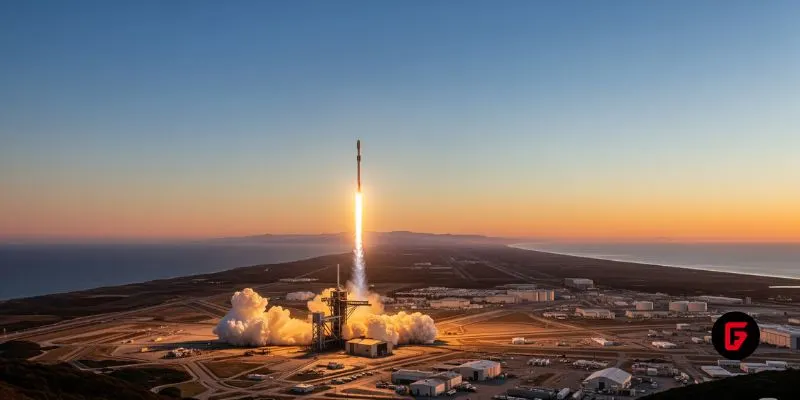
SpaceX aims to nearly double launches from Vandenberg in 2025, facing support from federal agencies but strong objections from the state and local communities.

NASA and Google’s AI-powered Crew Medical Officer Digital Assistant enables autonomous diagnoses for astronauts on Mars missions, redefining remote healthcare for space and Earth.
futureTEKnow is focused on identifying and promoting creators, disruptors and innovators, and serving as a vital resource for those interested in the latest advancements in technology.
© 2026 All Rights Reserved.