






























Genoa, Italy
2021
Space Agriculture, Aerospace, Space Life Support Systems, Controlled Environment Agriculture, Vertical Farming, Precision Agriculture, Space Biotechnology, Space Exploration, Agricultural Research, Space Infrastructure
Space V is a space agriculture technology company developing adaptive vertical greenhouse systems for growing plants in space. Its technology uses movable cultivation shelves, individually controlled growing environments, and automated resource management to improve plant production within the limited volume available aboard spacecraft and orbital habitats. The company’s Adaptive Vertical Farm architecture is designed to reduce the space and energy required for crop cultivation while accommodating plants at different growth stages. Space V is developing its systems for future space stations, lunar habitats, and long-duration exploration missions, with potential applications in terrestrial precision agriculture.
Space V designs and tests multilayer greenhouse technology for controlled plant cultivation in space environments. Its greenhouse architecture automatically adjusts the spacing between cultivation shelves as plants grow, reducing the amount of unused volume that must be illuminated, ventilated, and climate-controlled.
The company combines mechanical automation with sensors and an AI-based decision support system to manage growing conditions. Individual cultivation levels can support different temperatures, humidity settings, and irrigation requirements, allowing multiple crops to develop within the same facility.
Space V also investigates how plant cultivation could contribute to spacecraft life support systems through fresh food production, carbon dioxide consumption, and oxygen generation.
Its engineering work includes greenhouse prototypes, laboratory testing, and research into cultivation substrates and resource recycling. In 2024, the company presented a three-shelf proof-of-concept demonstrator designed to illustrate its adaptive growing architecture for future orbital facilities.
Space V develops a Multilayer Adaptive Greenhouse System that combines controlled-environment agriculture, mechatronics, and automated crop management. Its central innovation is the ability to adjust the vertical space allocated to plants throughout their growth cycle rather than maintaining fixed distances between cultivation shelves.
In conventional vertical farms, growing compartments often retain the same dimensions regardless of plant size. Space V’s architecture uses a motorized mechanism to reposition cultivation shelves as plants develop. This allows lighting and ventilation equipment to remain closer to the plant canopy while reducing the volume of air requiring environmental control.
An AI-based decision support system is designed to optimize shelf positioning according to crop growth conditions. Each cultivation level can incorporate independent temperature and humidity control, supporting plants with different environmental requirements within the same greenhouse.
The architecture also includes precision irrigation and concepts for exchanging gases with a spacecraft cabin. Plants consume carbon dioxide during photosynthesis and release oxygen, potentially contributing to future regenerative environmental control and life support systems.
Space V reports that theoretical comparisons with fixed-shelf greenhouses indicate production yield improvements averaging 108% and potential energy savings of up to 43% under studied configurations. These figures are research-based comparisons, not demonstrated performance from an operating orbital greenhouse.
Its 2024 proof-of-concept demonstrator uses three movable cultivation shelves to simulate plant growth and illustrate the mechanical system. Some subsystems were designed with future space qualification requirements in mind, but the demonstrator itself is not flight-qualified hardware.
Long-duration human space missions require reliable supplies of food, water, and oxygen. Transporting these resources from Earth creates logistical challenges, particularly for missions beyond low Earth orbit.
Space V is developing space-efficient crop cultivation technology that could reduce the volume and energy needed to produce fresh vegetables aboard orbital stations and planetary habitats. Its adaptive greenhouse design addresses a central constraint of space agriculture: producing useful quantities of food within limited pressurized environments.
The technology also contributes to research into regenerative life support systems, where biological processes help recycle resources and support human habitation.
Beyond space exploration, its adaptive farming architecture could inform terrestrial vertical agriculture by improving cultivation density and reducing environmental control requirements. Further testing and space qualification will determine whether these concepts can be integrated into operational spacecraft and habitats.
Adaptive Vertical Farm is Space V’s primary multilayer greenhouse technology for controlled plant cultivation. It uses motorized shelves that adjust their spacing as crops grow, reducing unused growing volume and the associated requirements for lighting and environmental control. The architecture is intended for future orbital and planetary habitats.
The AVF proof-of-concept is a three-shelf engineering demonstrator presented at the International Astronautical Congress in 2024. It simulates plant growth while showing how cultivation shelves move automatically to accommodate changing plant dimensions. The demonstrator is intended to validate the greenhouse architecture and is not qualified for spaceflight.
Space V’s greenhouse architecture incorporates independent environmental controls for individual growing shelves. These systems are designed to regulate temperature, humidity, ventilation, and irrigation requirements for different crops while reducing energy consumption compared with conditioning an entire fixed-volume greenhouse.
The company’s proposed AI-assisted crop management system adjusts shelf positioning according to plant growth and cultivation conditions. It forms part of the automated greenhouse design, combining crop information with mechanical control to optimize the use of available growing space.
Space V’s adaptive greenhouse technology is being developed for food production aboard space stations and future human exploration habitats. Its compact growing architecture could support fresh vegetable cultivation in orbital laboratories, commercial space stations, lunar bases, and eventual Mars settlements.
The system is also intended to support plant biology, agricultural research, and regenerative life support studies. Controlled cultivation compartments could allow researchers to investigate crop growth under different environmental conditions and examine how plants contribute to resource recycling in crewed habitats.
Terrestrial applications include vertical farming, precision agriculture, and food production in isolated environments where water, energy, and available space are constrained. These applications could benefit from adaptive shelf positioning and individually managed cultivation conditions, although operational performance depends on further testing and implementation.
Space V’s greenhouse uses motorized cultivation shelves that change position as plants grow. This reduces unused space between growing levels and allows lighting, ventilation, and environmental controls to operate closer to the crops. The system is designed to improve cultivation density and reduce energy requirements.
Space V has developed a proof-of-concept greenhouse intended to demonstrate technology for future space station applications. Its three-shelf demonstrator was presented in 2024, but the company identifies it as non-flight hardware. An operational greenhouse installation aboard the International Space Station has not been publicly verified.
Yes. Space V’s greenhouse architecture incorporates an AI-based decision support system intended to optimize cultivation shelf positioning according to plant growth. The technology combines automated mechanical movement with crop management and environmental control systems.
The greenhouse is designed with individual micro-conditioning systems for separate cultivation shelves. These compartments can accommodate different temperature, humidity, and irrigation requirements, potentially allowing several crop varieties to grow within the same facility.
Space V’s technology could contribute to future regenerative life support systems by producing fresh plant-based food and supporting biological processes that consume carbon dioxide and release oxygen. Integration with spacecraft environmental control systems remains a development objective rather than an established operational capability.
Have an update, correction, or additional information about this company? Help us keep the futureTEKnow company database up to date by submitting the latest company information.

Turion Space has raised more than $75 million in Series B funding to scale its Starfire platform and satellite fleet, betting that space domain awareness is the next critical defense infrastructure layer. The piece unpacks Turion’s business model, contracts, and risks for operators and investors watching the new space intelligence stack.
Pulsar Fusion’s Sunbird fusion rocket has achieved first plasma, validating its exhaust architecture and edging a reusable “space tug” concept toward sub‑six‑month Mars transfers. Drawing on multiple reports, this piece breaks down how the Dual Direct Fusion Drive works, what the 2027 in‑orbit demo must prove, and which technical and regulatory hurdles still stand between Sunbird and operational deep‑space logistics.
Aetherflux is betting that orbital data centers can power the next wave of AI, shifting from laser power beaming to space-based compute as it targets a $2 billion valuation. For founders and investors, the company’s 2027 satellite plans highlight how quickly space infrastructure is converging with AI demand and reshaping the deep-tech funding landscape.
Sierra Space’s $550 million Series C round, valuing the company at $8 billion, signals a decisive shift toward defense-tech space. This feature unpacks the hardware, strategy, and risks shaping the next decade of orbital infrastructure.
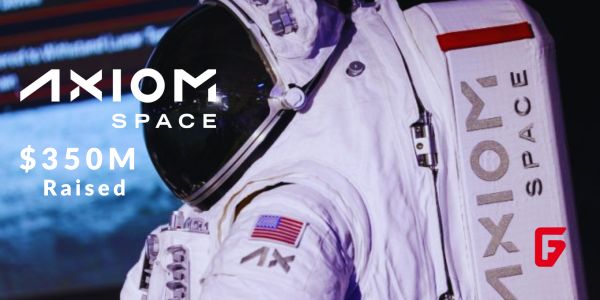
Axiom Space has locked in a fresh $350M raise to push its commercial space station and NASA lunar spacesuits toward launch, signaling growing investor faith in private orbital infrastructure.
Morpheus Space secures $15M funding for GO-2 electric propulsion mass production. Learn how this boosts satellite mobility with efficient thrusters.

Stoke Space extended its Series D funding to $860 million, fueling Nova’s full-reuse rocket production at Cape Canaveral. Backed by founders from Blue Origin, this pushes total capital to $1.34B.
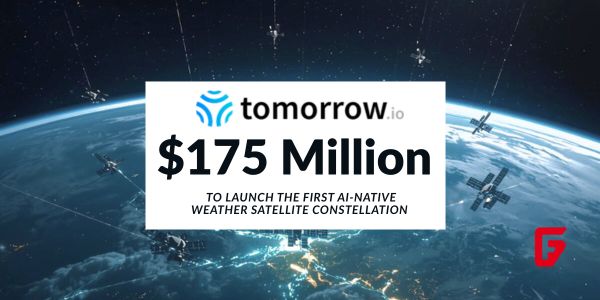
Tomorrow.io has closed a $175 million equity round to deploy DeepSky, its AI-native weather satellite constellation designed to make global atmospheric data far more precise, frequent, and useful for businesses, governments, and communities facing extreme weather.

Stay ahead of AI and space tech wars: OpenAI vs Google AI, SpaceX and Blue Origin’s race for orbital data centers, Meta’s AI strategy shift, and key robotics breakthroughs reshaping industry.

Bridgit Mendler’s Northwood Space is pioneering mass-produced ground stations, enabling scalable, high-speed connectivity for the new era of satellite networks and megaconstellations.
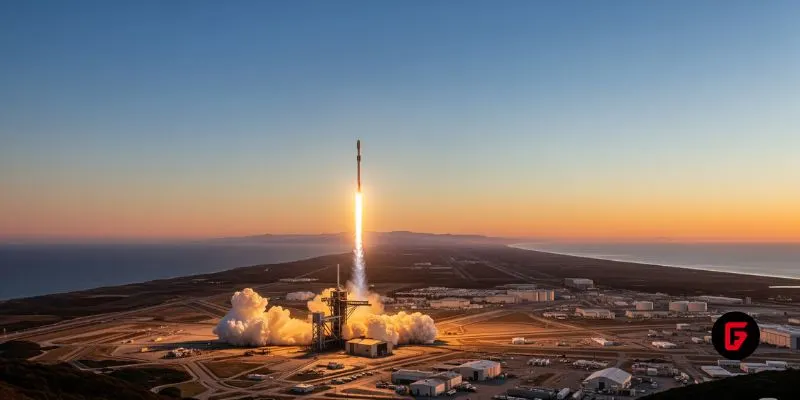
SpaceX aims to nearly double launches from Vandenberg in 2025, facing support from federal agencies but strong objections from the state and local communities.
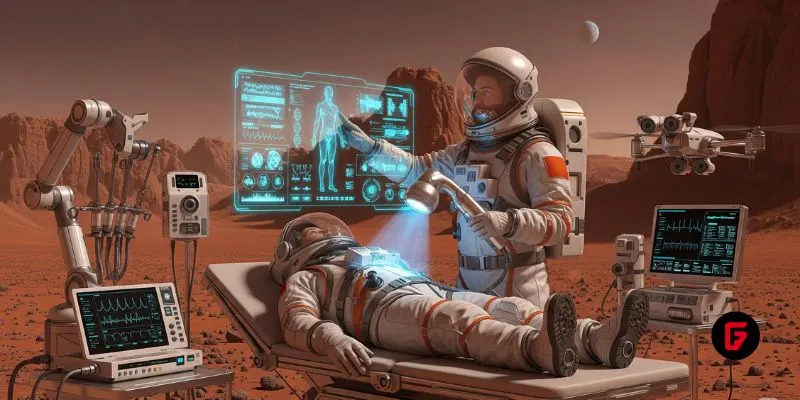
NASA and Google’s AI-powered Crew Medical Officer Digital Assistant enables autonomous diagnoses for astronauts on Mars missions, redefining remote healthcare for space and Earth.
futureTEKnow is focused on identifying and promoting creators, disruptors and innovators, and serving as a vital resource for those interested in the latest advancements in technology.
© 2026 All Rights Reserved.