

































Hyderabad, India
2023
Satellite Manufacturing, Space Computing, Earth Observation, Artificial Intelligence, Cloud Computing, Geospatial Intelligence, Agriculture, Environmental Monitoring, Defense, Scientific Research
TakeMe2Space is a space technology company developing orbital computing infrastructure that allows software applications and artificial intelligence models to process data aboard satellites. Its technology combines small satellite platforms, onboard computing hardware, radiation protection, and cloud-accessible software. The company develops space-based edge computing systems for Earth observation, scientific experiments, and satellite data processing. Its approach allows selected information to be analyzed in orbit before transmission to Earth, reducing the need to download large volumes of raw satellite data.
TakeMe2Space designs and manufactures satellites equipped with onboard processors capable of executing software and AI models in low Earth orbit. Its systems process information collected by satellite sensors, allowing relevant results to be identified before transmission to ground stations.
The company develops OrbitLab, an orbital computing software platform through which customers can prepare applications, upload machine learning models, and configure satellite processing tasks. The service is designed to provide shared access to computing infrastructure without requiring each customer to develop an independent spacecraft.
TakeMe2Space also manufactures CubeSat platforms, onboard computers, AI processing modules, attitude control components, and radiation shielding products. Its hardware portfolio supports organizations building satellites for research, remote sensing, and commercial applications.
Its MOI-TD mission demonstrated onboard AI processing and satellite subsystem operation. The company is developing additional spacecraft and a planned six-satellite constellation for more extensive orbital computing and Earth observation services.
TakeMe2Space develops satellite-based edge computing technology that processes data directly in low Earth orbit. Conventional Earth observation satellites often transmit large volumes of imagery to ground stations for processing. TakeMe2Space’s architecture integrates computing hardware with satellite sensors so selected analysis can occur before data transmission.
Its MOI satellite architecture incorporates an AI-Cube computing module based on an NVIDIA Jetson Orin NX processor, with a published performance specification of 117 trillion operations per second, 16 GB of memory, and up to 2 TB of onboard storage. The planned MOI-1A configuration also included a nine-band multispectral imaging system for capturing Earth observation data.
The company’s software infrastructure supports machine learning inference, image classification, segmentation, and geospatial analysis. OrbitLab provides interfaces for configuring workloads, selecting observation targets, testing applications, and retrieving processed results. Its documented processing pipeline includes image calibration, geometric correction, cloud masking, and change detection.
TakeMe2Space also develops RadShield radiation-protection technology, designed to protect commercial electronic components against the radiation environment encountered in orbit. Its approach uses a proprietary shielding material to extend the usable life of computing hardware that would otherwise be vulnerable to radiation-induced degradation.
The company’s satellite hardware includes onboard computers, reaction wheels, star trackers, navigation modules, power systems, and communications equipment. Its MOI-TD mission validated onboard computing and several satellite subsystems during orbital operations.
Earth observation satellites collect substantial amounts of imagery, but limited communication windows and ground processing requirements can delay the delivery of useful information. Transmitting complete datasets also consumes satellite bandwidth and ground station capacity.
TakeMe2Space addresses these constraints through onboard AI processing and orbital edge computing. Its architecture allows satellites to analyze selected information close to the source and transmit smaller results instead of complete raw datasets.
The company’s radiation-protected computing hardware is relevant to the use of commercial processors in spacecraft, where conventional electronics face environmental limitations. Its orbital demonstration provides evidence that third-party software and AI workloads can execute aboard small satellites.
TakeMe2Space is also developing a shared infrastructure model that could allow researchers and businesses to access orbital computing without manufacturing their own satellites. Wider commercial availability will depend on successful deployment and operation of its next spacecraft.
MOI is TakeMe2Space’s satellite platform for orbital computing and Earth observation. The program began with MOI-TD, a technology demonstration launched in December 2024 that validated onboard AI processing and satellite subsystems. The company’s subsequent MOI-1 and MOI-1A missions were lost in 2026. Its MOI-1A design incorporated an NVIDIA-based processor rated at 117 TOPS, onboard storage, and a nine-band multispectral imager. TakeMe2Space is developing additional spacecraft for a planned six-satellite orbital computing constellation.
OrbitLab is a software platform for developing and executing orbital computing workloads. It provides tools for uploading AI models, configuring Earth observation tasks, testing applications, and managing satellite processing operations. Its development environment supports containerized applications and programming interfaces, including gRPC. The platform also provides geospatial visualization, mission task history, and image-processing workflows. TakeMe2Space markets OrbitLab through a usage-based access model, with live orbital services dependent on available spacecraft.
TakeMe2Space manufactures AI-Cube processing modules and onboard computers for CubeSats and small satellites. Its AICube product incorporates GPU-based computing capabilities for AI inference, image processing, and autonomous spacecraft applications. The company’s computing hardware portfolio also includes CMCube and ZeroCube onboard computers. These modules support satellite operators requiring embedded processing, data handling, and application execution within spacecraft power and size constraints.
TakeMe2Space offers Arya CubeSat platforms in configurations ranging from 1U to 16U. The company also markets Darwin, a microsatellite bus designed for spacecraft in the 30–50 kilogram class. These platforms provide structural and subsystem foundations for customers developing research satellites, technology demonstrations, and Earth observation missions. The configurable product range allows customers to select spacecraft architectures according to payload requirements.
RadShield is TakeMe2Space’s proprietary radiation shielding technology for satellite electronics. The company offers it as a protective coating and shielding tape intended to reduce radiation-related damage to onboard components. RadShield was evaluated during the MOI-TD orbital demonstration. TakeMe2Space reports that the material can extend the operational life of selected electronic components, although actual performance depends on radiation exposure, component design, and mission conditions.
TakeMe2Space offers hosted payload opportunities aboard planned satellite missions. Customers can reserve spacecraft mass, volume, and electrical power for experiments, sensors, or technology demonstrations. The company publishes payload accommodation specifications for MOI-1B and subsequent missions, including spacecraft planned for 2027 and 2028. The service is intended to provide access to orbital testing without requiring customers to manufacture and operate an entire satellite.
Earth Observation and Geospatial Intelligence: Processing satellite imagery in orbit to identify geographic changes, classify terrain, and generate information from multispectral observations.
Artificial Intelligence in Space: Executing machine learning models aboard satellites for image classification, object detection, segmentation, and autonomous data analysis.
Agriculture and Environmental Monitoring: Supporting analysis of vegetation conditions, crop stress, water distribution, and environmental changes using satellite imagery and onboard processing.
Satellite Data Processing: Reducing the volume of information transmitted to ground stations by extracting selected results from raw sensor data before downlink.
Space Research and Technology Demonstration: Providing computing hardware, satellite platforms, and hosted payload opportunities for universities, research institutions, and aerospace developers.
Satellite Manufacturing: Supplying CubeSat buses, attitude control systems, onboard computers, power components, and other spacecraft hardware for commercial and institutional missions.
Yes. TakeMe2Space launched its MOI-TD technology demonstration aboard India’s PSLV-C60 mission on December 30, 2024. The company reports that the spacecraft completed a 14-day orbital demonstration in January 2025, validating onboard AI inference, sensor processing, and satellite hardware. More than 20 experiments were conducted during the mission.
MOI-1 was lost on January 12, 2026, when India’s PSLV-C62 launch vehicle experienced a third-stage anomaly during ascent. MOI-1A subsequently launched aboard SpaceX’s Transporter-18 mission in October 2026, but TakeMe2Space reports that the satellite was later lost for operational purposes. These losses affected the company’s planned deployment of orbital computing infrastructure, although its earlier MOI-TD demonstration had already validated several core technologies.
TakeMe2Space’s OrbitLab platform is designed to allow developers to upload and execute their own AI models on compatible orbital computing hardware. It supports applications involving image classification, segmentation, object detection, and other processing tasks. Developers can prepare and test workloads through its software environment, while execution aboard an actual satellite depends on available operational spacecraft and mission capacity.
TakeMe2Space developed RadShield, a proprietary protective material intended to reduce radiation damage to satellite electronics. The technology helps address the limitations of commercial computing components operating in low Earth orbit. RadShield was tested during the MOI-TD demonstration, and the company reports improved electronic component longevity under orbital radiation conditions.
TakeMe2Space manufactures both complete satellite platforms and individual spacecraft subsystems. Its product portfolio includes Arya CubeSat buses, the Darwin microsatellite platform, AI processing modules, onboard computers, attitude control hardware, power systems, navigation equipment, and radiation shielding products. The company also offers hosted payload opportunities for customers seeking access to orbital missions.
Have an update, correction, or additional information about this company? Help us keep the futureTEKnow company database up to date by submitting the latest company information.

Turion Space has raised more than $75 million in Series B funding to scale its Starfire platform and satellite fleet, betting that space domain awareness is the next critical defense infrastructure layer. The piece unpacks Turion’s business model, contracts, and risks for operators and investors watching the new space intelligence stack.

Pulsar Fusion’s Sunbird fusion rocket has achieved first plasma, validating its exhaust architecture and edging a reusable “space tug” concept toward sub‑six‑month Mars transfers. Drawing on multiple reports, this piece breaks down how the Dual Direct Fusion Drive works, what the 2027 in‑orbit demo must prove, and which technical and regulatory hurdles still stand between Sunbird and operational deep‑space logistics.

Aetherflux is betting that orbital data centers can power the next wave of AI, shifting from laser power beaming to space-based compute as it targets a $2 billion valuation. For founders and investors, the company’s 2027 satellite plans highlight how quickly space infrastructure is converging with AI demand and reshaping the deep-tech funding landscape.
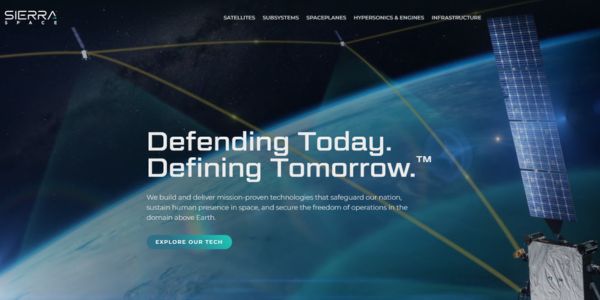
Sierra Space’s $550 million Series C round, valuing the company at $8 billion, signals a decisive shift toward defense-tech space. This feature unpacks the hardware, strategy, and risks shaping the next decade of orbital infrastructure.
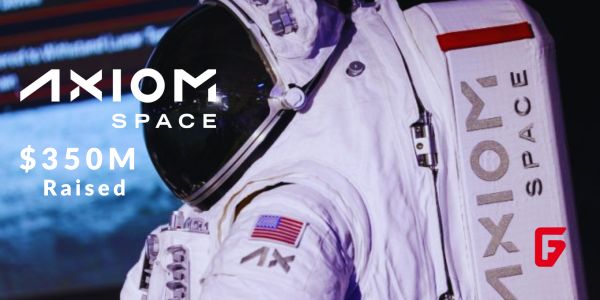
Axiom Space has locked in a fresh $350M raise to push its commercial space station and NASA lunar spacesuits toward launch, signaling growing investor faith in private orbital infrastructure.
Morpheus Space secures $15M funding for GO-2 electric propulsion mass production. Learn how this boosts satellite mobility with efficient thrusters.

Stoke Space extended its Series D funding to $860 million, fueling Nova’s full-reuse rocket production at Cape Canaveral. Backed by founders from Blue Origin, this pushes total capital to $1.34B.

Tomorrow.io has closed a $175 million equity round to deploy DeepSky, its AI-native weather satellite constellation designed to make global atmospheric data far more precise, frequent, and useful for businesses, governments, and communities facing extreme weather.

Stay ahead of AI and space tech wars: OpenAI vs Google AI, SpaceX and Blue Origin’s race for orbital data centers, Meta’s AI strategy shift, and key robotics breakthroughs reshaping industry.

Bridgit Mendler’s Northwood Space is pioneering mass-produced ground stations, enabling scalable, high-speed connectivity for the new era of satellite networks and megaconstellations.
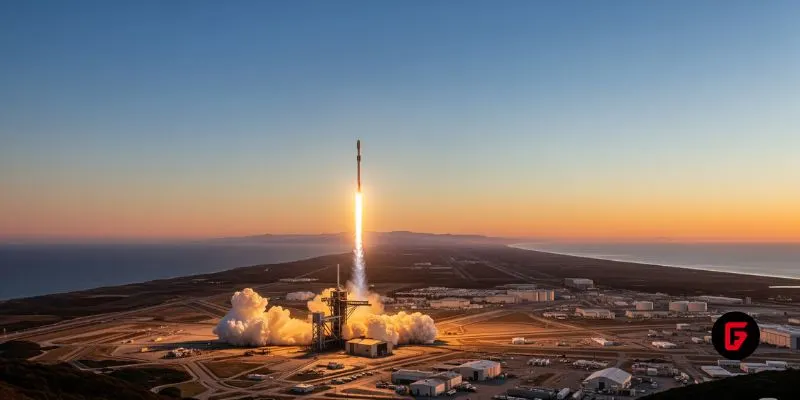
SpaceX aims to nearly double launches from Vandenberg in 2025, facing support from federal agencies but strong objections from the state and local communities.
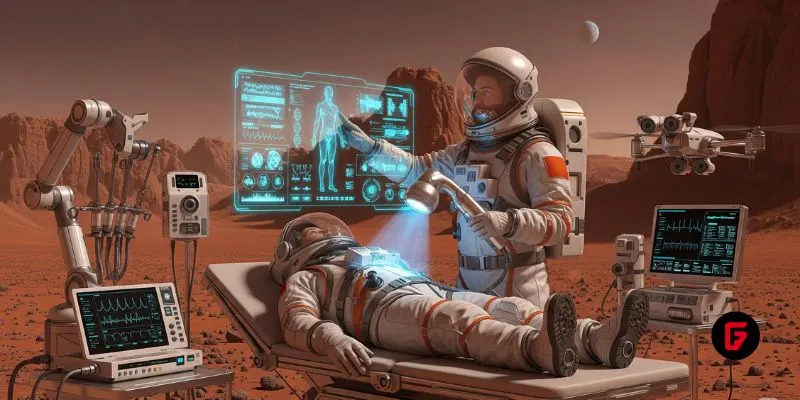
NASA and Google’s AI-powered Crew Medical Officer Digital Assistant enables autonomous diagnoses for astronauts on Mars missions, redefining remote healthcare for space and Earth.
futureTEKnow is focused on identifying and promoting creators, disruptors and innovators, and serving as a vital resource for those interested in the latest advancements in technology.
© 2026 All Rights Reserved.