






























Broomfield, Colorado, USA
2010
Aerospace, In-Space Servicing, Satellite Docking Systems, Space Robotics, Satellite Capture Technologies, Orbital Logistics, Spacecraft Components, On-Orbit Assembly, Active Debris Removal
Altius Space Machines is a space robotics and engineering company developing technologies for satellite servicing, orbital rendezvous, spacecraft capture, and in-space assembly. Its systems include satellite grappling fixtures, magnetic attachment mechanisms, robotic interfaces, and spacecraft components designed to support operations in orbit. The company developed DogTag, a lightweight fixture that allows servicing spacecraft to capture satellites using different robotic methods. Altius also researches modular spacecraft connections and electropermanent magnetic technologies for attaching equipment in space. It operates within Voyager Technologies’ aerospace and space infrastructure business.
Altius Space Machines designs, develops, and tests robotic mechanisms that allow spacecraft to interact with satellites and other objects in orbit. Its engineering activities focus on rendezvous and capture systems, spacecraft attachment hardware, and technologies supporting satellite maintenance and end-of-life operations.
The company supplies DogTag grappling fixtures that can be installed on satellites before launch. These fixtures provide a defined attachment point for future servicing vehicles, making it easier to capture a spacecraft for repositioning, maintenance, or controlled removal from orbit.
Altius also develops magnetic interfaces and robotic mechanisms for connecting spacecraft modules, transferring equipment, and supporting assembly operations. Its research includes electropermanent magnets, robotic control software, docking hardware, and mechanisms for spacecraft operating in microgravity.
Its technologies have been developed through commercial satellite partnerships and research programs involving NASA and U.S. government agencies.
Altius Space Machines develops robotic and mechanical technologies for spacecraft capture, satellite servicing, and orbital infrastructure. Its engineering focuses on creating interfaces that allow servicing vehicles to attach to satellites without requiring every spacecraft to use the same robotic capture system.
Its DogTag universal grappling fixture is a lightweight spacecraft attachment point designed to support several capture methods. These include magnetic grappling, mechanical gripping, electrostatic adhesion, gecko-inspired adhesives, and other capture mechanisms. The fixture incorporates a visual reference pattern that can help robotic systems identify and approach the attachment point during rendezvous operations.
Altius also develops electropermanent magnet technology, which combines permanent magnetic materials with electrical switching. These mechanisms can establish or release magnetic connections without requiring continuous electrical power to maintain attachment. The technology is relevant to robotic gripping, modular spacecraft connections, and equipment handling in microgravity.
Its MagTag research explores compact interfaces for connecting spacecraft modules. The proposed technology combines switchable magnetic attachment with electrical or fluid connections, allowing spacecraft components to be attached, removed, or replaced through robotic operations.
Other research areas include robotic capture of tumbling spacecraft, spacecraft docking mechanisms, deployable structures, and autonomous or remotely operated robotic systems.
These technologies contribute to on-orbit servicing and assembly by providing physical connection methods between spacecraft, robotic vehicles, and replaceable components. Some systems, including DogTag, have flown in orbit, while other concepts remain at research or prototype stages.
Altius Space Machines addresses a technical challenge in satellite servicing: how a robotic vehicle can safely capture a spacecraft that was not originally designed for maintenance. Its standardized grappling interfaces provide attachment points that can be incorporated into satellites during manufacturing.
This approach can reduce the complexity of future servicing missions by giving robotic systems a known location for capturing or manipulating spacecraft.
The company’s technologies are also relevant to orbital debris mitigation. Satellites equipped with suitable capture interfaces may be easier to retrieve, reposition, or deorbit after their operational missions end.
Altius’ work in magnetic connections and modular spacecraft mechanisms also supports research into in-space assembly, equipment replacement, and satellite upgrades. These capabilities are part of the broader development of spacecraft designed for interaction and maintenance rather than one-time deployment.
DogTag is a spacecraft attachment fixture designed to provide a standardized capture point for robotic servicing vehicles. It supports magnetic, mechanical, and adhesive grappling methods and incorporates a visual reference pattern to assist robotic alignment. DogTags have been deployed aboard OneWeb satellites to facilitate potential future servicing and end-of-life removal operations.
MagTag is a modular spacecraft connection technology developed through research into electropermanent magnetic attachment. Its design uses switchable magnets to connect spacecraft modules without continuous holding power. The research also explores electrical and fluid interfaces that could support equipment replacement, spacecraft upgrades, and modular assembly.
Altius develops robotic mechanisms for approaching, attaching to, and manipulating spacecraft. Its research includes boom-assisted capture systems, magnetic gripping mechanisms, and docking interfaces for spacecraft with different configurations. These technologies support satellite rendezvous, capture, and orbital servicing research.
Bulldog was a proposed small spacecraft servicing vehicle combining electric propulsion with robotic capture technology. The concept was intended to support satellite repositioning, inspection, maintenance, and disposal operations. Bulldog should be considered a historical development concept, not a confirmed operational product.
Altius Space Machines technologies are applicable to satellite servicing, orbital debris removal, spacecraft maintenance, and in-space assembly. Its DogTag fixtures provide robotic capture points that can be installed on satellites before launch, supporting future retrieval or servicing operations.
Magnetic attachment and modular interface technologies could enable robotic replacement of spacecraft components, attachment of new equipment, and connections between spacecraft modules.
The company’s robotic capture research also supports spacecraft repositioning and end-of-life management, where servicing vehicles may need to approach and secure satellites before moving or deorbiting them.
Additional applications include robotic handling of equipment in space habitats, spacecraft docking research, and the assembly of larger orbital structures.
DogTag provides a standardized attachment point that allows robotic servicing vehicles to capture a satellite. It supports several grappling methods, including magnetic, mechanical, and adhesive capture. Installing a DogTag before launch can make a satellite easier to retrieve, reposition, or remove from orbit during a future servicing mission.
Yes. Altius’ DogTag grappling fixtures were first launched aboard OneWeb satellites in January 2021. By February 2022, more than 300 DogTags had been launched. Their deployment demonstrated the integration of standardized capture interfaces into operational communications satellites, although it does not establish that those satellites have subsequently been serviced using the fixtures.
Electropermanent magnets use electrical pulses to switch a magnetic connection between attachment and release states. Unlike conventional electromagnets, they do not require continuous electrical power to maintain their holding force. This makes them useful for spacecraft mechanisms that need to grip, secure, or release equipment while limiting power consumption.
Altius develops grappling interfaces and robotic capture technologies that could support active debris removal missions. A servicing spacecraft may use a compatible interface to attach to a non-operational satellite and move it toward a disposal orbit or controlled deorbiting trajectory. The presence of a DogTag facilitates capture but does not independently remove debris.
Yes. Altius Space Machines became part of Voyager’s aerospace business following its acquisition in January 2020, according to Voyager Technologies’ company history. Its expertise in spacecraft mechanisms, satellite servicing, robotic capture, and in-space assembly contributes to Voyager’s broader space engineering capabilities.
Have an update, correction, or additional information about this company? Help us keep the futureTEKnow company database up to date by submitting the latest company information.

Turion Space has raised more than $75 million in Series B funding to scale its Starfire platform and satellite fleet, betting that space domain awareness is the next critical defense infrastructure layer. The piece unpacks Turion’s business model, contracts, and risks for operators and investors watching the new space intelligence stack.
Pulsar Fusion’s Sunbird fusion rocket has achieved first plasma, validating its exhaust architecture and edging a reusable “space tug” concept toward sub‑six‑month Mars transfers. Drawing on multiple reports, this piece breaks down how the Dual Direct Fusion Drive works, what the 2027 in‑orbit demo must prove, and which technical and regulatory hurdles still stand between Sunbird and operational deep‑space logistics.
Aetherflux is betting that orbital data centers can power the next wave of AI, shifting from laser power beaming to space-based compute as it targets a $2 billion valuation. For founders and investors, the company’s 2027 satellite plans highlight how quickly space infrastructure is converging with AI demand and reshaping the deep-tech funding landscape.
Sierra Space’s $550 million Series C round, valuing the company at $8 billion, signals a decisive shift toward defense-tech space. This feature unpacks the hardware, strategy, and risks shaping the next decade of orbital infrastructure.
Axiom Space has locked in a fresh $350M raise to push its commercial space station and NASA lunar spacesuits toward launch, signaling growing investor faith in private orbital infrastructure.
Morpheus Space secures $15M funding for GO-2 electric propulsion mass production. Learn how this boosts satellite mobility with efficient thrusters.

Stoke Space extended its Series D funding to $860 million, fueling Nova’s full-reuse rocket production at Cape Canaveral. Backed by founders from Blue Origin, this pushes total capital to $1.34B.

Tomorrow.io has closed a $175 million equity round to deploy DeepSky, its AI-native weather satellite constellation designed to make global atmospheric data far more precise, frequent, and useful for businesses, governments, and communities facing extreme weather.

Stay ahead of AI and space tech wars: OpenAI vs Google AI, SpaceX and Blue Origin’s race for orbital data centers, Meta’s AI strategy shift, and key robotics breakthroughs reshaping industry.

Bridgit Mendler’s Northwood Space is pioneering mass-produced ground stations, enabling scalable, high-speed connectivity for the new era of satellite networks and megaconstellations.
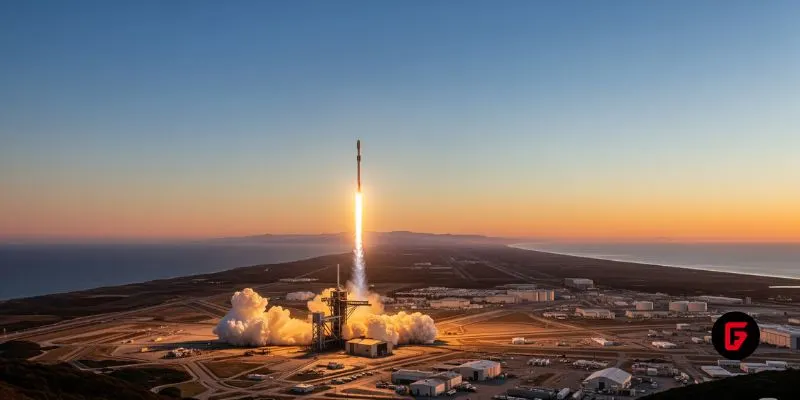
SpaceX aims to nearly double launches from Vandenberg in 2025, facing support from federal agencies but strong objections from the state and local communities.
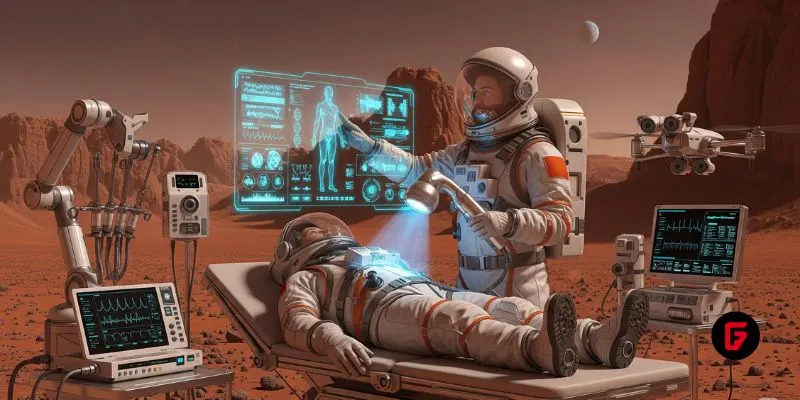
NASA and Google’s AI-powered Crew Medical Officer Digital Assistant enables autonomous diagnoses for astronauts on Mars missions, redefining remote healthcare for space and Earth.
futureTEKnow is focused on identifying and promoting creators, disruptors and innovators, and serving as a vital resource for those interested in the latest advancements in technology.
© 2026 All Rights Reserved.