


























Orbit Fab is a space technology company developing infrastructure for refueling satellites and other spacecraft while they remain in orbit. Its technology combines standardized spacecraft refueling interfaces, docking equipment, fuel delivery vehicles, and orbital propellant storage systems. The company’s RAFTI interface allows compatible spacecraft to receive additional propellant without returning to Earth. Orbit Fab is also developing the RAVEN refueling shuttle and NEST fuel depot as part of a planned orbital fuel distribution network. Its systems are designed to support satellite life extension, spacecraft maneuvering, and orbital logistics for commercial and government missions.
Orbit Fab develops hardware and services that allow satellites to receive additional propellant after launch. Its systems address a limitation of conventional spacecraft operations: satellites carry a finite amount of fuel that must support their maneuvers throughout their missions.
The company manufactures RAFTI refueling interfaces that can be installed on satellites before launch. These interfaces provide a standardized connection for compatible servicing spacecraft to dock and transfer propellant.
Orbit Fab also develops fuel delivery spacecraft and orbital storage infrastructure. Its RAVEN shuttle is designed to transport propellant to client satellites, while the NEST depot concept provides storage locations where refueling vehicles can replenish their supplies.
Through its UMPIRE software, Orbit Fab analyzes spacecraft fuel requirements, orbital trajectories, and servicing opportunities to plan refueling missions.
The company works with commercial satellite operators, spacecraft manufacturers, and government organizations on refueling demonstrations and future services. Its technology supports spacecraft operating in low Earth orbit, geostationary orbit, and potentially cislunar space.
Orbit Fab develops technologies for transferring propellant between spacecraft in orbit. Its architecture combines standardized fluid connections, docking mechanisms, fuel storage systems, servicing spacecraft, and software for planning orbital refueling operations.
Its primary technology is RAFTI, the Rapidly Attachable Fluid Transfer Interface. RAFTI replaces a conventional spacecraft fill-and-drain valve with a connection designed for both ground fueling and orbital refueling. The interface includes fluid transfer channels, sealing mechanisms, and features that support cooperative docking with a servicing vehicle.
RAFTI works with Orbit Fab’s GRIP docking and refueling hardware, which connects a servicing spacecraft to a compatible client satellite. The system is designed to support rendezvous, proximity operations, docking, and controlled propellant transfer. Visual alignment markers help servicing spacecraft determine the position and orientation of the refueling connection.
Orbit Fab has also developed RAFTI High Pressure, a variant qualified in October 2026 for propellants including xenon, krypton, argon, nitrous oxide, and ethane. This extends the interface’s compatibility to spacecraft using certain electric propulsion and chemical propulsion systems.
The company’s proposed orbital fuel distribution network includes RAVEN refueling shuttles and NEST fuel depots. RAVEN is designed to carry approximately 150 to 200 kilograms of propellant and deliver it to compatible spacecraft. NEST is designed to store fuel in orbit and support repeated servicing missions.
Orbit Fab’s UMPIRE mission planning software models spacecraft trajectories, fuel consumption, servicing opportunities, and the placement of refueling infrastructure. These calculations help determine when refueling could extend a mission or support additional orbital maneuvers.
The company has demonstrated elements of its technology in space, including the Tanker-001 Tenzing fuel depot launched in 2021. However, routine commercial fuel delivery using its full shuttle-and-depot architecture remains under development, with further demonstrations scheduled for 2027 and beyond.
Orbit Fab addresses a limitation of satellite operations: spacecraft can remain functional after their onboard propellant reserves become insufficient for continued maneuvering. Refueling could allow operators to extend missions without replacing otherwise operational satellites.
Its standardized RAFTI interface creates a common connection that spacecraft manufacturers can integrate before launch. This could reduce the need to design a different refueling mechanism for each satellite or servicing mission.
The company’s planned orbital fuel delivery network could also support more frequent spacecraft maneuvers, including orbital repositioning, collision avoidance, and changes in mission requirements.
For commercial satellite operators, in-space refueling could reduce the need to replace spacecraft solely because they have exhausted their propellant. For defense missions, additional fuel could provide greater flexibility to reposition satellites in response to changing operational conditions.
Orbit Fab’s contribution depends on demonstrating reliable fuel transfer and developing the infrastructure needed to deliver propellant to customers on a recurring basis.
RAFTI, or Rapidly Attachable Fluid Transfer Interface, is Orbit Fab’s standardized spacecraft refueling connection. It replaces a conventional fill-and-drain valve and enables compatible servicing spacecraft to dock and transfer propellant. The interface incorporates fluid transfer channels, sealing mechanisms, and alignment features for cooperative docking. RAFTI has achieved flight qualification and Technology Readiness Level 8 and is commercially available for spacecraft integration.
RAFTI High Pressure is a variant of Orbit Fab’s refueling interface designed for higher-pressure spacecraft propulsion systems. In October 2026, it completed qualification testing for propellants including xenon, krypton, argon, nitrous oxide, and ethane. The interface supports electric propulsion and selected chemical propulsion systems. An orbital demonstration using the Shilling payload is planned to validate its performance in space.
GRIP is Orbit Fab’s servicing-side hardware for connecting to RAFTI-equipped spacecraft. It supports cooperative docking and propellant transfer between a servicing vehicle and a client satellite. The system is designed for rendezvous, proximity operations, docking, and refueling, providing the mechanical and fluid connection required for transferring fuel in orbit.
RAVEN is a refueling shuttle introduced in April 2026 as part of Orbit Fab’s planned orbital fuel distribution network. It is designed to transport approximately 150 to 200 kilograms of propellant between orbital storage facilities and client spacecraft. RAVEN would use cooperative docking and fuel transfer technology to service RAFTI-equipped satellites. The shuttle remains under development.
NEST is an orbital propellant storage concept designed to work with RAVEN refueling shuttles. The depot would store fuel at selected orbital locations, allowing servicing spacecraft to replenish their supplies between customer missions. Its planned architecture supports distributed fuel storage and repeated satellite servicing, reducing the need for each fuel delivery to originate directly from Earth. NEST remains under development.
UMPIRE is Orbit Fab’s mission analysis and refueling logistics software. It models spacecraft fuel requirements, orbital trajectories, servicing opportunities, and the positioning of fuel delivery infrastructure. The software helps operators evaluate satellite life extension, orbital maneuvering, and refueling schedules based on their mission requirements.
Tanker-001 Tenzing is Orbit Fab’s orbital fuel depot demonstration spacecraft, launched in June 2021 aboard SpaceX’s Transporter-2 mission. It carried high-test peroxide propellant and incorporated a RAFTI service valve. The mission demonstrated the deployment of orbital propellant storage hardware and provided an early platform for developing future refueling infrastructure. It did not establish a routine commercial satellite refueling service.
Kamino is a planned geostationary-orbit-adjacent refueling demonstration developed for the Defense Innovation Unit and U.S. Space Force. The mission is designed to transfer approximately 50 kilograms of hydrazine to compatible spacecraft using RAFTI and GRIP hardware. Its objective is to demonstrate rendezvous, docking, and orbital propellant transfer. As of October 2026, the mission is in testing, with launch planned for 2027.
ASTRAL is a planned orbital refueling demonstration supported by the European Space Agency and UK Space Agency. The project focuses on validating RAFTI High Pressure and associated docking technology in a representative orbital environment. It is intended to demonstrate propellant transfer for electric propulsion spacecraft, with an orbital experiment targeted for 2028.
Orbit Fab’s technologies are designed for satellite life extension, spacecraft servicing, orbital logistics, and propulsion management. Its refueling interfaces could allow operators to replenish spacecraft propellant after launch, supporting longer satellite missions and additional orbital maneuvers.
For communications satellites in geostationary orbit, refueling could provide additional propellant for station-keeping, orbital repositioning, and continued operations. Its technologies are also applicable to spacecraft using electric propulsion systems.
Government and defense organizations could use in-space refueling for responsive satellite operations, allowing spacecraft to maneuver more frequently or adjust their orbital positions as mission requirements change.
Orbit Fab’s proposed RAVEN and NEST infrastructure also supports the development of orbital fuel distribution networks, with potential future applications in low Earth orbit, geostationary orbit, and cislunar space.
Orbit Fab develops technologies for refueling satellites and other spacecraft in orbit. Its products include the RAFTI refueling interface, GRIP docking hardware, UMPIRE mission planning software, and planned fuel delivery vehicles and orbital storage depots. These systems are designed to extend spacecraft operating lifetimes and provide additional propellant for orbital maneuvers.
RAFTI replaces a spacecraft’s conventional fill-and-drain valve with a connection designed for orbital refueling. A compatible servicing vehicle approaches the satellite, aligns with the interface, and uses docking hardware to establish a mechanical and fluid connection. Propellant can then be transferred under controlled conditions. The interface also supports fueling before launch.
RAVEN is a planned refueling shuttle designed to transport approximately 150 to 200 kilograms of propellant to compatible satellites. NEST is a planned orbital fuel depot intended to store propellant for repeated servicing missions. Together, the systems form part of Orbit Fab’s proposed fuel distribution network, announced in April 2026.
Orbit Fab has demonstrated elements of its refueling technology in space, including the Tanker-001 Tenzing orbital fuel depot launched in 2021. However, as of October 2026, its published mission schedule still identifies the first full docking and propellant-transfer demonstrations as upcoming missions. Routine commercial satellite refueling has not yet been established.
Orbit Fab’s RAFTI technology supports multiple storable spacecraft propellants, depending on the interface configuration. Its RAFTI High Pressure variant completed qualification in October 2026 for xenon, krypton, argon, nitrous oxide, and ethane. The company’s planned refueling demonstrations also include hydrazine delivery for compatible spacecraft.
Have an update, correction, or additional information about this company? Help us keep the futureTEKnow company database up to date by submitting the latest company information.

Turion Space has raised more than $75 million in Series B funding to scale its Starfire platform and satellite fleet, betting that space domain awareness is the next critical defense infrastructure layer. The piece unpacks Turion’s business model, contracts, and risks for operators and investors watching the new space intelligence stack.
Pulsar Fusion’s Sunbird fusion rocket has achieved first plasma, validating its exhaust architecture and edging a reusable “space tug” concept toward sub‑six‑month Mars transfers. Drawing on multiple reports, this piece breaks down how the Dual Direct Fusion Drive works, what the 2027 in‑orbit demo must prove, and which technical and regulatory hurdles still stand between Sunbird and operational deep‑space logistics.

Aetherflux is betting that orbital data centers can power the next wave of AI, shifting from laser power beaming to space-based compute as it targets a $2 billion valuation. For founders and investors, the company’s 2027 satellite plans highlight how quickly space infrastructure is converging with AI demand and reshaping the deep-tech funding landscape.
Sierra Space’s $550 million Series C round, valuing the company at $8 billion, signals a decisive shift toward defense-tech space. This feature unpacks the hardware, strategy, and risks shaping the next decade of orbital infrastructure.

Axiom Space has locked in a fresh $350M raise to push its commercial space station and NASA lunar spacesuits toward launch, signaling growing investor faith in private orbital infrastructure.
Morpheus Space secures $15M funding for GO-2 electric propulsion mass production. Learn how this boosts satellite mobility with efficient thrusters.

Stoke Space extended its Series D funding to $860 million, fueling Nova’s full-reuse rocket production at Cape Canaveral. Backed by founders from Blue Origin, this pushes total capital to $1.34B.

Tomorrow.io has closed a $175 million equity round to deploy DeepSky, its AI-native weather satellite constellation designed to make global atmospheric data far more precise, frequent, and useful for businesses, governments, and communities facing extreme weather.

Stay ahead of AI and space tech wars: OpenAI vs Google AI, SpaceX and Blue Origin’s race for orbital data centers, Meta’s AI strategy shift, and key robotics breakthroughs reshaping industry.

Bridgit Mendler’s Northwood Space is pioneering mass-produced ground stations, enabling scalable, high-speed connectivity for the new era of satellite networks and megaconstellations.
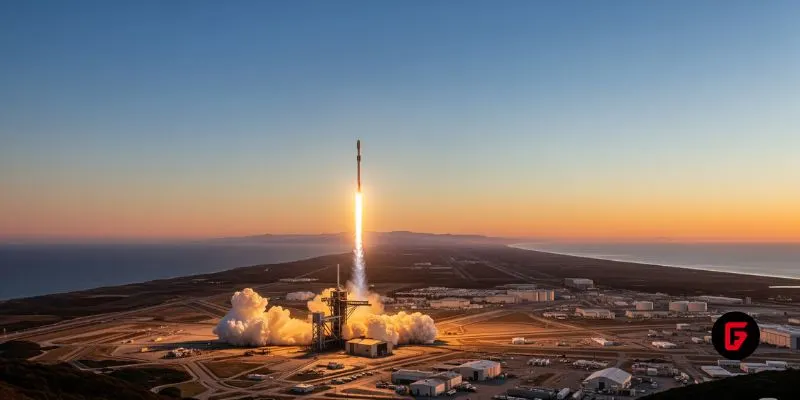
SpaceX aims to nearly double launches from Vandenberg in 2025, facing support from federal agencies but strong objections from the state and local communities.

NASA and Google’s AI-powered Crew Medical Officer Digital Assistant enables autonomous diagnoses for astronauts on Mars missions, redefining remote healthcare for space and Earth.
futureTEKnow is focused on identifying and promoting creators, disruptors and innovators, and serving as a vital resource for those interested in the latest advancements in technology.
© 2026 All Rights Reserved.