






























Évry-Courcouronnes, France
1980
Aerospace, Space Transportation, Satellite Launch Services, Space Exploration, Satellite Communications, Earth Observation, Defense, Space Infrastructure
Arianespace is a European space transportation company providing orbital launch services for commercial, institutional, and government customers. Its operations involve launching satellites and other spacecraft into Earth orbit using the Ariane launch vehicle family from the Guiana Space Centre.
The company has supported missions involving telecommunications satellites, navigation systems, Earth observation spacecraft, and scientific observatories. Its current launch services are centered on Ariane 6, Europe’s modular heavy-lift launch vehicle developed for a range of orbital missions.
Arianespace provides satellite launch and mission delivery services, coordinating the activities required to transport spacecraft from launch preparation through orbital deployment. Its responsibilities include commercial launch arrangements, payload accommodation, mission planning, launch campaign management, and coordination with rocket manufacturers and spaceport operators.
The company’s Ariane 6 services support missions to geostationary transfer orbit, low Earth orbit, and other trajectories according to spacecraft requirements. Its modular launch configurations allow customers to select different payload capacities and mission profiles.
Arianespace works with ArianeGroup, the Ariane 6 prime contractor, and the European spaceport infrastructure at the Guiana Space Centre. Launch campaigns involve spacecraft integration, rocket preparation, ground system testing, fueling operations, and deployment of payloads into their planned trajectories.
The company also supports multi-satellite missions, including deployment of satellite constellations for communications and other applications. Its services form part of Europe’s independent access-to-space infrastructure.
Arianespace’s launch services use the Ariane 6 modular rocket architecture, combining cryogenic propulsion, solid rocket boosters, flight guidance systems, and payload deployment technologies. Ariane 6 is manufactured by ArianeGroup, while Arianespace manages its commercial launch operations and mission delivery services.
The rocket’s core stage uses the Vulcain 2.1 engine, which burns liquid hydrogen and liquid oxygen. Two or four solid rocket boosters provide additional thrust during the initial phase of flight, depending on the selected launch configuration. The Ariane 64 configuration accommodates heavier payloads and large satellite deployment missions.
Ariane 6 incorporates a reignitable upper-stage propulsion system powered by the Vinci engine. Multiple engine burns allow spacecraft to be delivered to different orbital trajectories during a single mission. This is particularly relevant to complex satellite deployment sequences and missions requiring precise orbital insertion.
The launcher integrates guidance, navigation, and control systems that manage vehicle orientation, propulsion events, stage separation, and payload release. Its payload accommodation systems include protective fairings, spacecraft adapters, and separation mechanisms configured according to mission requirements.
Arianespace also coordinates the technical interfaces between satellites, launch vehicles, and ground infrastructure. This includes spacecraft compatibility analysis, launch preparation, mission trajectory planning, and coordination of ground operations at the Guiana Space Centre.
Reliable access to orbit is an essential part of space infrastructure. Satellite operators and government agencies depend on launch providers to deploy communications networks, navigation systems, Earth observation spacecraft, and scientific missions.
Arianespace contributes to this infrastructure through European orbital launch services, providing transportation capabilities for commercial and institutional customers. Its Ariane 6 operations support Europe’s ability to launch strategic spacecraft without relying exclusively on launch providers outside the region.
The increasing demand for satellite constellations also requires launch vehicles capable of carrying multiple spacecraft during a single mission. Ariane 64 addresses this market through high-capacity satellite deployment, including its missions supporting Amazon Leo’s broadband constellation.
Arianespace’s transition from Ariane 5 to Ariane 6 illustrates how established launch providers are adapting to changing satellite markets, production requirements, and commercial competition. Its future role will depend on launch reliability, manufacturing capacity, flight frequency, and the ability to serve different orbital mission requirements.
Ariane 6 is a modular, expendable orbital launch vehicle developed by ArianeGroup and operated commercially by Arianespace. It supports commercial and institutional satellite missions, including deployments into low Earth orbit, geostationary transfer orbit, and other trajectories. The launcher uses liquid hydrogen and liquid oxygen propulsion, supplemented by solid rocket boosters.
Ariane 62 is the two-booster configuration of Ariane 6. It is designed for missions with lower payload mass requirements than the four-booster variant. Its applications include navigation satellites, Earth observation spacecraft, and government missions requiring dedicated orbital transportation.
Ariane 64 is the four-booster configuration of Ariane 6, providing increased launch performance for heavier spacecraft and multi-satellite missions. Arianespace uses this configuration for large-scale satellite constellation deployments, including Amazon Leo. Enhanced P160C solid rocket boosters were introduced on the VA269 mission in June 2026.
Ariane 6 provides payload accommodation and deployment configurations for different spacecraft sizes and mission requirements. Its fairing protects satellites during ascent, while payload adapters and separation systems support the controlled release of spacecraft after reaching their designated trajectories.
The Ariane 6 upper stage uses the reignitable Vinci rocket engine, allowing multiple propulsion burns during a mission. This capability supports deployment of spacecraft into different orbits and controlled disposal of the upper stage after payload separation, depending on mission requirements.
Arianespace conducts launch campaigns from the Guiana Space Centre in French Guiana. Its operations involve spacecraft preparation, payload integration, launch vehicle coordination, mission rehearsals, countdown management, and flight monitoring in cooperation with European space industry partners.
Satellite Constellation Deployment: Launching multiple satellites for broadband communications and other large-scale orbital networks.
Telecommunications Satellites: Transporting communications spacecraft to transfer orbits for subsequent positioning in geostationary orbit.
Earth Observation: Launching satellites that monitor weather, environmental conditions, land surfaces, and climate-related measurements.
Satellite Navigation: Deploying navigation spacecraft supporting positioning and timing infrastructure, including European Galileo missions.
Government and Defense: Providing launch services for institutional spacecraft used in secure communications, reconnaissance, and other government missions.
Scientific Research: Transporting astronomical observatories, planetary exploration spacecraft, and scientific instruments into space.
Commercial Space Transportation: Supporting orbital deployment of spacecraft and emerging space transportation systems through dedicated launch agreements.
Arianespace provides commercial launch services, manages launch campaigns, and coordinates orbital delivery for customers. ArianeGroup develops and manufactures the Ariane 6 launch vehicle as its prime industrial contractor. Arianespace is also a subsidiary of ArianeGroup.
Ariane 62 uses two solid rocket boosters, while Ariane 64 uses four. The four-booster configuration provides greater launch performance and supports heavier spacecraft and larger satellite deployments. Both versions use the Ariane 6 core stage and reignitable upper-stage propulsion system.
No. ArianeGroup is responsible for Ariane 6 development and manufacturing, working with European industrial partners. Arianespace commercializes and operates the launcher, providing launch services and coordinating mission execution for its customers.
Arianespace launches Ariane 6 from the Guiana Space Centre in French Guiana. The spaceport’s location near the equator provides favorable conditions for missions requiring eastward launches, including spacecraft traveling toward geostationary transfer orbit.
Ariane 6 has launched spacecraft for European government and scientific programs, including Galileo navigation satellites, Sentinel Earth observation missions, and meteorological satellites. In 2026, it also deployed 100 Amazon Leo broadband satellites across three missions completed by June.
Have an update, correction, or additional information about this company? Help us keep the futureTEKnow company database up to date by submitting the latest company information.

Turion Space has raised more than $75 million in Series B funding to scale its Starfire platform and satellite fleet, betting that space domain awareness is the next critical defense infrastructure layer. The piece unpacks Turion’s business model, contracts, and risks for operators and investors watching the new space intelligence stack.
Pulsar Fusion’s Sunbird fusion rocket has achieved first plasma, validating its exhaust architecture and edging a reusable “space tug” concept toward sub‑six‑month Mars transfers. Drawing on multiple reports, this piece breaks down how the Dual Direct Fusion Drive works, what the 2027 in‑orbit demo must prove, and which technical and regulatory hurdles still stand between Sunbird and operational deep‑space logistics.
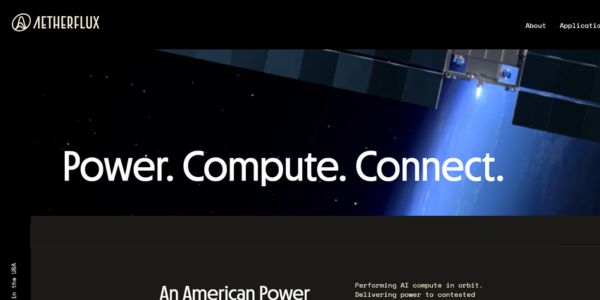
Aetherflux is betting that orbital data centers can power the next wave of AI, shifting from laser power beaming to space-based compute as it targets a $2 billion valuation. For founders and investors, the company’s 2027 satellite plans highlight how quickly space infrastructure is converging with AI demand and reshaping the deep-tech funding landscape.
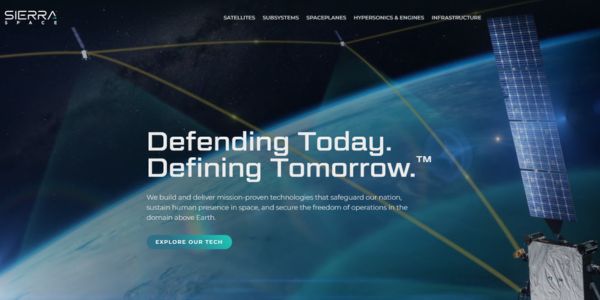
Sierra Space’s $550 million Series C round, valuing the company at $8 billion, signals a decisive shift toward defense-tech space. This feature unpacks the hardware, strategy, and risks shaping the next decade of orbital infrastructure.
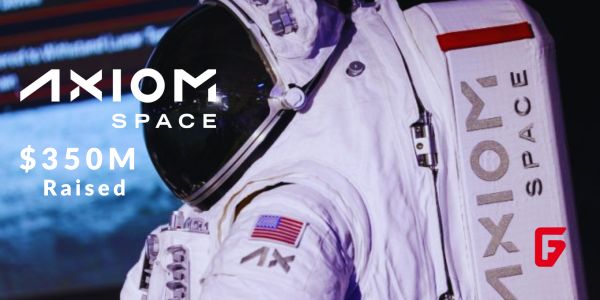
Axiom Space has locked in a fresh $350M raise to push its commercial space station and NASA lunar spacesuits toward launch, signaling growing investor faith in private orbital infrastructure.
Morpheus Space secures $15M funding for GO-2 electric propulsion mass production. Learn how this boosts satellite mobility with efficient thrusters.

Stoke Space extended its Series D funding to $860 million, fueling Nova’s full-reuse rocket production at Cape Canaveral. Backed by founders from Blue Origin, this pushes total capital to $1.34B.

Tomorrow.io has closed a $175 million equity round to deploy DeepSky, its AI-native weather satellite constellation designed to make global atmospheric data far more precise, frequent, and useful for businesses, governments, and communities facing extreme weather.

Stay ahead of AI and space tech wars: OpenAI vs Google AI, SpaceX and Blue Origin’s race for orbital data centers, Meta’s AI strategy shift, and key robotics breakthroughs reshaping industry.

Bridgit Mendler’s Northwood Space is pioneering mass-produced ground stations, enabling scalable, high-speed connectivity for the new era of satellite networks and megaconstellations.
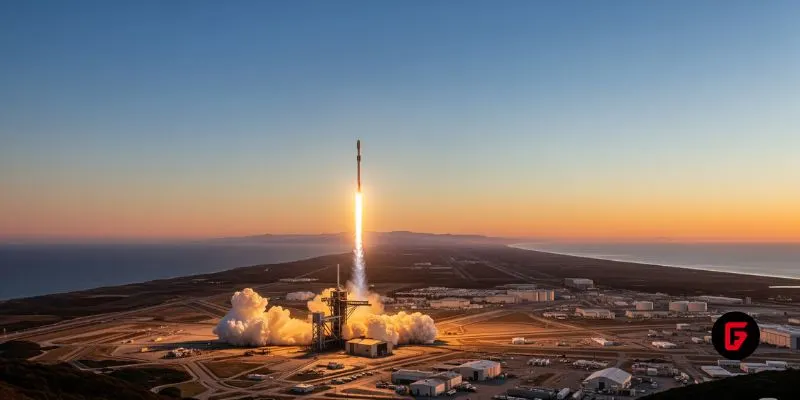
SpaceX aims to nearly double launches from Vandenberg in 2025, facing support from federal agencies but strong objections from the state and local communities.

NASA and Google’s AI-powered Crew Medical Officer Digital Assistant enables autonomous diagnoses for astronauts on Mars missions, redefining remote healthcare for space and Earth.
futureTEKnow is focused on identifying and promoting creators, disruptors and innovators, and serving as a vital resource for those interested in the latest advancements in technology.
© 2026 All Rights Reserved.