

































San Francisco, California, USA
2023
Aerospace, Satellite Infrastructure, Earth Observation, Defense, Intelligence, Remote Sensing, Telecommunications, Government, Space Services
Basalt is an American space technology company developing autonomous satellite constellations and software-defined spacecraft for commercial and government organizations. Founded in 2023 and headquartered in San Francisco, the company combines satellite hardware, artificial intelligence, and mission management software to simplify the deployment and operation of orbital systems. Its Constellations as a Service (CaaS) model enables customers to access dedicated satellite capabilities without developing the spacecraft, ground infrastructure, and operational software independently. Basalt’s technology supports Earth observation, communications, and defense-related space missions.
Basalt designs, builds, and operates satellite systems that organizations can use for dedicated space missions. Its Constellations as a Service offering combines spacecraft platforms, payload integration, autonomous operations, and access to satellite-generated data.
Customers can select satellite configurations for optical imaging, radio-frequency monitoring, synthetic aperture radar, or specialized payloads. Basalt provides spacecraft options ranging from compact 16U satellites to larger ESPA-class platforms.
The company also develops AI-powered satellite control software that reduces the manual work involved in managing orbital assets. Its systems are designed to coordinate multiple spacecraft, execute mission instructions, and deliver imagery or other information to users through software interfaces.
Basalt serves commercial enterprises and government organizations seeking dedicated satellite capabilities without maintaining extensive internal aerospace engineering and mission operations teams.
Basalt’s technology combines autonomous spacecraft operations, satellite operating systems, and modular satellite hardware. Its architecture is designed to make spacecraft more software-defined, allowing mission capabilities and operational instructions to be managed through reusable software rather than entirely customized systems.
The company’s Dispatch operating system provides a common software environment for coordinating different types of satellites. It supports mission tasking, communications management, and orbital monitoring while allowing additional software modules to be integrated into existing operations.
Basalt also develops Diamond AI, an artificial intelligence system associated with its autonomous constellation capabilities. The technology is intended to simplify satellite control and coordinate orbital activities, including the execution of mission instructions across multiple spacecraft. The company has also described natural-language control of satellite swarms, enabling operators to issue commands without individually programming every spacecraft action.
Its hardware portfolio includes 16U satellite platforms and larger ESPA-class spacecraft capable of supporting optical imaging, multispectral sensors, radio-frequency payloads, and synthetic aperture radar.
These technologies support multi-satellite coordination and payload flexibility, allowing customers to configure orbital systems around specific data collection or operational requirements.
Basalt’s approach combines spacecraft manufacturing with software automation, creating satellite infrastructure that can be deployed and managed through a unified operational environment.
Operating satellite constellations traditionally requires specialized engineering teams, customized flight software, and ground infrastructure. As commercial and government organizations deploy more satellites, managing these systems becomes increasingly complex.
Basalt addresses this challenge through software-defined satellite infrastructure that combines autonomous operations with configurable spacecraft platforms.
Its Constellations as a Service model could allow organizations to deploy dedicated orbital capabilities without developing every component internally. This is particularly relevant for companies requiring specialized Earth observation data and government agencies seeking responsive space-based intelligence.
Basalt also reflects the growing role of artificial intelligence in satellite operations, where software can coordinate spacecraft activities and reduce dependence on continuous manual control.
The company’s development of autonomous satellite systems illustrates how space infrastructure is moving toward more flexible, software-managed architectures.
Lantern is Basalt’s compact 16U satellite platform, designed for missions requiring smaller spacecraft with configurable payload capabilities. The platform supports optical imaging, radio-frequency monitoring, and custom instruments.
Basalt offers Lantern Optical for RGB and multispectral imaging, Lantern SIGINT for radio-frequency payloads operating across VHF, UHF, L, S, C, and X bands, and Lantern Custom for customer-specific payload integration.
Gateway is Basalt’s larger ESPA-class spacecraft platform for missions requiring greater payload capacity. It supports optical Earth observation, synthetic aperture radar, and specialized instruments.
Gateway Optical accommodates RGB and multispectral imaging payloads, while Gateway SAR is designed for C-band radar applications. Gateway Custom supports mission-specific payload integration. The platform targets customers requiring more capable orbital systems than compact CubeSat configurations.
Dispatch is Basalt’s satellite operating system, developed to coordinate spacecraft with different hardware architectures through a common software environment.
The system supports mission tasking, satellite communications, and orbital monitoring. Its modular architecture allows operators to integrate additional software capabilities without rebuilding the entire mission control system for each spacecraft.
Dispatch is designed to reduce the complexity of managing heterogeneous satellite fleets and support more automated orbital operations.
Diamond AI is Basalt’s artificial intelligence system for autonomous satellite operations. It supports the company’s vision of self-flying satellite constellations, allowing spacecraft activities to be coordinated through software.
Basalt has described using natural-language instructions to control satellite swarms, reducing the need for operators to manage every spacecraft individually.
Diamond AI forms part of the company’s broader effort to automate mission execution and constellation management.
Basalt’s satellite technology supports several commercial and government applications.
In Earth observation and geospatial intelligence, its optical and multispectral satellite platforms can collect imagery for environmental monitoring, infrastructure assessment, and geographic analysis.
For defense and national security, Basalt provides satellite configurations designed for radio-frequency monitoring, signals intelligence, and radar-based observation. These capabilities can support situational awareness and intelligence collection.
Its synthetic aperture radar platforms are designed to capture Earth observation data using radar sensors, supporting applications where optical imaging may be limited by lighting or weather conditions.
Basalt’s autonomous operations software also supports satellite constellation management, allowing organizations to coordinate multiple spacecraft and manage mission activities through a unified interface.
Its customizable spacecraft platforms provide additional opportunities for specialized commercial payloads and government space missions.
Basalt’s Constellations as a Service model allows organizations to obtain dedicated satellite capabilities through a managed service. Customers can configure spacecraft and payloads for their missions while Basalt provides the underlying satellite infrastructure and operational software.
Lantern is a compact 16U satellite platform supporting optical, radio-frequency, and custom payloads. Gateway is a larger ESPA-class platform designed for more demanding missions, including optical imaging and C-band synthetic aperture radar applications.
Basalt uses its Diamond AI technology to support autonomous spacecraft operations and constellation coordination. The company has described systems that allow operators to issue natural-language instructions for satellite swarms, reducing the need to control each spacecraft individually.
Basalt offers Gateway SAR, a satellite configuration designed for synthetic aperture radar payloads. SAR technology can collect radar observations during nighttime and through many cloud conditions, unlike conventional optical imaging systems.
Yes. Basalt has reported orbital deployments, including its BSLT-3 spacecraft in 2026. The company has also described its Spirit-EEL satellite constellation as an AI-controlled orbital system. These activities support its development of autonomous satellite operations, although individual mission capabilities should not be assumed to be commercially available without confirmation.
Have an update, correction, or additional information about this company? Help us keep the futureTEKnow company database up to date by submitting the latest company information.

Turion Space has raised more than $75 million in Series B funding to scale its Starfire platform and satellite fleet, betting that space domain awareness is the next critical defense infrastructure layer. The piece unpacks Turion’s business model, contracts, and risks for operators and investors watching the new space intelligence stack.

Pulsar Fusion’s Sunbird fusion rocket has achieved first plasma, validating its exhaust architecture and edging a reusable “space tug” concept toward sub‑six‑month Mars transfers. Drawing on multiple reports, this piece breaks down how the Dual Direct Fusion Drive works, what the 2027 in‑orbit demo must prove, and which technical and regulatory hurdles still stand between Sunbird and operational deep‑space logistics.

Aetherflux is betting that orbital data centers can power the next wave of AI, shifting from laser power beaming to space-based compute as it targets a $2 billion valuation. For founders and investors, the company’s 2027 satellite plans highlight how quickly space infrastructure is converging with AI demand and reshaping the deep-tech funding landscape.
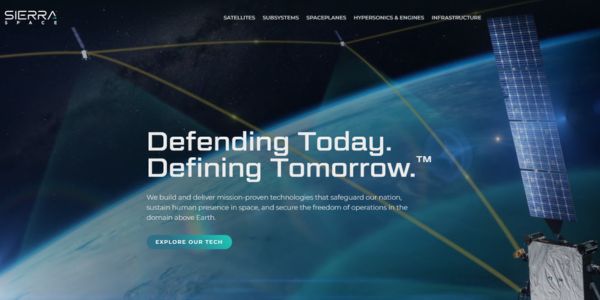
Sierra Space’s $550 million Series C round, valuing the company at $8 billion, signals a decisive shift toward defense-tech space. This feature unpacks the hardware, strategy, and risks shaping the next decade of orbital infrastructure.

Axiom Space has locked in a fresh $350M raise to push its commercial space station and NASA lunar spacesuits toward launch, signaling growing investor faith in private orbital infrastructure.
Morpheus Space secures $15M funding for GO-2 electric propulsion mass production. Learn how this boosts satellite mobility with efficient thrusters.

Stoke Space extended its Series D funding to $860 million, fueling Nova’s full-reuse rocket production at Cape Canaveral. Backed by founders from Blue Origin, this pushes total capital to $1.34B.

Tomorrow.io has closed a $175 million equity round to deploy DeepSky, its AI-native weather satellite constellation designed to make global atmospheric data far more precise, frequent, and useful for businesses, governments, and communities facing extreme weather.

Stay ahead of AI and space tech wars: OpenAI vs Google AI, SpaceX and Blue Origin’s race for orbital data centers, Meta’s AI strategy shift, and key robotics breakthroughs reshaping industry.

Bridgit Mendler’s Northwood Space is pioneering mass-produced ground stations, enabling scalable, high-speed connectivity for the new era of satellite networks and megaconstellations.
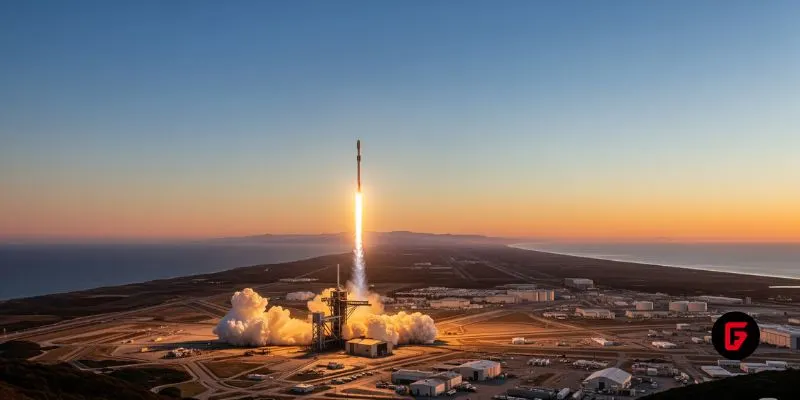
SpaceX aims to nearly double launches from Vandenberg in 2025, facing support from federal agencies but strong objections from the state and local communities.

NASA and Google’s AI-powered Crew Medical Officer Digital Assistant enables autonomous diagnoses for astronauts on Mars missions, redefining remote healthcare for space and Earth.
futureTEKnow is focused on identifying and promoting creators, disruptors and innovators, and serving as a vital resource for those interested in the latest advancements in technology.
© 2026 All Rights Reserved.