























Momentus is a commercial space technology company developing orbital service vehicles, satellite buses, and in-space transportation systems. Its Vigoride spacecraft provides a platform for satellite deployment, orbital maneuvering, hosted payloads, and technology demonstrations in low Earth orbit. The company also develops water-based electric propulsion, spacecraft components, and systems for rendezvous and proximity operations. Momentus serves government, research, and commercial organizations requiring orbital transportation and spacecraft infrastructure services.
Momentus designs, manufactures, launches, and operates spacecraft that support satellite deployment and other activities in Earth orbit. Its services allow customers to transport satellites, operate scientific instruments, and test technologies without necessarily developing and operating an independent spacecraft.
The company’s primary platform is the Vigoride Orbital Service Vehicle, a spacecraft that can carry multiple payloads, perform orbital maneuvers, and provide electrical power, communications, and command functions for hosted equipment.
Momentus develops Microwave Electrothermal Thruster technology that uses water as a propellant. The propulsion system enables controlled orbital maneuvers and supports spacecraft positioning, orbit changes, and mission operations.
The company also provides spacecraft buses, avionics, satellite components, and hosted payload services. Its Vigoride platform can accommodate experiments involving sensors, communications equipment, materials, and technologies for future orbital servicing and manufacturing.
Momentus conducts in-space demonstrations involving rendezvous and proximity operations, spacecraft sensing, and autonomous systems. Its 2026 Vigoride-7 mission included a demonstration with a NASA CubeSat using optical, infrared, and LiDAR sensors to characterize a nearby spacecraft.
Momentus develops spacecraft systems for orbital transportation, satellite deployment, hosted payload operations, and in-space technology demonstrations. Its engineering portfolio includes propulsion, spacecraft avionics, attitude control, power generation, payload integration, and autonomous spacecraft operations.
The company’s primary technology platform is the Vigoride Orbital Service Vehicle. Vigoride combines spacecraft structures, propulsion, electrical power, communications, and payload accommodation systems in a vehicle designed to perform multiple activities during a single orbital mission.
A central capability is its Microwave Electrothermal Thruster (MET), which uses water as a propellant. Microwave energy heats the propellant, which is expelled through a nozzle to generate thrust. Unlike conventional chemical propulsion systems, this approach uses water for orbital maneuvering. Momentus reported more than 400 MET firings across its missions through mid-2026, including controlled altitude reductions by Vigoride-7.
Momentus also develops spacecraft attitude control systems, including momentum wheels, sensors, and onboard control software. These systems maintain spacecraft orientation during payload operations, orbital maneuvers, communications, and proximity demonstrations.
Its spacecraft power architecture includes deployable solar arrays and electrical distribution equipment. Vigoride-7 deployed approximately 1.6 kilowatts of solar array capacity after launch in March 2026, providing electrical power for the spacecraft and its hosted payloads.
The company has demonstrated rendezvous and proximity operations technology using optical cameras, infrared sensors, LiDAR, and onboard processing. During a September 2026 demonstration, Vigoride-7 supported observations of NASA’s R5-S10 CubeSat at different distances and lighting conditions. These measurements are relevant to future autonomous spacecraft navigation and servicing systems.
Momentus also develops spacecraft components using additive manufacturing. Its Vigoride-7 mission included flight testing of a titanium propellant tank manufactured using 3D printing, providing information about the performance of additively manufactured pressure vessels in orbit.
Its hosted payload architecture provides customers with spacecraft power, communications, command and data handling, and mission operations support. This allows scientific instruments and experimental technologies to operate aboard Vigoride without requiring a separate dedicated satellite bus.
Satellite missions frequently require deployment, orbital maneuvering, electrical power, communications, and operational support after launch. Developing these capabilities independently can add cost and complexity, particularly for smaller payloads and technology demonstrations.
Momentus’ Vigoride orbital service vehicles provide shared spacecraft infrastructure that can accommodate multiple customers and mission objectives. This allows organizations to conduct orbital experiments and deploy satellites using an existing spacecraft platform.
Its water-based propulsion and orbital maneuvering technology provides an alternative to conventional spacecraft propulsion architectures. Flight demonstrations have shown the system performing controlled orbit changes, supporting further development of in-space transportation services.
The company’s proximity operations and hosted payload demonstrations are also relevant to emerging in-space servicing, assembly, and manufacturing activities. These applications require spacecraft capable of operating near other vehicles and supporting specialized equipment in orbit.
Vigoride is Momentus’ primary orbital service vehicle, designed for satellite deployment, orbital maneuvering, hosted payloads, and technology demonstrations. The spacecraft integrates propulsion, electrical power, communications, attitude control, and payload interfaces. Its modular architecture allows multiple government and commercial payloads to operate during a single mission. Vigoride has completed multiple orbital missions, including the Vigoride-7 launch in March 2026.
The Vigoride satellite bus is a spacecraft platform offered to customers developing dedicated satellites and constellations. It uses technologies developed for the Vigoride Orbital Service Vehicle, including avionics, power systems, propulsion, and spacecraft control equipment. The platform can be configured for different payload requirements and mission objectives, providing integrated spacecraft infrastructure for government and commercial applications.
Vigoride Lite is a smaller satellite bus offering intended for missions that do not require the full capacity of the standard Vigoride platform. It is designed to provide spacecraft support functions within a more compact architecture. Momentus has identified Vigoride Lite as part of its expanding satellite bus portfolio, although its operational flight heritage has not been established separately from the larger Vigoride vehicles.
The Microwave Electrothermal Thruster is Momentus’ proprietary spacecraft propulsion technology. It uses microwave energy to heat water propellant and expel it through a nozzle to produce thrust. The system supports controlled changes in spacecraft orbit and position. Momentus has demonstrated MET propulsion in orbit, including repeated Vigoride-7 maneuvers during 2026.
TASSA is a deployable solar array technology developed by Momentus for spacecraft power generation. Its architecture uses tape-spring structures that unfold after launch, allowing solar panels to be transported in a compact configuration. The system was included as a technology demonstration aboard Vigoride-6 in 2023. TASSA is intended to support spacecraft requiring lightweight, deployable electrical power systems.
Momentus develops spacecraft propellant tanks using additive manufacturing. The technology allows complex tank geometries to be produced through metal 3D printing rather than conventional manufacturing processes. A titanium tank was included in the Vigoride-7 mission for in-orbit testing during 2026. The development program investigates spacecraft pressure vessel performance and manufacturing flexibility.
Momentus has integrated optical cameras, infrared sensors, LiDAR, and onboard processing into a spacecraft sensing system for rendezvous and proximity operations. During its September 2026 demonstration, Vigoride-7 supported observations of NASA’s R5-S10 CubeSat at different distances and lighting conditions. The demonstration validated sensing and communications capabilities relevant to future autonomous spacecraft inspection and servicing.
Momentus provides hosted payload services that allow scientific instruments and technology demonstrations to operate aboard its Vigoride spacecraft. Customers receive access to electrical power, communications, command and data handling, and mission operations support. The service reduces the need for each payload to have its own dedicated spacecraft bus. Applications include scientific research, sensor demonstrations, communications testing, and in-space manufacturing experiments.
Momentus provides orbital transportation services using its Vigoride vehicles. The spacecraft can carry customer satellites aboard a shared launch, perform orbital maneuvers, and deploy payloads according to mission requirements. Its propulsion and deployment architecture supports satellite delivery and orbital logistics in low Earth orbit. The extent of orbit changes and delivery options depends on spacecraft capabilities and individual mission parameters.
Vigoride-7 launched aboard SpaceX’s Transporter-16 mission on March 30, 2026, carrying ten government and commercial payloads. Its activities include orbital maneuvering, hosted payload operations, spacecraft component testing, and rendezvous technology demonstrations. In September 2026, the mission completed a proximity operations demonstration involving NASA’s R5-S10 CubeSat and an integrated optical, infrared, and LiDAR sensor suite.
Vigoride-8 is a planned orbital service vehicle mission scheduled for 2027. The spacecraft is intended to carry two NASA payloads and provide orbital hosting and mission support services. Momentus announced in July 2026 that the spacecraft had completed its critical design review. The mission remains in development and has not yet launched.
Vigoride-9 is a planned orbital service vehicle mission targeting launch in 2027. Its contracted payloads include the University of Colorado Boulder’s Occultation Wave Limb Sounder instruments for atmospheric research and an ARCSPACE payload designed to demonstrate autonomous welding in microgravity. The mission will provide spacecraft power, communications, and operational support for these experiments. The planned demonstrations have not yet been performed in orbit.
Momentus is participating in the formulation phase of NASA’s Fly Foundational Robots Resupply mission. The proposed architecture involves transporting robotic payloads to an orbital platform, performing rendezvous and docking, and transferring equipment using an existing robotic arm. NASA awarded Momentus a mission formulation task order in October 2026. This is a design-phase contract, and Momentus has not yet been selected to perform the flight implementation.
Momentus’ orbital service vehicles support satellite transportation and deployment for commercial operators, government agencies, and research institutions. Its spacecraft provide shared transportation and payload accommodation capabilities for missions in low Earth orbit.
Its hosted payload services support scientific instruments, technology demonstrations, and experimental equipment requiring power, communications, and operational support in space. Applications include atmospheric research, spacecraft sensor testing, and microgravity manufacturing experiments.
The company’s water-based propulsion and spacecraft control technologies support orbital maneuvering, satellite positioning, and the development of future space logistics systems.
Momentus also develops technologies for rendezvous, proximity operations, and potential in-orbit servicing. These capabilities are relevant to future spacecraft inspection, robotic resupply, assembly, and maintenance activities.
Momentus develops orbital service vehicles, satellite buses, propulsion systems, and in-space infrastructure services. Its Vigoride spacecraft supports satellite deployment, orbital maneuvering, hosted payload operations, and technology demonstrations. The company also develops spacecraft components and systems for future orbital servicing and logistics applications.
Vigoride is Momentus’ spacecraft platform for orbital transportation, hosted payloads, and satellite deployment. It integrates propulsion, power generation, communications, attitude control, and payload interfaces. The vehicle can support multiple customers during a mission and has been used for orbital demonstrations since 2022.
Momentus uses a Microwave Electrothermal Thruster that heats water propellant using microwave energy. The heated propellant expands and exits through a nozzle, producing thrust. This allows Vigoride spacecraft to perform controlled orbital maneuvers. The system has undergone repeated in-orbit testing, including maneuvers performed during the Vigoride-7 mission in 2026.
Yes. In September 2026, Momentus announced the successful completion of a rendezvous and proximity operations demonstration involving Vigoride-7 and NASA’s R5-S10 CubeSat. The mission used optical, infrared, and LiDAR sensors to observe and track the satellite under different conditions. The demonstration validated sensing and communications capabilities relevant to future autonomous spacecraft operations, but it was not a completed docking or satellite repair mission.
As of October 2026, Momentus is preparing Vigoride-8 and Vigoride-9 for planned missions in 2027. Vigoride-8 is intended to carry two NASA payloads, while Vigoride-9 will host scientific and technology demonstration payloads, including atmospheric research instruments and an autonomous welding experiment. The company is also participating in NASA’s Fly Foundational Robots Resupply mission formulation phase, with any future flight award subject to a separate selection.
Have an update, correction, or additional information about this company? Help us keep the futureTEKnow company database up to date by submitting the latest company information.

Turion Space has raised more than $75 million in Series B funding to scale its Starfire platform and satellite fleet, betting that space domain awareness is the next critical defense infrastructure layer. The piece unpacks Turion’s business model, contracts, and risks for operators and investors watching the new space intelligence stack.
Pulsar Fusion’s Sunbird fusion rocket has achieved first plasma, validating its exhaust architecture and edging a reusable “space tug” concept toward sub‑six‑month Mars transfers. Drawing on multiple reports, this piece breaks down how the Dual Direct Fusion Drive works, what the 2027 in‑orbit demo must prove, and which technical and regulatory hurdles still stand between Sunbird and operational deep‑space logistics.
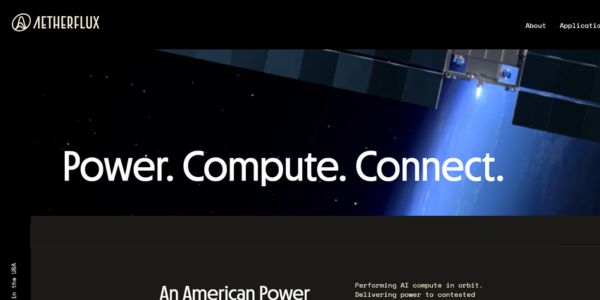
Aetherflux is betting that orbital data centers can power the next wave of AI, shifting from laser power beaming to space-based compute as it targets a $2 billion valuation. For founders and investors, the company’s 2027 satellite plans highlight how quickly space infrastructure is converging with AI demand and reshaping the deep-tech funding landscape.
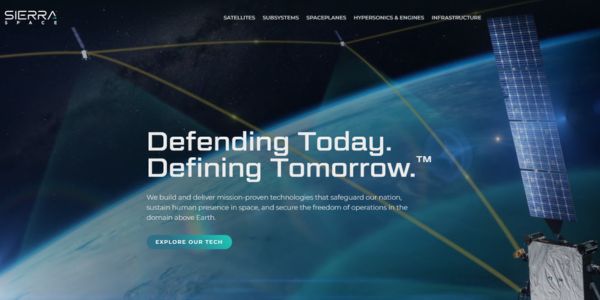
Sierra Space’s $550 million Series C round, valuing the company at $8 billion, signals a decisive shift toward defense-tech space. This feature unpacks the hardware, strategy, and risks shaping the next decade of orbital infrastructure.
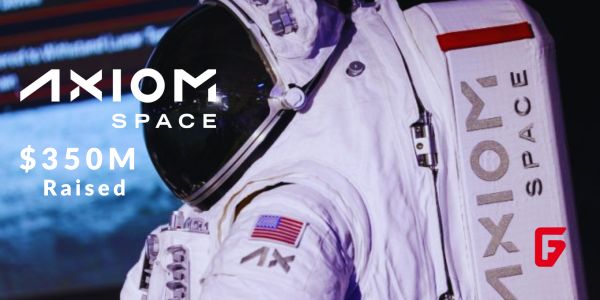
Axiom Space has locked in a fresh $350M raise to push its commercial space station and NASA lunar spacesuits toward launch, signaling growing investor faith in private orbital infrastructure.
Morpheus Space secures $15M funding for GO-2 electric propulsion mass production. Learn how this boosts satellite mobility with efficient thrusters.

Stoke Space extended its Series D funding to $860 million, fueling Nova’s full-reuse rocket production at Cape Canaveral. Backed by founders from Blue Origin, this pushes total capital to $1.34B.

Tomorrow.io has closed a $175 million equity round to deploy DeepSky, its AI-native weather satellite constellation designed to make global atmospheric data far more precise, frequent, and useful for businesses, governments, and communities facing extreme weather.

Stay ahead of AI and space tech wars: OpenAI vs Google AI, SpaceX and Blue Origin’s race for orbital data centers, Meta’s AI strategy shift, and key robotics breakthroughs reshaping industry.

Bridgit Mendler’s Northwood Space is pioneering mass-produced ground stations, enabling scalable, high-speed connectivity for the new era of satellite networks and megaconstellations.
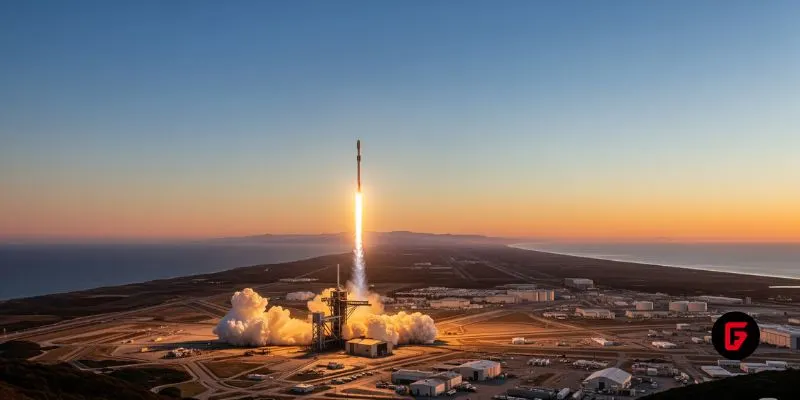
SpaceX aims to nearly double launches from Vandenberg in 2025, facing support from federal agencies but strong objections from the state and local communities.
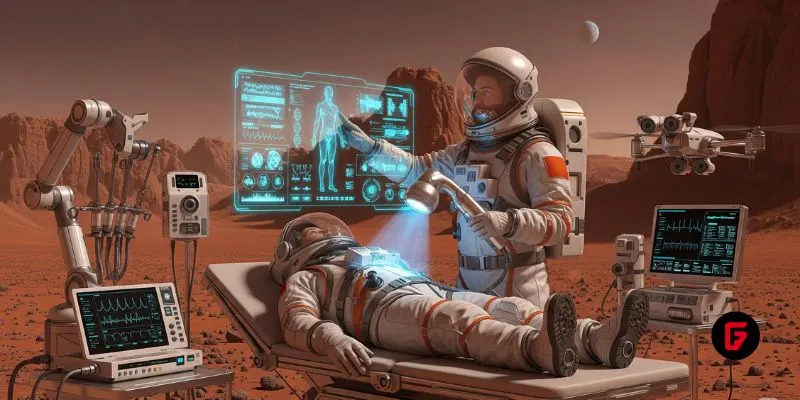
NASA and Google’s AI-powered Crew Medical Officer Digital Assistant enables autonomous diagnoses for astronauts on Mars missions, redefining remote healthcare for space and Earth.
futureTEKnow is focused on identifying and promoting creators, disruptors and innovators, and serving as a vital resource for those interested in the latest advancements in technology.
© 2026 All Rights Reserved.