


































Long Beach, California, USA
2018
Aerospace, Space Debris Removal, Satellite Servicing, Space Traffic Management, Space Infrastructure, Space Sustainability
OrbitGuardians is a space technology company developing spacecraft concepts and services for removing orbital debris and managing objects in Earth orbit. Its proposed technologies focus on active debris removal, satellite inspection, orbital positioning, and space situational awareness. The company’s SWEEPER spacecraft concept is designed to remove multiple debris objects during a single mission, rather than targeting only one object per launch. OrbitGuardians also works on policy and funding proposals intended to support commercial space traffic management. Its activities connect spacecraft engineering, orbital mechanics, and space sustainability technologies.
OrbitGuardians develops concepts for spacecraft capable of removing debris from Earth orbit. Its primary development effort centers on multi-object active debris removal, with a proposed servicing vehicle that would approach and deorbit multiple objects during a single mission.
The company has conducted feasibility studies for its SWEEPER spacecraft concept and identified sodium-potassium coolant droplets as potential targets for an initial demonstration mission. These studies form part of its preparation for spacecraft development and flight testing.
OrbitGuardians also proposes services involving on-orbit inspection, space situational awareness, and spacecraft repositioning. These would allow satellite operators to obtain close-range observations, investigate nearby debris, or request orbital adjustments.
Alongside its technical work, the company develops proposals for financing debris removal through space traffic management programs. Its published status indicates that spacecraft development and operational demonstrations remain dependent on additional funding and mission preparation.
OrbitGuardians is developing spacecraft concepts for active debris removal and orbital servicing. Its technical approach focuses on addressing multiple debris objects during a single mission, potentially reducing the number of dedicated launches needed for cleanup operations.
Its proposed SWEEPER spacecraft is intended to navigate between orbital debris targets and remove them from orbit. The company reports completing feasibility studies of a vehicle capable of deorbiting large numbers of debris objects per launch. However, it has not publicly established that a flight-qualified SWEEPER spacecraft has been completed or tested in orbit.
The company’s initial demonstration concept focuses on sodium-potassium, or NaK, coolant droplets. These droplets were released during historical space missions and remain part of the orbital debris environment. OrbitGuardians has identified 40 such objects as potential demonstration targets.
The proposed mission would require orbital rendezvous and trajectory planning to move between objects traveling at different positions and velocities. Effective debris removal also requires reliable target identification, controlled spacecraft maneuvering, and a method for changing the target’s orbit so that it can be disposed of safely.
OrbitGuardians additionally proposes on-orbit inspection and space situational awareness services. These concepts involve collecting imagery and orbital information about nearby spacecraft or debris objects, including objects that may not be routinely tracked from the ground.
Its broader technology roadmap includes spacecraft repositioning and orbital servicing. Detailed flight hardware specifications, validated capture mechanisms, and completed operational demonstrations have not yet been publicly established.
OrbitGuardians addresses the challenge of removing debris from increasingly populated orbital environments. Small debris objects can damage operational satellites, while larger objects may generate additional fragments if collisions occur.
Its proposed multi-object debris removal approach is relevant because the economics of orbital cleanup depend partly on how many targets a spacecraft can address during a mission. Removing multiple objects with one servicing vehicle could reduce the need for separate launches, although the approach still requires flight validation.
The company also highlights the financial and regulatory challenges of orbital cleanup. Its proposed space traffic management funding framework addresses how debris removal services might be supported when no individual satellite operator is responsible for paying to remove older debris.
OrbitGuardians represents an early-stage effort to connect spacecraft engineering, debris remediation, and economic policy. Its eventual impact will depend on securing funding and demonstrating its proposed technology in orbit.
SWEEPER is a proposed spacecraft designed to perform multi-object orbital debris removal. OrbitGuardians reports conducting feasibility studies for a vehicle capable of deorbiting numerous debris objects during a single launch mission. The spacecraft remains a development concept, with flight testing and operational deployment still requiring funding and engineering work.
OrbitGuardians proposes an active debris removal service for eliminating unwanted objects from Earth orbit. Its approach focuses on removing multiple debris targets during one mission, including objects that may be too small to justify dedicated removal launches. The service is planned rather than demonstrated as an operational offering.
The proposed inspection service would use spacecraft to collect close-range images, video, and observational data about satellites and other orbital assets. It is intended to help operators investigate potential debris impacts, equipment damage, and unexpected spacecraft conditions.
OrbitGuardians proposes a space-based monitoring service for identifying debris objects near operational spacecraft. The concept includes detecting small, otherwise untracked orbital objects and supplying orbital information, including two-line element data, for further analysis.
The proposed positioning service would support spacecraft operators seeking to change an asset’s orbital location. Its concept involves orbital maneuvering and spacecraft repositioning performed by a servicing vehicle. Publicly available information does not establish an operational flight demonstration of this service.
OrbitGuardians’ proposed technologies are applicable to active orbital debris removal, satellite inspection, space situational awareness, and spacecraft repositioning. Its SWEEPER concept is intended to support multi-target debris cleanup by addressing several objects during a single mission.
The company’s proposed inspection services could help satellite operators investigate spacecraft anomalies, while its space situational awareness concept could provide additional information about smaller debris objects near operational satellites.
Its planned positioning capabilities could support orbital relocation and satellite management. These applications remain prospective until the relevant spacecraft technologies are developed, tested, and demonstrated in orbit.
SWEEPER is a proposed spacecraft for active orbital debris removal. Its design concept focuses on removing multiple debris objects during a single mission, potentially reducing the number of launches required for orbital cleanup. OrbitGuardians has reported feasibility studies, but the spacecraft has not been confirmed as operational.
OrbitGuardians has identified 40 sodium-potassium coolant droplets as potential targets for its first demonstration mission. These objects are remnants of historical spacecraft cooling systems. The proposed mission would test the company’s debris removal approach, subject to securing funding, obtaining necessary permissions, and completing spacecraft development.
As of October 2026, OrbitGuardians has not publicly confirmed a completed SWEEPER launch or orbital debris removal demonstration. Its published development status describes feasibility studies, mission planning, funding requests, and efforts to assemble a team for spacecraft design, construction, testing, and operation.
The STM Act of 2025 is a legislative proposal drafted by OrbitGuardians to create funding incentives for space traffic management and orbital debris removal. The proposal includes tax-credit mechanisms intended to encourage financial contributions toward space safety services. It is a company-backed policy proposal, not an enacted federal law.
Satellite tracking companies primarily monitor objects in orbit and provide information about their positions and potential collision risks. OrbitGuardians is developing an approach centered on physically removing debris from orbit, while also proposing inspection and space situational awareness services. Its debris removal capabilities remain under development.
Have an update, correction, or additional information about this company? Help us keep the futureTEKnow company database up to date by submitting the latest company information.

Turion Space has raised more than $75 million in Series B funding to scale its Starfire platform and satellite fleet, betting that space domain awareness is the next critical defense infrastructure layer. The piece unpacks Turion’s business model, contracts, and risks for operators and investors watching the new space intelligence stack.

Pulsar Fusion’s Sunbird fusion rocket has achieved first plasma, validating its exhaust architecture and edging a reusable “space tug” concept toward sub‑six‑month Mars transfers. Drawing on multiple reports, this piece breaks down how the Dual Direct Fusion Drive works, what the 2027 in‑orbit demo must prove, and which technical and regulatory hurdles still stand between Sunbird and operational deep‑space logistics.

Aetherflux is betting that orbital data centers can power the next wave of AI, shifting from laser power beaming to space-based compute as it targets a $2 billion valuation. For founders and investors, the company’s 2027 satellite plans highlight how quickly space infrastructure is converging with AI demand and reshaping the deep-tech funding landscape.
Sierra Space’s $550 million Series C round, valuing the company at $8 billion, signals a decisive shift toward defense-tech space. This feature unpacks the hardware, strategy, and risks shaping the next decade of orbital infrastructure.

Axiom Space has locked in a fresh $350M raise to push its commercial space station and NASA lunar spacesuits toward launch, signaling growing investor faith in private orbital infrastructure.
Morpheus Space secures $15M funding for GO-2 electric propulsion mass production. Learn how this boosts satellite mobility with efficient thrusters.

Stoke Space extended its Series D funding to $860 million, fueling Nova’s full-reuse rocket production at Cape Canaveral. Backed by founders from Blue Origin, this pushes total capital to $1.34B.

Tomorrow.io has closed a $175 million equity round to deploy DeepSky, its AI-native weather satellite constellation designed to make global atmospheric data far more precise, frequent, and useful for businesses, governments, and communities facing extreme weather.

Stay ahead of AI and space tech wars: OpenAI vs Google AI, SpaceX and Blue Origin’s race for orbital data centers, Meta’s AI strategy shift, and key robotics breakthroughs reshaping industry.

Bridgit Mendler’s Northwood Space is pioneering mass-produced ground stations, enabling scalable, high-speed connectivity for the new era of satellite networks and megaconstellations.
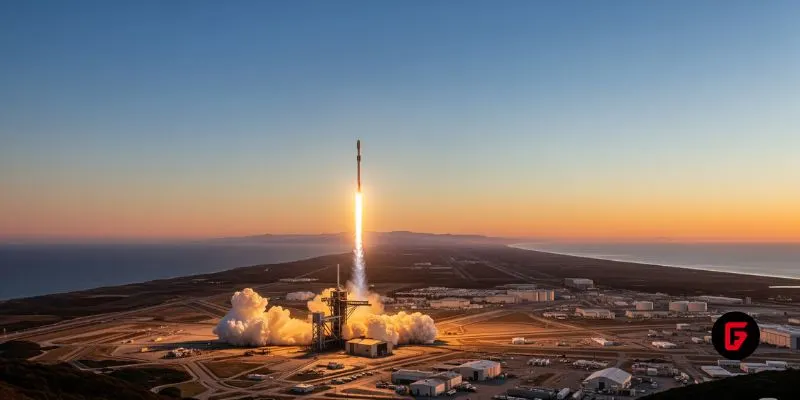
SpaceX aims to nearly double launches from Vandenberg in 2025, facing support from federal agencies but strong objections from the state and local communities.

NASA and Google’s AI-powered Crew Medical Officer Digital Assistant enables autonomous diagnoses for astronauts on Mars missions, redefining remote healthcare for space and Earth.
futureTEKnow is focused on identifying and promoting creators, disruptors and innovators, and serving as a vital resource for those interested in the latest advancements in technology.
© 2026 All Rights Reserved.