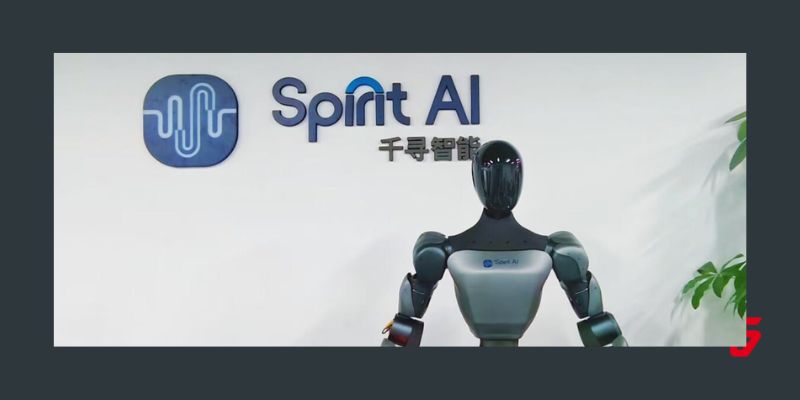
A Landmark Financing Shifts the Industry
In a move that signals a dramatic shift in the global humanoid robotics landscape, Spirit AI, a Beijing-based innovator, has clinched nearly 600 million yuan ($84 million) in early-stage funding. JD.com—one of China’s leading e-commerce players—steered the investment round, joined by an impressive chorus of heavyweights like China Internet Investment Fund, Zhejiang Science and Innovation Mother Fund, and Fosun RZ Capital. Existing investors, including Saudi Aramco’s Prosperity7 Ventures and Shunwei Capital, also doubled down on their support.
This funding isn’t just about numbers. According to industry analysts, it marks the creation of a robust industrial alliance—marrying capital with real-world deployment opportunities vital for scaling true humanoid technology.
From Startup to Star: Spirit AI’s Rapid Rise and Technical Edge
Founded by Han Fengtao, ex-CTO of Rokae, Spirit AI’s journey from zero to a working prototype in just 16 months is noteworthy. Within six months of its founding, the company attracted nearly 200 million yuan from seed and angel rounds. Its technical coming-of-age arrived with the Moz1, unveiled in June 2025—a force-controlled humanoid robot with 26 degrees of freedom.
At the core lies Spirit AI’s Vision-Language-Action model and dual systems approach: an L1 reflex system for immediate responses and an L2 planning layer for complex decisions—a technical structure inspired by human cognition. The in-house joint modules (400W, 3.4 kW/kg power density) deliver performance at a price that is 30-40% lower than Western alternatives, thanks to domestic supply chains
Data: The True Game-Changer
The strategic pact with JD.com unlocks access to hundreds of millions of real-world robotics data points from the logistics giant’s million-plus mobile robots. Such authentic pick-and-place trajectories provide Spirit AI a competitive edge in training advanced AI models—a resource that rivals have to synthesize artificially.
“Data is the new oil in robotics,” as one venture investor put it. Authentic, messy, unsimulated data is propelling the next generation of embodied intelligence
Industry Traction—and Some Caution
Industry projections for humanoid robotics range widely, with estimates swinging from $38 billion to as high as $154 billion by 2035. Yet, while American rival Figure AI recently netted $675 million at a $2.6 billion valuation, Spirit AI’s focus on lowering actuator costs and forming strategic alliances could offer a more sustainable path to market leadership.
Despite the momentum, challenges remain: mean-time-between-failure for critical components is still far below the automotive industry’s requirements (2,000 versus 20,000 hours). Regulatory moves and geopolitical tensions—especially U.S. investment reviews targeting “national-security-sensitive technology”—pose further hurdles for global scaling.
The Investable Future of Humanoid Robotics
Market strategists are urging investors to consider component makers—like those specializing in actuators and sensors—as lower-risk, high-reward bets amid the sector’s boom. While backing a full-stack humanoid robotics developer promises transformative upside, it also calls for patience, capital reserves, and a tolerance for steep competition and possible dilution.
The Road Ahead
As Spirit AI prepares to roll out Moz1 pilots in automotive factories, the sector sits at a crossroads: moving from technical validation to commercial reality. Whether Spirit’s technical and strategic assets will translate into market dominance isn’t yet clear, but its recent surge in funding cements its role as a major innovator in the race to bring humanoid robots from the lab into the real world.