




























Singapore
2026
Information Technology, Software, Business Services, Financial Services, Sales and Marketing, Human Resources
Automaid is an artificial intelligence company developing AI agents for recurring work and business automation. Its platform allows users to describe tasks in natural language and have agents carry out workflows across connected applications. Rather than functioning primarily as a conversational assistant, Automaid focuses on executing multi-step tasks across software tools, including email, browsers, productivity platforms, financial systems, and business applications. The company operates within the growing field of agentic AI and autonomous workflow automation.
Automaid provides AI agents designed to take recurring or repetitive work off a user’s hands. A user can describe an outcome in natural language, and the platform can plan and execute workflows across connected applications rather than requiring the user to manually construct every automation step.
The agents can monitor information, analyze data, update records, create tasks, prepare reports, send messages, and interact with websites. Automaid lists workflows spanning sales, marketing, administration, finance, HR, operations, legal work, and personal productivity. Its platform provides access to more than 3,000 applications, allowing workflows to move information and actions between multiple tools.
Automaid combines AI agents, natural-language instructions, and application integrations to automate digital workflows. Instead of requiring users to manually map every trigger, condition, and action, the system interprets the desired outcome and determines the steps and tools required to complete it.
Its agents can operate across connected applications and web environments. For browser-based work, Automaid provides a Chrome extension that enables agents to navigate websites, read pages, extract information, complete forms, summarize content, and carry out multi-step browser tasks. The company says its agents can plan steps, use appropriate tools, check results, and continue recurring work when required.
A significant part of the platform is its large application integration layer. Automaid advertises more than 3,000 available apps, enabling an agent to coordinate activities involving email, calendars, CRM systems, social platforms, databases, project-management tools, payment systems, and other business software.
Automaid represents the shift from generative AI that primarily answers questions toward AI systems that perform ongoing operational work. This distinction is increasingly important as businesses explore agents capable of interacting with their existing software rather than requiring employees to move information manually between applications.
Automaid’s emphasis on recurring workflows also illustrates how agentic AI is moving into everyday business functions. Tasks involving email, finance, sales, HR, research, administration, and operations can potentially involve an agent monitoring information and deciding when an action is required.
Automaid’s core platform provides AI agents for recurring workflows. Users describe the work they want performed and connect the applications needed for the task. Available use cases include reviewing invoices, turning emails into tasks, monitoring competitors, preparing payroll checks, tracking payments, reviewing contracts, organizing research, and coordinating information between business systems.
The platform also provides a library of ready-made workflows from Automaid and its community, giving users starting points for common business and personal automation tasks.
The Automaid Chrome extension brings the company’s agents directly into web-based workflows. It enables agents to navigate websites and perform browser actions, including reading webpages, filling forms, extracting information, summarizing material, monitoring websites, and completing multi-step tasks based on natural-language instructions.
The browser capability expands the platform beyond applications with conventional integrations by allowing agents to interact with information and interfaces available through the web.
Automaid’s technology has applications across multiple business functions. Sales teams can use agents for lead and CRM workflows, while marketing teams can automate content monitoring and distribution tasks. Finance applications include invoice review, expense matching, payment tracking, and payroll checks. HR workflows can cover hiring feedback, employee leave, and training follow-ups.
Operations and administrative teams can use the platform for recurring monitoring, record updates, task creation, reporting, and cross-application coordination. Automaid also supports browser-based research and monitoring, enabling agents to collect information from websites and incorporate it into broader automated workflows.
Automaid provides access to more than 3,000 applications. These connections allow its agents to perform workflows involving multiple software tools rather than operating within a single application.
Yes. Automaid offers a Chrome extension that allows its AI agents to navigate websites, read pages, fill forms, extract information, summarize content, and execute multi-step browser workflows.
Automaid supports workflows across sales, marketing, finance, HR, operations, administration, legal activities, research, and personal productivity. Examples include reviewing invoices, monitoring competitors, matching receipts with expenses, processing email-related tasks, and preparing reports.
Automaid is designed around natural-language workflow instructions. Users describe the desired outcome, while the agent determines steps and uses connected tools to carry out the work. This differs from conventional automation platforms centered primarily on manually constructed workflow sequences.
Yes. Recurring work is a central part of Automaid’s platform. Its agents can monitor information and repeatedly execute workflows, making the system suitable for activities that need to happen on an ongoing basis rather than only after individual prompts.
Have an update, correction, or additional information about this company? Help us keep the futureTEKnow company database up to date by submitting the latest company information.

OpenAI’s Astra for Law combines GPT-6 Astra with specialized legal search, integrations, and governance controls. The launch shows how frontier AI is moving deeper into professional legal workflows.

AI projects often stall because business data isn’t consistent or trustworthy. Here’s how to identify data gaps before they become an AI roadblock.
EVAS Intelligence has raised 1.5 billion yuan to mass‑produce its RISC-V Epoch AI chips, deepen its full‑stack platform, and accelerate global expansion, signaling rising investor confidence in alternative AI compute.
Orkes has raised 60 million dollars to turn its Netflix‑born workflow engine into a control plane for enterprise AI agents. The piece unpacks how its orchestration platform works, why investors are backing it now, and what this means for companies trying to move AI from pilots into production.

Paris-based Sillage has raised €1.7 million to launch an AI signal engine that helps enterprise sales teams follow the right buying signals, prioritize high-intent accounts, and improve pipeline efficiency without replacing human-led conversations.
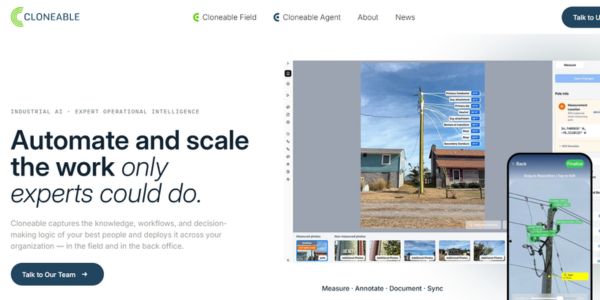
Cloneable is launching an agentic AI platform for infrastructure operations that captures institutional knowledge from retiring experts and turns it into scalable agents, targeting energy, utilities, and other asset-heavy sectors. The $4.6M seed-backed startup aims to connect field data capture with back-office execution so founders and operators can modernize infrastructure faster and with fewer bottlenecks.
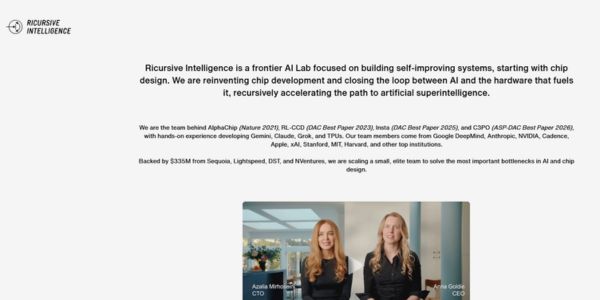
Excerpt: Ricursive Superintelligence has raised at least $500 million to build self‑improving AI, with GV and Nvidia backing a four‑month‑old lab at a $4 billion valuation. The deal crystallizes how quickly capital, talent and regulatory scrutiny are converging around autonomous AI research—and what that means for builders trying to compete outside the frontier club.

Brazilian startup BOND has raised US$2M to automate accounting for SMEs in Brazil’s complex tax system. Combining AI with human accountants, it targets a fragmented market of manual processes, aiming to turn back-office compliance into a faster, more strategic function for founders and operators.

Loop just raised a $95M Series C to expand its AI-native supply chain platform, turning messy logistics data into early disruption warnings and better financial outcomes for global operators and shippers.
Linkedin X-twitter-square Facebook-square Startups & Business News AI agents are finally moving from demos to the day-to-day stack of real
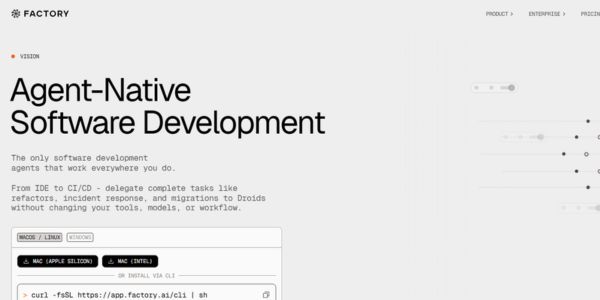
Factory has raised a $150M Series C at a $1.5B valuation to scale its autonomous “Droids” platform, betting that enterprises will standardize software engineering around agent‑native missions, governance and cost‑optimized AI infrastructure.

Solidroad has raised $25 million to bring AI-native quality assurance to every human and AI-powered customer interaction. The new funding will accelerate product development and expansion for support-heavy businesses leaning into automation.
futureTEKnow is focused on identifying and promoting creators, disruptors and innovators, and serving as a vital resource for those interested in the latest advancements in technology.
© 2026 All Rights Reserved.