























London, England
2019
Enterprise Software, Workforce Training, Professional Services, Financial Services, Operations, Supply Chain, Data & Analytics, AI Governance
Etiq AI is an artificial intelligence company developing software for AI workforce reskilling and AI-output verification. Its platform helps organizations teach employees how to use generative AI in their actual work while checking whether AI-assisted outputs are supported by the underlying evidence. Etiq combines role-specific learning, practical AI exercises, automated verification, and workforce capability measurement to help companies determine what employees can reliably accomplish with AI, rather than measuring adoption only through course completion or AI usage.
Etiq helps organizations develop AI skills among existing employees through training tied to their roles and day-to-day workflows. Employees learn and practice with AI while the platform evaluates the work they produce rather than relying solely on quizzes, course completion, or self-assessment.
A major component is automated verification of AI-generated work. Etiq can check calculations, locate supporting sources, compare claims against evidence, examine reasoning, and identify sensitive information before an output is used. Those verified interactions also become data for measuring AI capability across teams. Managers can see which tasks employees are successfully moving to AI, recurring errors, and areas where capabilities are improving. The result combines AI training, verification, and workforce measurement in a single workflow.
Etiq’s current platform combines personalized AI learning with a verification layer for AI-assisted work. Rather than evaluating only whether an employee used an AI system, the platform examines the resulting output against its underlying evidence.
Its verification system can recompute arithmetic against source data, determine whether cited sources can be located, check whether statements are supported by evidence, trace conclusions back to their inputs, and identify sensitive information. These checks operate as employees complete practical tasks, allowing problems to be identified before AI-generated material reaches customers, management, or other external audiences.
Etiq also builds workforce capability data from verified AI interactions. The platform can track AI capability by team, completed tasks, recurring errors, verification pass rates, and which types of work are increasingly being performed with AI.
Etiq’s technology has roots in machine-learning testing and AI integrity. Its earlier Data Science Copilot provides code and data lineage, ML-specific testing, and root-cause analysis for issues including bias, drift, leakage, accuracy, and robustness. Its developer tooling can operate locally inside environments such as VS Code and Jupyter Notebooks.
Generative AI adoption creates a measurement problem for organizations. Knowing that employees have access to AI—or have completed an AI course—does not establish whether they can use it to produce reliable work.
Etiq addresses this gap by connecting AI skills development with verification of actual work. Instead of treating AI training, output quality, and workforce analytics as separate problems, it uses verified tasks as evidence of what employees can successfully accomplish with AI.
This is relevant as enterprises move beyond initial experimentation toward broader AI adoption. Organizations increasingly need ways to determine whether AI-generated analysis, reports, summaries, and other outputs are trustworthy while also understanding where employees need additional training. Etiq’s approach places it at the intersection of enterprise AI adoption, AI verification, and workforce reskilling.
Etiq’s workforce platform provides role-based AI learning built around employees’ actual work. It combines personalized learning paths, practical exercises, AI-assisted coaching, and task-based assessments. Learning can be adapted to the tools, systems, and workflows used by individual teams rather than relying exclusively on generic AI courses.
Etiq’s verification technology evaluates work produced with AI against the evidence supporting it. It can check numbers, sources, claims, reasoning, and privacy, flagging problems such as unsupported statements, incorrect calculations, missing sources, or sensitive information. Verification occurs as part of the employee’s workflow rather than only through later sampling.
Etiq converts verified AI work into workforce capability information. Managers can monitor AI capability across teams, recurring mistakes, tasks being performed with AI, verification performance, and changes in employee capabilities over time. The objective is to measure demonstrated performance rather than training attendance or self-reported proficiency.
Etiq’s Data Science Copilot provides tools for testing and debugging machine-learning pipelines. It builds code and data lineage, recommends relevant tests, and uses root-cause analysis agents to locate the source of failures. Its testing capabilities include accuracy, data problems, leakage, drift, and bias.
Etiq’s current platform is designed primarily for organizations introducing generative AI into professional workflows. Applications include financial analysis, reporting, audit-related work, insurance and claims analysis, professional services, operations, supply chain activities, drafting, and research.
For example, finance teams can use Etiq while creating variance commentary, reconciling expense information, summarizing claims files, or preparing reports. The verification layer can check calculations and determine whether claims are supported by the original material.
The platform also supports organization-wide AI workforce development, giving companies a way to identify which employees and teams are developing usable AI skills and where recurring problems remain. Its machine-learning testing technology has additional applications for data science teams developing predictive models where accuracy, bias, leakage, drift, and pipeline reliability need to be evaluated.
Etiq checks AI-assisted outputs against underlying evidence. Its verification can recompute numbers, locate cited sources, assess whether claims are supported, trace reasoning back to inputs, and detect sensitive information.
Etiq uses completed and verified work as evidence of AI capability. Its dashboards can show capability by team, completed AI tasks, recurring errors, verification pass rates, and areas where employee performance is improving.
AI training is part of the platform, but Etiq goes beyond conventional course-based training. Employees receive role-specific learning and practice using real workflows, while the work they produce is verified and used to measure demonstrated AI capability.
Etiq’s current platform can check arithmetic, sources, factual claims, reasoning, and privacy-related issues against the evidence underlying an employee’s work.
Yes. Etiq’s Data Science Copilot and ML testing technology can test machine-learning pipelines for areas including accuracy, data issues, leakage, drift, and bias. It also provides lineage and root-cause analysis capabilities for identifying where problems originate within a pipeline.
Have an update, correction, or additional information about this company? Help us keep the futureTEKnow company database up to date by submitting the latest company information.

OpenAI’s Astra for Law combines GPT-6 Astra with specialized legal search, integrations, and governance controls. The launch shows how frontier AI is moving deeper into professional legal workflows.

AI projects often stall because business data isn’t consistent or trustworthy. Here’s how to identify data gaps before they become an AI roadblock.
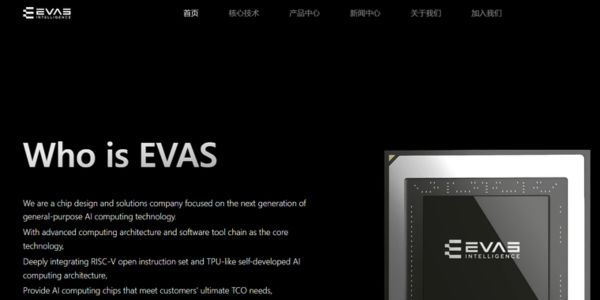
EVAS Intelligence has raised 1.5 billion yuan to mass‑produce its RISC-V Epoch AI chips, deepen its full‑stack platform, and accelerate global expansion, signaling rising investor confidence in alternative AI compute.
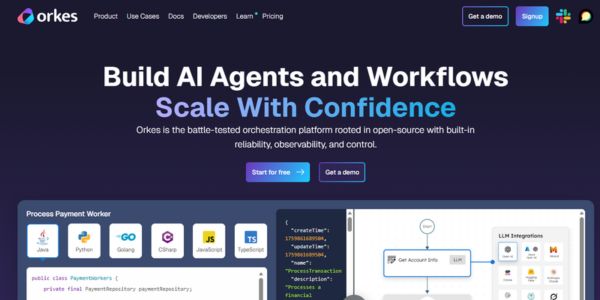
Orkes has raised 60 million dollars to turn its Netflix‑born workflow engine into a control plane for enterprise AI agents. The piece unpacks how its orchestration platform works, why investors are backing it now, and what this means for companies trying to move AI from pilots into production.

Paris-based Sillage has raised €1.7 million to launch an AI signal engine that helps enterprise sales teams follow the right buying signals, prioritize high-intent accounts, and improve pipeline efficiency without replacing human-led conversations.
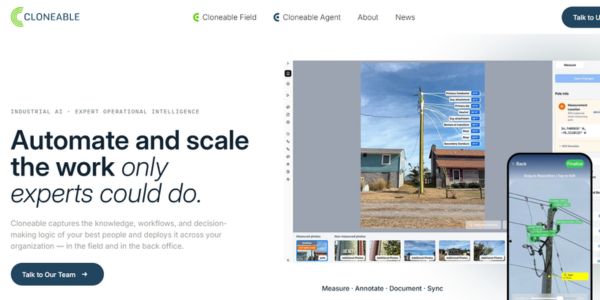
Cloneable is launching an agentic AI platform for infrastructure operations that captures institutional knowledge from retiring experts and turns it into scalable agents, targeting energy, utilities, and other asset-heavy sectors. The $4.6M seed-backed startup aims to connect field data capture with back-office execution so founders and operators can modernize infrastructure faster and with fewer bottlenecks.

Excerpt: Ricursive Superintelligence has raised at least $500 million to build self‑improving AI, with GV and Nvidia backing a four‑month‑old lab at a $4 billion valuation. The deal crystallizes how quickly capital, talent and regulatory scrutiny are converging around autonomous AI research—and what that means for builders trying to compete outside the frontier club.

Brazilian startup BOND has raised US$2M to automate accounting for SMEs in Brazil’s complex tax system. Combining AI with human accountants, it targets a fragmented market of manual processes, aiming to turn back-office compliance into a faster, more strategic function for founders and operators.

Loop just raised a $95M Series C to expand its AI-native supply chain platform, turning messy logistics data into early disruption warnings and better financial outcomes for global operators and shippers.
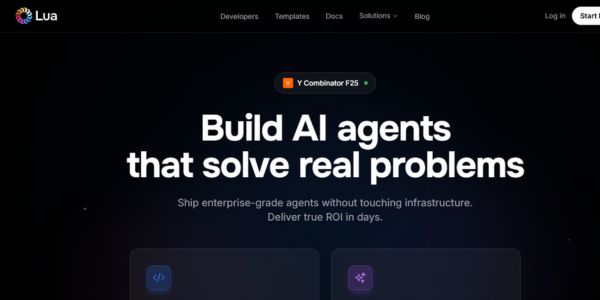
Linkedin X-twitter-square Facebook-square Startups & Business News AI agents are finally moving from demos to the day-to-day stack of real
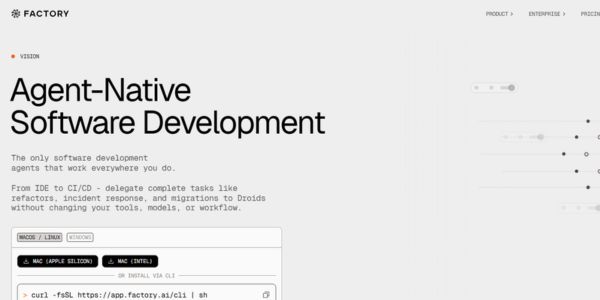
Factory has raised a $150M Series C at a $1.5B valuation to scale its autonomous “Droids” platform, betting that enterprises will standardize software engineering around agent‑native missions, governance and cost‑optimized AI infrastructure.
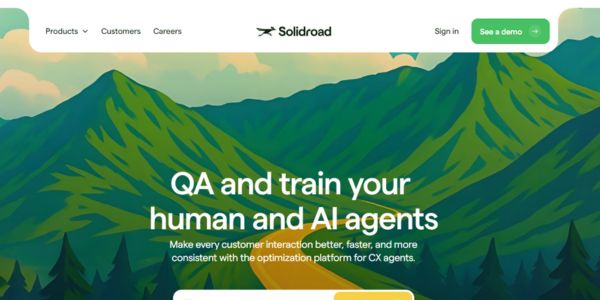
Solidroad has raised $25 million to bring AI-native quality assurance to every human and AI-powered customer interaction. The new funding will accelerate product development and expansion for support-heavy businesses leaning into automation.
futureTEKnow is focused on identifying and promoting creators, disruptors and innovators, and serving as a vital resource for those interested in the latest advancements in technology.
© 2026 All Rights Reserved.