




























Los Altos, California, USA
2022
Cybersecurity, Identity and Access Management, Artificial Intelligence, Enterprise Software, Software Development, Developer Tools
Descope is an identity and access management company that provides customer identity and agentic identity infrastructure for applications, AI agents, and Model Context Protocol (MCP) servers. Its platform combines visual workflows, APIs, and software development kits to help organizations implement authentication, authorization, user management, and identity orchestration. Descope operates primarily in cybersecurity and identity infrastructure, with newer capabilities focused on secure identity for AI agents and autonomous systems.
Descope helps developers and organizations build and manage authentication and identity workflows without having to create the underlying identity infrastructure themselves. Its platform supports signup and login, passwordless authentication, multifactor authentication, single sign-on, SCIM provisioning, identity federation, user management, and fine-grained authorization.
A central component is Descope Flows, a visual workflow system for designing authentication and user journeys. Organizations can modify identity logic across frontend and backend systems without rebuilding authentication code. Descope has also expanded into agentic identity, providing infrastructure that lets AI agents authenticate, obtain scoped credentials, and securely access tools and APIs while organizations maintain policy controls, auditing, and user consent.
Descope’s underlying technology combines customer identity and access management, authentication orchestration, fine-grained authorization, and increasingly identity infrastructure specifically designed for AI agents.
For human users, Descope supports authentication methods including passkeys, magic links, one-time passwords, social login, SAML and OIDC single sign-on, biometrics, passwords, and multifactor authentication. Descope Flows abstracts authentication logic, session management, risk controls, and error handling into visual workflows that generate authenticated sessions for applications.
Its authorization layer supports RBAC, ReBAC, and ABAC, allowing applications to determine access based on roles, relationships, attributes, and other contextual information.
For AI systems, Descope extends identity concepts to agents and MCP infrastructure. Its Agentic Identity Hub provides OAuth-based authentication, agent registration, consent management, credential storage, access policies, and audit logging. AI agents can receive short-lived, scoped credentials rather than broad permanent access tokens, helping organizations enforce least-privilege access as agents interact with APIs and external services.
Descope is relevant to emerging technology because identity infrastructure is becoming an important requirement for agentic AI systems that interact with real applications, APIs, and enterprise data.
Traditional identity systems were primarily built around people and conventional machine accounts. Autonomous agents introduce a different access-control problem: an agent may act on behalf of a user, use multiple tools, request additional permissions, and interact with several services during a single workflow. Descope is extending established authentication and authorization concepts to this new category of digital identity.
Its combination of human identity and AI-agent identity on the same platform is particularly relevant as organizations introduce agents into existing applications rather than operating them as isolated systems. Identity, permissions, credential management, and auditability are becoming part of the infrastructure required to deploy autonomous AI safely in enterprise environments.
Descope Flows is a visual drag-and-drop identity workflow builder used to create signup, login, MFA, SSO, authorization, identity verification, and other user journeys. Developers can define frontend screens and backend identity logic within the same workflow and modify those journeys without rebuilding their application.
Descope’s CIAM platform provides authentication, user management, identity federation, enterprise SSO, SCIM provisioning, and fine-grained authorization. It supports both B2C and B2B applications and can centralize customer identities across multiple applications and identity providers.
Agentic Identity Hub provides identity infrastructure for AI agents and MCP servers. It enables organizations to assign identities to agents, manage credentials, connect agents with external services, enforce access policies, and track agent activity through audit logs.
Descope provides authentication and authorization infrastructure specifically for MCP servers. It supports OAuth, client registration, user consent, token management, and scoped access so AI agents can securely connect to MCP tools and enterprise resources. Organizations can also add Descope to existing authentication environments without replacing their primary identity provider.
Descope can be used wherever software needs to securely identify people, organizations, or AI agents. Traditional applications include customer authentication, enterprise SSO, passwordless login, user onboarding, access control, identity federation, and account-takeover prevention.
Its technology applies across SaaS, financial services, healthcare, retail and e-commerce, enterprise software, and other digital services that manage external users or business customers.
An increasingly important application is securing AI agents and MCP-based systems. Organizations can use Descope to give individual agents identities, restrict which tools and resources they can access, issue temporary credentials, require human approval for sensitive actions, and maintain records of what agents accessed. This becomes particularly relevant as AI applications move from generating information to autonomously interacting with enterprise systems.
Descope Flows is a visual workflow system for designing authentication and identity journeys. Developers can create login, registration, MFA, password recovery, user-management, and other processes by connecting configurable blocks rather than coding the complete authentication logic manually.
Descope can assign identities to individual agents, issue scoped credentials, define access policies, manage authorization to APIs and MCP servers, and audit agent activity. Its Agentic Identity Hub is designed to give agents limited access based on their specific task and context rather than sharing broad user credentials.
Agentic Identity Hub is Descope’s identity platform for AI agents and MCP servers. It includes an agent directory, credential management, access policies, OAuth-based authentication, connections to external services, and auditing capabilities.
Yes. Descope provides identity infrastructure for MCP servers, including OAuth authentication, dynamic client registration, user consent, token management, policy enforcement, and scoped authorization for agents accessing MCP tools.
Descope supports passkeys, magic links, one-time passwords, social login, SAML and OIDC SSO, WebAuthn and biometrics, authenticator applications, passwords, and multifactor authentication.
Have an update, correction, or additional information about this company? Help us keep the futureTEKnow company database up to date by submitting the latest company information.

OpenAI’s Astra for Law combines GPT-6 Astra with specialized legal search, integrations, and governance controls. The launch shows how frontier AI is moving deeper into professional legal workflows.

AI projects often stall because business data isn’t consistent or trustworthy. Here’s how to identify data gaps before they become an AI roadblock.
EVAS Intelligence has raised 1.5 billion yuan to mass‑produce its RISC-V Epoch AI chips, deepen its full‑stack platform, and accelerate global expansion, signaling rising investor confidence in alternative AI compute.
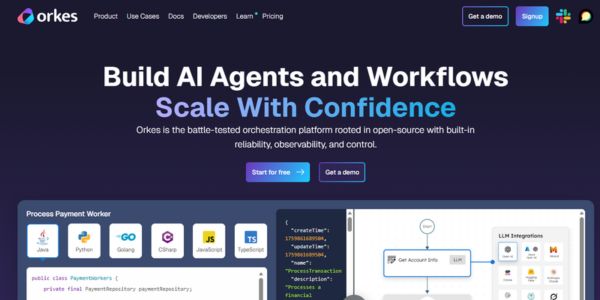
Orkes has raised 60 million dollars to turn its Netflix‑born workflow engine into a control plane for enterprise AI agents. The piece unpacks how its orchestration platform works, why investors are backing it now, and what this means for companies trying to move AI from pilots into production.

Paris-based Sillage has raised €1.7 million to launch an AI signal engine that helps enterprise sales teams follow the right buying signals, prioritize high-intent accounts, and improve pipeline efficiency without replacing human-led conversations.
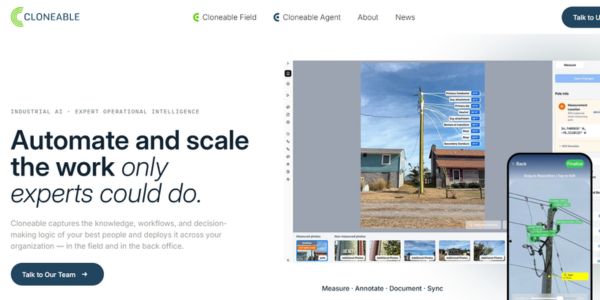
Cloneable is launching an agentic AI platform for infrastructure operations that captures institutional knowledge from retiring experts and turns it into scalable agents, targeting energy, utilities, and other asset-heavy sectors. The $4.6M seed-backed startup aims to connect field data capture with back-office execution so founders and operators can modernize infrastructure faster and with fewer bottlenecks.
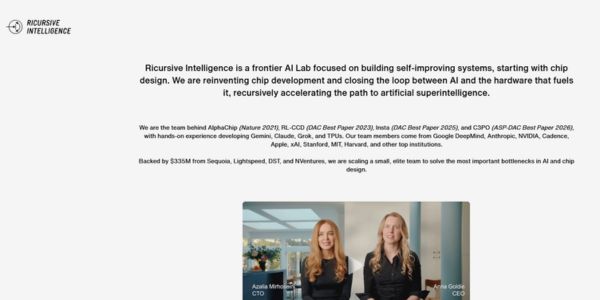
Excerpt: Ricursive Superintelligence has raised at least $500 million to build self‑improving AI, with GV and Nvidia backing a four‑month‑old lab at a $4 billion valuation. The deal crystallizes how quickly capital, talent and regulatory scrutiny are converging around autonomous AI research—and what that means for builders trying to compete outside the frontier club.

Brazilian startup BOND has raised US$2M to automate accounting for SMEs in Brazil’s complex tax system. Combining AI with human accountants, it targets a fragmented market of manual processes, aiming to turn back-office compliance into a faster, more strategic function for founders and operators.

Loop just raised a $95M Series C to expand its AI-native supply chain platform, turning messy logistics data into early disruption warnings and better financial outcomes for global operators and shippers.
Linkedin X-twitter-square Facebook-square Startups & Business News AI agents are finally moving from demos to the day-to-day stack of real
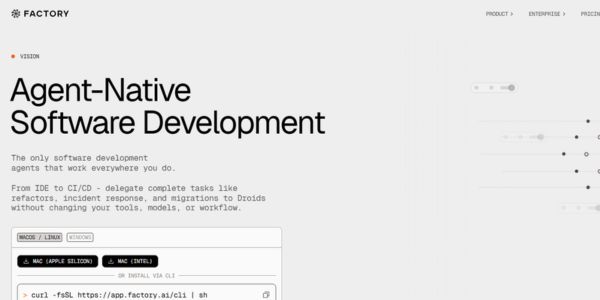
Factory has raised a $150M Series C at a $1.5B valuation to scale its autonomous “Droids” platform, betting that enterprises will standardize software engineering around agent‑native missions, governance and cost‑optimized AI infrastructure.

Solidroad has raised $25 million to bring AI-native quality assurance to every human and AI-powered customer interaction. The new funding will accelerate product development and expansion for support-heavy businesses leaning into automation.
futureTEKnow is focused on identifying and promoting creators, disruptors and innovators, and serving as a vital resource for those interested in the latest advancements in technology.
© 2026 All Rights Reserved.