























Ann Arbor, Michigan, USA
2019
Supply Chain & Logistics, Manufacturing, Retail, Consumer Goods, Automotive
Optilogic is an AI and supply chain technology company that develops software for modeling, analyzing, and improving complex supply chain networks. Its platform combines artificial intelligence and decision intelligence with mathematical optimization, simulation, and risk analysis. Optilogic’s technology helps organizations create digital models of supply chains, evaluate alternative scenarios, and make strategic and tactical decisions involving facilities, inventory, transportation, cost, service, risk, and sustainability.
Optilogic provides a cloud-based platform for organizations to design and continuously analyze supply chains. Companies can model their existing networks, test changes such as adding or removing facilities, analyze transportation and inventory decisions, assess disruption risk, and compare alternative network configurations.
The platform combines optimization and simulation with AI-assisted workflows so users can explore large numbers of what-if scenarios and evaluate trade-offs among cost, service, risk, and sustainability. Optilogic also provides tools for preparing supply chain data and making modeling capabilities accessible to people beyond specialized supply chain modelers.
Optilogic combines agentic AI, mathematical optimization, and simulation within a cloud-based supply chain decision platform. Its Cosmic Frog software supports network optimization, transportation optimization, inventory optimization, intelligent greenfield analysis, and simulation. These capabilities allow organizations to construct digital representations of supply chains and test how different configurations perform before making operational or capital decisions.
The platform also incorporates AI into model creation and data preparation. Ada is Optilogic’s agentic AI system for supply chain design, while DataStar uses AI and agentic workflows for data cleansing and orchestration. Cosmic Frog includes AI-assisted modeling and can execute multiple scenarios concurrently in the cloud.
Another important capability is risk-aware scenario analysis. Cosmic Frog can assign risk ratings to scenarios, while its simulation and sensitivity-analysis capabilities help teams examine how designs respond when assumptions or operating conditions change.
Optilogic represents a broader shift from traditional supply chain planning software toward AI-assisted decision intelligence. Supply chains involve interconnected decisions about facilities, inventory, transportation, sourcing, service levels, costs, and risk. Evaluating these decisions can require large models and many alternative scenarios.
Optilogic brings optimization, simulation, risk analysis, and AI into a common environment so organizations can test potential decisions before implementing them. Its use of agentic AI for supply chain design is particularly relevant as AI moves beyond forecasting and analytics toward systems that help construct models, prepare data, evaluate alternatives, and support complex operational decisions.
Ada is Optilogic’s agentic AI system for supply chain design. It is designed to automate portions of the modeling and analysis process and allow users to ask supply chain questions without relying entirely on traditional manual model-building workflows. Optilogic positions Ada as an intelligence layer for analyzing and continuously redesigning supply chains.
Cosmic Frog is Optilogic’s cloud-based supply chain design and modeling platform. It combines optimization, simulation, risk analysis, sensitivity analysis, and scenario modeling. Organizations can model networks at SKU level, run what-if scenarios, evaluate facility and transportation strategies, and compare trade-offs involving cost, service, risk, and sustainability.
DataStar is Optilogic’s data transformation and analytics environment. It uses AI-assisted data cleansing and workflow orchestration to prepare supply chain information for analysis and modeling. The platform is intended to reduce the data-preparation work required before teams can begin evaluating supply chain decisions.
Optilogic provides composable applications that make optimization, simulation, and AI-powered decision capabilities available through purpose-built supply chain workflows. These applications can be tailored to particular use cases and stakeholders without requiring every user to construct the underlying models themselves.
Optilogic’s technology supports supply chain network design and scenario planning across a range of operational decisions. Applications include determining facility footprints, evaluating plants and warehouses, transportation and inventory optimization, merger and acquisition analysis, disruption planning, competitive network modeling, and risk assessment.
Organizations can also use the platform to examine tariffs and changing network flows, conduct large-scale sensitivity analysis, and simulate variability before implementing changes. Optilogic supports supply chain decision-making in industries with complex physical networks, including manufacturing, consumer products, retail, and life sciences.
Cosmic Frog is used to model supply chain networks and evaluate alternative designs and operating scenarios. It supports optimization, simulation, risk analysis, sensitivity analysis, and what-if modeling across decisions involving facilities, transportation, inventory, service, cost, and other supply chain variables.
Ada is an agentic AI system designed specifically for supply chain design. It applies AI to modeling and analysis workflows so users can investigate supply chain questions and accelerate processes that traditionally require substantial manual modeling work.
Yes. Cosmic Frog combines optimization and simulation within the same supply chain modeling environment. Simulation allows teams to test proposed supply chain designs against real-world variability rather than evaluating decisions only under fixed assumptions.
Yes. Cosmic Frog incorporates risk analysis into supply chain scenarios, including automatic risk ratings. Organizations can compare risk alongside other design considerations such as cost and service and use simulation and sensitivity analysis to examine how networks may respond to changing conditions.
Optilogic can support decisions involving network footprints, plants and warehouses, transportation, inventory, mergers and acquisitions, disruption planning, network strategy, and other what-if scenarios. Its modeling environment allows organizations to compare alternative configurations before making physical or operational changes.
Have an update, correction, or additional information about this company? Help us keep the futureTEKnow company database up to date by submitting the latest company information.

OpenAI’s Astra for Law combines GPT-6 Astra with specialized legal search, integrations, and governance controls. The launch shows how frontier AI is moving deeper into professional legal workflows.

AI projects often stall because business data isn’t consistent or trustworthy. Here’s how to identify data gaps before they become an AI roadblock.
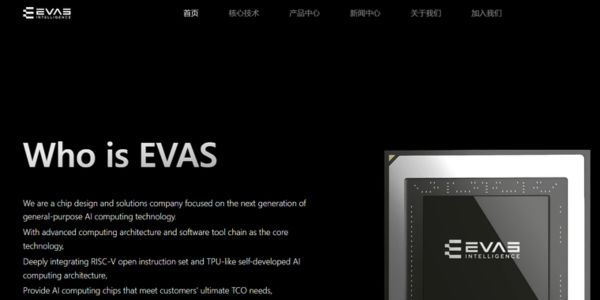
EVAS Intelligence has raised 1.5 billion yuan to mass‑produce its RISC-V Epoch AI chips, deepen its full‑stack platform, and accelerate global expansion, signaling rising investor confidence in alternative AI compute.
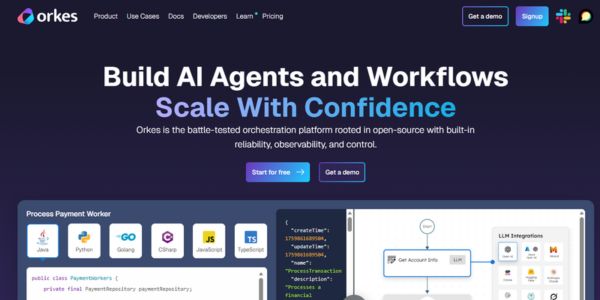
Orkes has raised 60 million dollars to turn its Netflix‑born workflow engine into a control plane for enterprise AI agents. The piece unpacks how its orchestration platform works, why investors are backing it now, and what this means for companies trying to move AI from pilots into production.

Paris-based Sillage has raised €1.7 million to launch an AI signal engine that helps enterprise sales teams follow the right buying signals, prioritize high-intent accounts, and improve pipeline efficiency without replacing human-led conversations.
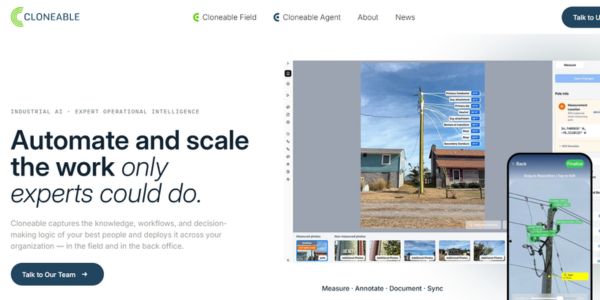
Cloneable is launching an agentic AI platform for infrastructure operations that captures institutional knowledge from retiring experts and turns it into scalable agents, targeting energy, utilities, and other asset-heavy sectors. The $4.6M seed-backed startup aims to connect field data capture with back-office execution so founders and operators can modernize infrastructure faster and with fewer bottlenecks.
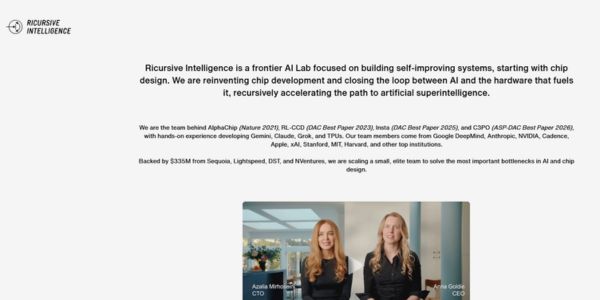
Excerpt: Ricursive Superintelligence has raised at least $500 million to build self‑improving AI, with GV and Nvidia backing a four‑month‑old lab at a $4 billion valuation. The deal crystallizes how quickly capital, talent and regulatory scrutiny are converging around autonomous AI research—and what that means for builders trying to compete outside the frontier club.

Brazilian startup BOND has raised US$2M to automate accounting for SMEs in Brazil’s complex tax system. Combining AI with human accountants, it targets a fragmented market of manual processes, aiming to turn back-office compliance into a faster, more strategic function for founders and operators.
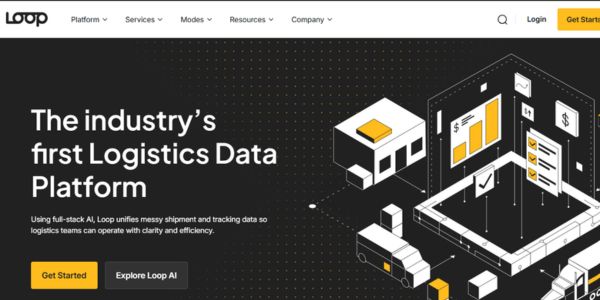
Loop just raised a $95M Series C to expand its AI-native supply chain platform, turning messy logistics data into early disruption warnings and better financial outcomes for global operators and shippers.
Linkedin X-twitter-square Facebook-square Startups & Business News AI agents are finally moving from demos to the day-to-day stack of real
Factory has raised a $150M Series C at a $1.5B valuation to scale its autonomous “Droids” platform, betting that enterprises will standardize software engineering around agent‑native missions, governance and cost‑optimized AI infrastructure.

Solidroad has raised $25 million to bring AI-native quality assurance to every human and AI-powered customer interaction. The new funding will accelerate product development and expansion for support-heavy businesses leaning into automation.
futureTEKnow is focused on identifying and promoting creators, disruptors and innovators, and serving as a vital resource for those interested in the latest advancements in technology.
© 2026 All Rights Reserved.