



















Beijing, China
2019
Software Development, Enterprise Software, Information Technology, Cybersecurity, Developer Tools, Education, Professional Services
Z.ai is an artificial intelligence company and platform built around the GLM family of large language models developed by Zhipu AI. Its technology spans generative AI, reasoning models, multimodal AI, coding systems, and autonomous agents. Z.ai provides both consumer-facing AI experiences and developer access to its models through APIs and coding tools. Its recent GLM models are increasingly designed around agentic AI and long-horizon task execution, moving beyond conversational responses toward systems that can use tools and complete multi-step work.
Z.ai develops foundation models and makes them available through its web application, APIs, developer plans, and AI coding tools. Users can interact with GLM models for research, reasoning, content creation, software development, and other knowledge-work tasks, while developers can integrate the models into their own applications.
The company has increasingly focused on AI systems that can perform multi-step tasks, particularly software engineering and tool-based workflows. Its GLM models support capabilities including reasoning, function and tool use, coding, document generation, search-based tasks, and agentic execution. Z.ai also provides infrastructure for developers that want to use GLM models through APIs or external coding-agent environments.
Z.ai’s core technology is the GLM family of foundation models. The architecture and training methods have evolved considerably across generations, with recent models emphasizing reasoning, coding, tool use, and long-running agent tasks.
GLM-5.3, released in August 2026, focuses heavily on complex software engineering and long-horizon agentic work. Z.ai says its post-training system uses large collections of executable task environments in which models can work with codebases, documentation, compute resources, and other tools while receiving verifiable feedback. The underlying training infrastructure includes technologies such as reinforcement learning and the open-source slime framework for large-scale asynchronous training.
Z.ai is also developing multimodal models. GLM-5.3-Flash, introduced in October 2026, combines sparse and linear attention and was trained on a 30-trillion-token multimodal corpus. It supports visual understanding alongside agentic and professional tasks.
The company’s broader technical direction is toward models that do more than generate responses: they reason about objectives, interact with tools, execute tasks, evaluate results, and iterate over longer workflows.
Z.ai is relevant to the emerging AI landscape because it combines foundation-model development with an increasingly agent-focused product ecosystem. Rather than concentrating solely on conversational AI, its recent GLM development emphasizes models capable of coding, tool use, reasoning, multimodal understanding, and extended autonomous work.
It is also part of the movement toward more accessible model infrastructure. Z.ai provides APIs while making weights for several GLM generations publicly available, allowing models to be integrated into external applications or deployed locally.
The progression from ChatGLM and GLM-4 to today’s agent-oriented GLM systems illustrates a broader AI trend: foundation models are evolving from assistants that generate answers into systems that execute work across software and digital environments.
The GLM model family provides the underlying AI technology across Z.ai’s products and developer services. Recent generations have expanded from general language and reasoning toward coding, tool use, multimodal processing, and agentic execution. As of October 2026, GLM-5.3 is positioned around complex coding and long-horizon tasks, while GLM-5.3-Flash adds native multimodal capabilities.
The Z.ai API gives developers programmatic access to GLM models for integration into software and AI applications. The platform provides OpenAI-compatible API interfaces, lowering the integration barrier for developers already working with that API format.
ZCode is Z.ai’s agentic development environment for software engineering. Developers can connect GLM models and use agents to work with files, folders, codebases, and development tasks. Its newer workflows support long-running coding tasks in which agents plan, implement, test, and verify their work.
The GLM Coding Plan provides access to GLM models for AI-assisted software development through ZCode and compatible coding agents. It supports tools including ZCode, Claude Code, OpenCode, and other development environments, allowing developers to use GLM models as coding agents rather than only through Z.ai’s web interface.
Z.ai’s technology has applications across software development, research, enterprise knowledge work, content generation, and AI application development.
One of its strongest current areas is software engineering and agentic coding. GLM models can work on code generation, debugging, repository-level tasks, testing, frontend and backend development, and longer engineering workflows. Z.ai has also demonstrated GLM models performing infrastructure engineering tasks that involve profiling systems, modifying code, running experiments, and evaluating results. Z.ai
Other applications include research and information retrieval, document and presentation creation, reasoning-intensive tasks, visual understanding, educational uses, and building third-party AI applications through the Z.ai API. The company’s models can also serve as the reasoning layer for AI agents that interact with external tools and software systems.
GLM is Zhipu AI’s family of foundation models. The family has developed from general-purpose language models into systems supporting reasoning, coding, multimodal processing, tool use, and AI agents. Recent models include GLM-5.3 and GLM-5.3-Flash.
Yes. Z.ai provides API access to GLM models. Its developer platform includes OpenAI-compatible endpoints, making it possible to integrate GLM models into applications and existing development workflows.
Several GLM generations have been released with publicly available model weights. Z.ai documents local deployment using inference frameworks including vLLM and SGLang, although availability varies by model generation.
ZCode is Z.ai’s development environment for AI-assisted software engineering. It connects coding agents with GLM models and allows them to work with project files, folders, codebases, and development tools.
Chat mode is intended for interactive conversational responses, while Agent mode gives GLM access to multiple tools and skills so it can perform more complex tasks and produce completed outputs.
Have an update, correction, or additional information about this company? Help us keep the futureTEKnow company database up to date by submitting the latest company information.

OpenAI’s Astra for Law combines GPT-6 Astra with specialized legal search, integrations, and governance controls. The launch shows how frontier AI is moving deeper into professional legal workflows.

AI projects often stall because business data isn’t consistent or trustworthy. Here’s how to identify data gaps before they become an AI roadblock.
EVAS Intelligence has raised 1.5 billion yuan to mass‑produce its RISC-V Epoch AI chips, deepen its full‑stack platform, and accelerate global expansion, signaling rising investor confidence in alternative AI compute.
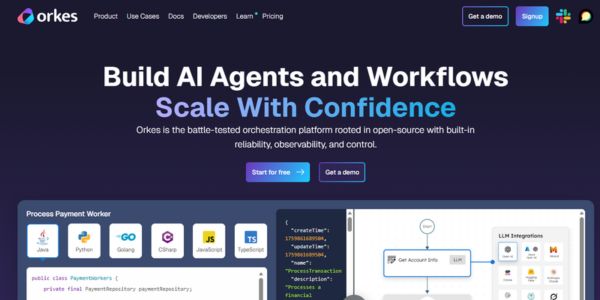
Orkes has raised 60 million dollars to turn its Netflix‑born workflow engine into a control plane for enterprise AI agents. The piece unpacks how its orchestration platform works, why investors are backing it now, and what this means for companies trying to move AI from pilots into production.

Paris-based Sillage has raised €1.7 million to launch an AI signal engine that helps enterprise sales teams follow the right buying signals, prioritize high-intent accounts, and improve pipeline efficiency without replacing human-led conversations.
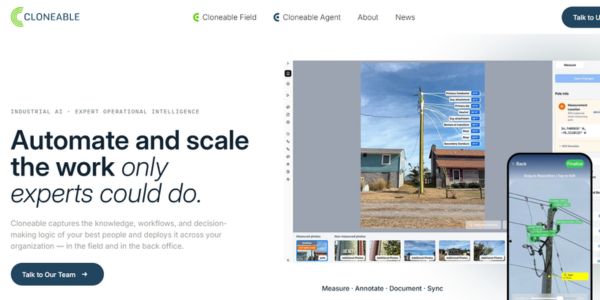
Cloneable is launching an agentic AI platform for infrastructure operations that captures institutional knowledge from retiring experts and turns it into scalable agents, targeting energy, utilities, and other asset-heavy sectors. The $4.6M seed-backed startup aims to connect field data capture with back-office execution so founders and operators can modernize infrastructure faster and with fewer bottlenecks.
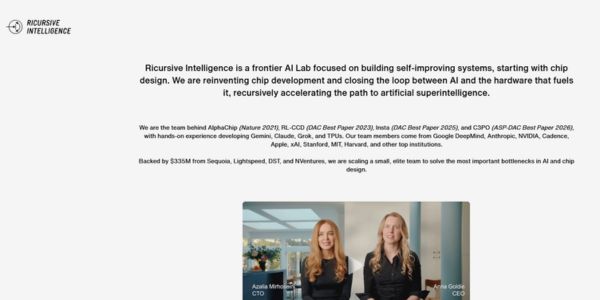
Excerpt: Ricursive Superintelligence has raised at least $500 million to build self‑improving AI, with GV and Nvidia backing a four‑month‑old lab at a $4 billion valuation. The deal crystallizes how quickly capital, talent and regulatory scrutiny are converging around autonomous AI research—and what that means for builders trying to compete outside the frontier club.

Brazilian startup BOND has raised US$2M to automate accounting for SMEs in Brazil’s complex tax system. Combining AI with human accountants, it targets a fragmented market of manual processes, aiming to turn back-office compliance into a faster, more strategic function for founders and operators.

Loop just raised a $95M Series C to expand its AI-native supply chain platform, turning messy logistics data into early disruption warnings and better financial outcomes for global operators and shippers.
Linkedin X-twitter-square Facebook-square Startups & Business News AI agents are finally moving from demos to the day-to-day stack of real
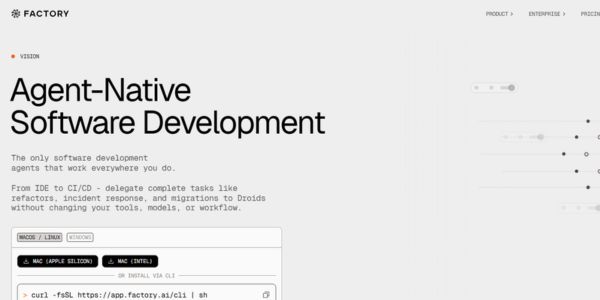
Factory has raised a $150M Series C at a $1.5B valuation to scale its autonomous “Droids” platform, betting that enterprises will standardize software engineering around agent‑native missions, governance and cost‑optimized AI infrastructure.
Solidroad has raised $25 million to bring AI-native quality assurance to every human and AI-powered customer interaction. The new funding will accelerate product development and expansion for support-heavy businesses leaning into automation.
futureTEKnow is focused on identifying and promoting creators, disruptors and innovators, and serving as a vital resource for those interested in the latest advancements in technology.
© 2026 All Rights Reserved.