

















Mountain View, California, USA
2023
AI Research, Enterprise Software, Software Development, Financial Services, Education, Data & Analytics, Robotics, Professional Services
Deccan AI is an artificial intelligence company providing post-training data, reinforcement learning environments, model evaluation, and AI agents for AI labs and enterprises. Its infrastructure supports the development and evaluation of large language models, multimodal systems, coding models, agentic AI, and physical AI. Deccan AI combines specialized human expertise with purpose-built data and evaluation infrastructure to help organizations train, test, and deploy AI systems across complex domains.
Deccan AI works across several stages of AI model development. It creates human-curated training and post-training datasets for coding, multimodal AI, multilingual models, model alignment, agentic systems, and physical AI. Its data services support techniques including supervised fine-tuning, RLHF, RAG, reasoning, and model evaluation.
The company has expanded beyond data into infrastructure for training and evaluating agents. Its STARK RL product provides executable reinforcement learning environments, while Helix evaluates AI agents using production traces, automated scoring, and human evaluation. Deccan AI also develops EnterpriseOS for deploying AI agents into enterprise workflows. Together, these capabilities allow customers to generate training data, improve models, evaluate their behavior, and deploy AI systems into operational environments.
Deccan AI’s technology centers on the data and environments required to improve AI models after initial pretraining. Its platform supports supervised fine-tuning, reinforcement learning, RLHF, multimodal training, and model evaluation, with human specialists involved in creating, reviewing, and validating data.
For reinforcement learning, STARK RL provides containerized environments where models can interact with tools and complete realistic tasks. These environments encode tool signatures, permissions, server states, and rate limits. Verification can examine not only whether an agent reached the correct result but also its execution path and changes to underlying system state.
Helix addresses another part of the model lifecycle: continuous AI-agent evaluation and drift detection. It can capture production traces, score behavior against defined rubrics, and combine automated evaluation with human review.
Deccan AI also produces datasets covering code, text, images, audio, video, documents, multilingual reasoning, model alignment, safety, and physical intelligence. Its data infrastructure incorporates expert review, quality-control workflows, compilers, validators, and other technical checks depending on the task.
As AI development moves toward reasoning models and autonomous agents, model performance increasingly depends on what happens after initial pretraining. High-quality post-training data, reinforcement learning environments, realistic evaluations, and expert feedback can determine whether models perform reliably on complex real-world tasks.
Deccan AI operates directly within this layer of the AI ecosystem. Its combination of specialized datasets, STARK RL environments, Helix evaluations, and EnterpriseOS connects training, evaluation, and deployment rather than treating data annotation as an isolated service.
Its expansion into coding agents, multimodal models, agentic systems, and physical intelligence also reflects an important shift in AI development: training data increasingly needs to represent actions, workflows, environments, and interactions, not just static text.
STARK RL provides reinforcement learning environments for training AI models and agents. Its containerized environments recreate realistic software and enterprise workflows with tools, permissions, state, and task-specific constraints. Multi-stage verifiers can examine execution traces, communication, database state, and final results to determine whether an agent completed a task correctly.
Helix is Deccan AI’s enterprise evaluation suite for testing AI agents. It combines automated and human evaluation and can monitor production traces for performance changes. Continuous monitoring and drift detection can identify behavior that falls below defined evaluation thresholds, while domain experts develop additional scenarios and rubrics around identified failure patterns.
EnterpriseOS is Deccan AI’s platform for deploying AI agents into enterprise operations. It is designed for human-supervised agentic workflows, where AI is integrated into operational processes while people retain oversight. The system can operate within an organization’s infrastructure and learn from cases handled through those workflows.
Deccan AI provides custom and ready-made datasets for AI training, post-training, and evaluation. Dataset categories include coding, multimodal AI, RLHF, multilingual reasoning, agentic systems, safety, and physical intelligence. Examples include coding-agent trajectories, executable terminal tasks, vision-language datasets, cultural and linguistic reasoning evaluations, and multilingual speech data.
Deccan AI’s technology is primarily used by AI developers that need specialized data and environments to improve model capabilities. Applications include training coding agents, evaluating autonomous AI systems, multimodal model development, model alignment, multilingual AI, and physical AI training.
Its enterprise applications extend into software development, financial services, education, and general-purpose AI. Deccan AI supports use cases such as code generation and debugging, Text-to-SQL, retrieval-augmented generation, financial analysis, risk-related AI applications, personalized educational content, and agentic workflows.
Physical AI represents another emerging application. Deccan AI provides labeled visual and motion data intended to supply ground-truth information for embodied AI systems interacting with physical environments.
Deccan AI provides data for coding, multimodal AI, multilingual models, model alignment, safety, agentic systems, and physical intelligence. Its datasets support techniques including supervised fine-tuning, RLHF, reinforcement learning, and model evaluation.
STARK RL is Deccan AI’s reinforcement learning environment platform. It provides containerized environments in which AI models and agents can interact with tools, execute realistic tasks, and receive verifiable feedback about whether their actions and final results were correct.
Deccan AI’s Helix platform captures agent traces and scores them against evaluation rubrics. It can combine automated AI evaluation with human review, monitor production behavior, identify drift, and turn detected failure patterns into additional evaluation scenarios.
Yes. Deccan AI includes physical intelligence among its dataset categories, providing visual and motion data designed to give embodied AI systems ground-truth information about physical environments and actions.
Yes. Deccan AI develops multilingual text and speech datasets. Its available datasets include examples for Indic-language RLHF, cultural reasoning, linguistic reasoning, and multilingual voice and audio systems.
Have an update, correction, or additional information about this company? Help us keep the futureTEKnow company database up to date by submitting the latest company information.

OpenAI’s Astra for Law combines GPT-6 Astra with specialized legal search, integrations, and governance controls. The launch shows how frontier AI is moving deeper into professional legal workflows.

AI projects often stall because business data isn’t consistent or trustworthy. Here’s how to identify data gaps before they become an AI roadblock.
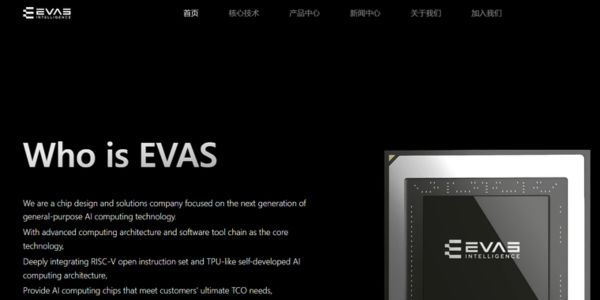
EVAS Intelligence has raised 1.5 billion yuan to mass‑produce its RISC-V Epoch AI chips, deepen its full‑stack platform, and accelerate global expansion, signaling rising investor confidence in alternative AI compute.
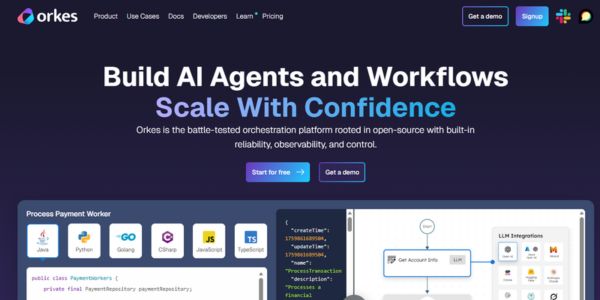
Orkes has raised 60 million dollars to turn its Netflix‑born workflow engine into a control plane for enterprise AI agents. The piece unpacks how its orchestration platform works, why investors are backing it now, and what this means for companies trying to move AI from pilots into production.

Paris-based Sillage has raised €1.7 million to launch an AI signal engine that helps enterprise sales teams follow the right buying signals, prioritize high-intent accounts, and improve pipeline efficiency without replacing human-led conversations.
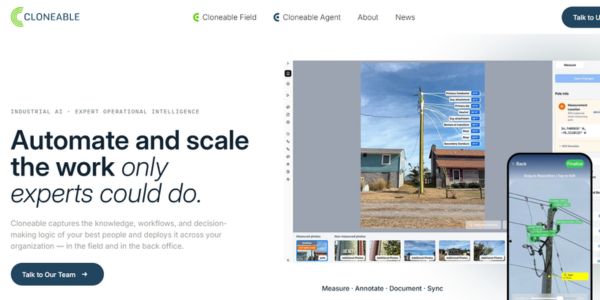
Cloneable is launching an agentic AI platform for infrastructure operations that captures institutional knowledge from retiring experts and turns it into scalable agents, targeting energy, utilities, and other asset-heavy sectors. The $4.6M seed-backed startup aims to connect field data capture with back-office execution so founders and operators can modernize infrastructure faster and with fewer bottlenecks.
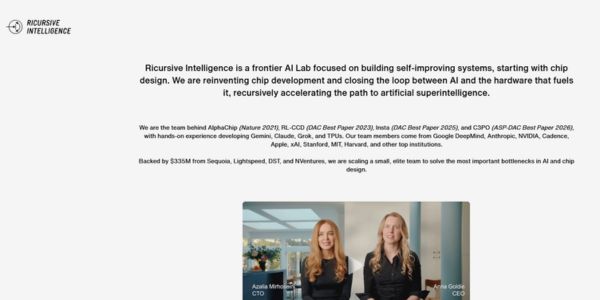
Excerpt: Ricursive Superintelligence has raised at least $500 million to build self‑improving AI, with GV and Nvidia backing a four‑month‑old lab at a $4 billion valuation. The deal crystallizes how quickly capital, talent and regulatory scrutiny are converging around autonomous AI research—and what that means for builders trying to compete outside the frontier club.

Brazilian startup BOND has raised US$2M to automate accounting for SMEs in Brazil’s complex tax system. Combining AI with human accountants, it targets a fragmented market of manual processes, aiming to turn back-office compliance into a faster, more strategic function for founders and operators.
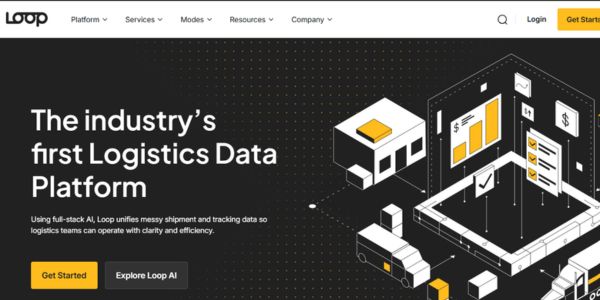
Loop just raised a $95M Series C to expand its AI-native supply chain platform, turning messy logistics data into early disruption warnings and better financial outcomes for global operators and shippers.
Linkedin X-twitter-square Facebook-square Startups & Business News AI agents are finally moving from demos to the day-to-day stack of real
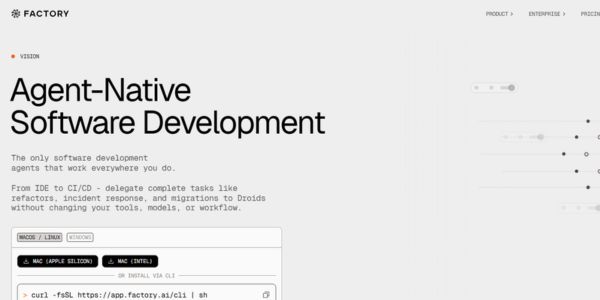
Factory has raised a $150M Series C at a $1.5B valuation to scale its autonomous “Droids” platform, betting that enterprises will standardize software engineering around agent‑native missions, governance and cost‑optimized AI infrastructure.
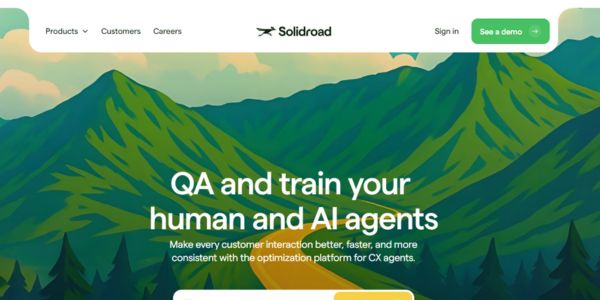
Solidroad has raised $25 million to bring AI-native quality assurance to every human and AI-powered customer interaction. The new funding will accelerate product development and expansion for support-heavy businesses leaning into automation.
futureTEKnow is focused on identifying and promoting creators, disruptors and innovators, and serving as a vital resource for those interested in the latest advancements in technology.
© 2026 All Rights Reserved.