
Startups & Business News
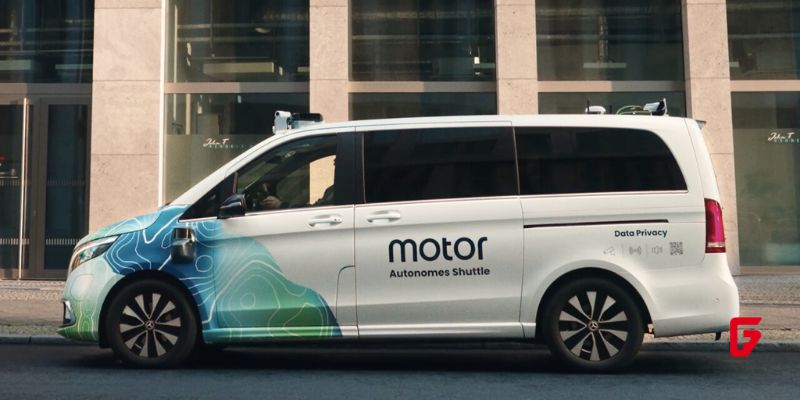
The landscape of autonomous mobility in Europe is shifting, and Berlin-based MOTOR Ai is at the forefront with a recent €17.1M seed funding round. This milestone arms the company with fresh resources to accelerate Level 4 autonomous driving systems deployment across Germany and beyond, reshaping what we expect from automated public transport, regulatory compliance, and AI transparency.
Reimagining Autonomous Driving: The MOTOR Ai Approach
Founded by Roy Uhlmann and Adam Bahlke, MOTOR Ai’s origin story is firmly rooted in technological necessity. The team discovered an industry-wide lack of robust perception modules for autonomous vehicles, which motivated them to create an entire full-stack system—controlling every layer from perception to decision-making. Unlike the industry norm of patching together off-the-shelf components, MOTOR Ai brings everything in-house for total system transparency and reliability.
A pivotal moment came when Bahlke joined Germany’s DIN commission, shaping the country’s autonomous driving legal framework. This membership gave MOTOR Ai early insight into what regulatory-ready AV systems should look like, guiding their R&D to not only meet but anticipate the strict European compliance environment.
“In a regulated environment like Europe, trust and compliance are non-negotiable. MOTOR Ai has built a solution that is technologically differentiated and fundamentally aligned with European infrastructure and public safety.” — Michael Janßen, Segenia Capital
What Makes MOTOR Ai Different?
MOTOR Ai’s Level 4 intelligence doesn’t rely on the opaque “black box” of deep learning models; instead, it operates on Active Inference—a cognitive model inspired by neuroscience. This methodology keeps every vehicle decision traceable and explainable, directly addressing the edge cases that stymie most competitors.
Perception: Real-time environmental awareness with complete sensor fusion provides a reliable bird’s-eye view.
Prediction and Active Inference: The vehicle predicts evolutions in traffic, weather, and more, continuously updating its internal model and immediately adjusting to changes—a process similar to how human drivers make decisions.
Drive-by-Wire Controls: Refinements are instantly executed through electronic steering and braking systems.
This stack ensures compliance with the world’s toughest AV regulations, including UNECE standards, ISO 26262 (ASIL-D), and the upcoming EU AI Act. MOTOR Ai’s mantra is to engineer for regulation, not merely adapt afterward.
Public Mobility, Rural Connectivity, and Robo-Shuttles
Initial deployments will focus on public transport and autonomous shuttle services. The goal: to improve rural connectivity, address driver shortages, and make municipal transit greener and more efficient. Pilot projects with entities like the Ludwigslust-Parchim transport authority (VLP) and the city of Geestland are already preparing for full-scale operations by 2026. Early tech demonstrations, like those at the Federal Garden Show in Mannheim, highlight the readiness of their stack for real-world conditions.
Autonomy as a Service: A New Model for Urban Mobility
Unlike typical suppliers handing off software, MOTOR Ai is embracing an “Autonomy as a Service” strategy—developing, deploying, and running the entire Autonomous Driving System (ADS) lifecycle. This approach ensures both safety and transparency, earning the trust of municipalities and regulators. The phased rollout begins in Germany, expanding through Europe as type approvals are secured.
The Road Ahead
For the European AV sector, MOTOR Ai’s transparent, neuroscience-inspired framework stands out in an increasingly crowded market. With regulatory clarity, strong partnerships, and full-stack control, the company is positioned to become a benchmark for safe and explainable driverless mobility.
This shift signals a new phase where trust, explainability, and local needs—not just technical capability—define the next generation of autonomous mobility solutions in Europe.

futureTEKnow
Editorial Team
Discover the companies and startups shaping tomorrow — explore the future of technology today.
Trending Companies
Latest Articles
futureTEKnow is focused on identifying and promoting creators, disruptors and innovators, and serving as a vital resource for those interested in the latest advancements in technology.
© 2026 All Rights Reserved.