
Startups & Business News
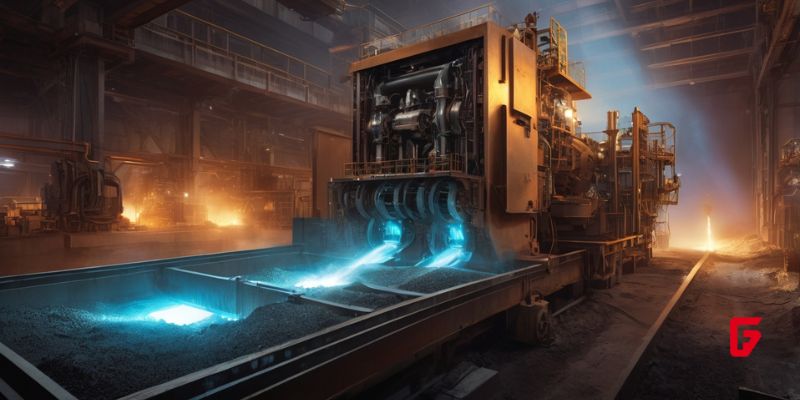
The rise of artificial intelligence is prompting an unprecedented race for a distinct class of resources: rare earth metals. Elements such as neodymium, gallium, and lithium have become the unsung backbone of modern technology—all the way from powerful data centers to advanced electric vehicles and next-gen semiconductors. The latest findings coming out of a once dormant American mining site could put the U.S. squarely back in the game, with major implications for technological independence and global market dynamics.
“A newly examined U.S. mining site may offer significant reserves of these materials, prompting renewed interest in reshoring critical supply chains…”
Rare Earths: The Beating Heart of AI Infrastructure
AI infrastructure is not only about lines of code—it’s about hardware. Neodymium is indispensable for the powerful magnets in EV motors and data center cooling. Gallium is what makes blazing-fast semiconductors possible, while lithium powers the energy-dense batteries that drive today’s robotics and autonomous systems.
Data centers rely on rare earths for thermal management and stable power delivery.
EVs and renewable platforms require vast quantities for motors and high-capacity energy storage.
Global AI expansion multiplies resource demand across every industry vertical.
The U.S. Discovery: A Geopolitical Game Changer
China currently dominates the rare earths market—accounting for over 80% of production and 90% of processing. The discovery of high-grade deposits in Mountain Pass, California, could reduce vulnerability to global supply disruptions and reset the balance of technological power.
Mountain Pass holds an estimated $100 trillion in “AI metals” based on future tech infrastructure demand.
U.S. policy shifts—including funding, the CHIPS Act, and stockpiling programs—aim to foster a domestic ecosystem for rare earth mining and processing.
Modern extraction and processing technologies at this site are designed to minimize environmental impact while maximizing output efficiency.

Market Surge: Demand Projections & Strategic Implications
Industry experts project a surge in AI metal demand through 2030. Every hyperscale data center coming online will devour thousands of pounds of these specialty metals. Driven by:
Massive infrastructure investments—an estimated $2 trillion annual spend by 2030 on AI infrastructure globally.
The electrification of transport, with EVs and autonomous vehicles accelerating need for neodymium and lithium.
Smart manufacturing, edge computing, and clean energy sectors—all critically dependent on these rare earths.
Nations with reliable access can steer the direction of digital transformation and technological advancement. The reshoring of supply chains isn’t just an economic play; it’s now fundamental to national security and industrial resilience.
Operational Excellence & Innovation
The team behind Mountain Pass is leveraging:
Automated extraction systems and breakthrough metallurgy for high-yield, low-waste mining.
Proprietary processes tailored for the unique needs of AI-critical materials—setting an industry standard in both output and sustainability.
Financially, the operation is showing gross margins above 40%, using long-term contracts with tech companies to stabilize cash flow while ramping up for greater scale.
The Road Ahead: Risks, Innovation, and Sustainability
Investing in AI metals comes with typical commodity risks—price volatility, geopolitical friction, and the constant chase for scientific substitutes. However, so far, “AI metals” remain irreplaceable due to their unique electromagnetic and thermal properties essential for modern computing.
Environmental and social responsibility pressures are simultaneously rising. Companies adopting green mining practices and strong ESG policies are increasingly favored by both regulators and forward-looking investors.
Why It Matters
Control over rare earth supply chains will define the next era of technological competition. As AI weaves deeper into economies and infrastructure, the minerals powering this revolution shift from obscurity to the center stage. The U.S.—with rediscovered, high-grade deposits and advanced processing capabilities—has a rare opportunity to reshape global technology infrastructure and reinforce strategic autonomy.
For anyone in tech, manufacturing, or policy: rare earth metals are no longer just an obscure footnote—they are the foundation of the AI revolution.

futureTEKnow
Editorial Team
Discover the companies and startups shaping tomorrow — explore the future of technology today.
Trending Companies
Latest Articles
futureTEKnow is focused on identifying and promoting creators, disruptors and innovators, and serving as a vital resource for those interested in the latest advancements in technology.
© 2026 All Rights Reserved.