
Startups & Business News
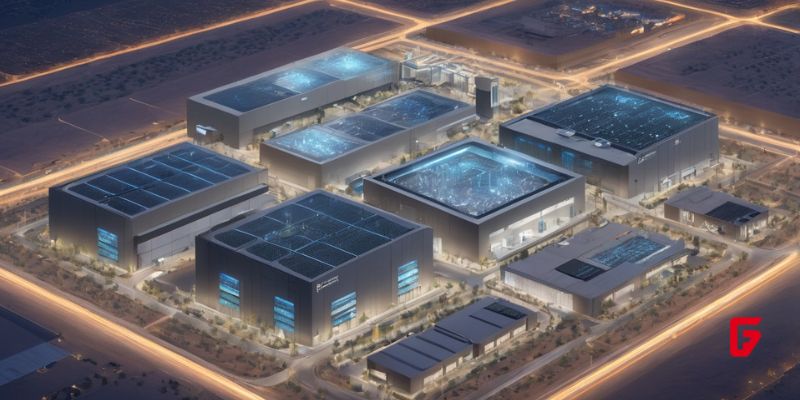
The U.S. defense and aerospace sectors are facing a defining moment as Hadrian, a rising name in industrial automation, secures $260 million in new funding to reimagine the American manufacturing landscape. With this fresh investment, Hadrian is set to accelerate the deployment of AI-driven, automated factories—and its ambitious expansion is making Mesa, Arizona, ground zero for the next wave of industrial innovation.
“America cannot afford to lose another generation of industrial capacity,” says Chris Power, Hadrian’s founder and CEO, as he positions the company at the crossroads of national security and advanced technology.
AI, Automation, and the Decline of Legacy Manufacturing
What sets Hadrian apart is its focus on advanced automation and AI-driven robotics—a stark contrast to the traditional American machining ecosystem that’s long depended on hundreds of small shops staffed by an aging workforce.
The company’s new and existing facilities are capable of producing precision CNC machined parts—components made to measurements thinner than a human hair—and are expanding to include welding, casting, and additive manufacturing.
Backed by influential investors like Peter Thiel’s Founders Fund, Lux Capital, and Morgan Stanley, Hadrian is aiming to deliver mission-critical systems for defense and aerospace at speeds and volumes the old guard simply can’t match. Their model, dubbed “Factories-as-a-Service,” allows defense clients to benefit from rapid, scalable production capacity without building their own plants—a particularly timely answer as U.S. defense supply chains face mounting pressure.
Hadrian is announcing a $260m Series C lead by @foundersfund + @Lux_Capital + @MorganStanley for (Factory Expansion financing). We're also welcoming new investors @altimeter, @1789Capital + investments from existing investors @a16z, @constructcap, @137ventures and many others.… pic.twitter.com/iunmL2v15j
— Chris Power (@2112Power) July 17, 2025
The Arizona Expansion: A New Hub Emerges
Hadrian’s latest site in Mesa, Arizona covers nearly five football fields and promises 350 new high-wage jobs. The facility is underpinned by Hadrian’s proprietary software, Opus, which orchestrates seamless automation and enables factories to go live in less than six months. According to Mesa mayor Mark Freeman, this not only cements the city as a center for advanced manufacturing and defense innovation, it strengthens America’s industrial foundation at a pivotal time.
Filling the Talent Gap and Reindustrializing America
Hadrian is also rethinking workforce development—its approach enables new staff, often from non-traditional backgrounds like ex-service members and nurses, to become productive within just 30 days. This results in a tenfold increase in productivity per employee, helping address the shortage of skilled labor in specialized manufacturing roles.
What’s Next?
10x year-over-year growth: Hadrian’s rapid scaling is notable not just for its funding, but for operational growth since its last funding round just a year ago.
National security as a driver: The company’s leadership sees the revitalization of U.S. industrial capacity as a strategic imperative in the face of growing global competition, particularly from China.
More facilities on the horizon: Over the next year, Hadrian plans to launch multiple new sites, each tailored to critical defense production needs.
Key takeaways:
$260 million raised for American manufacturing innovation
Mesa, Arizona: new hub for advanced, AI-automated factories
Rapid, highly precise manufacturing for aerospace and defense
Addressing labor shortages with accelerated training and automation
Driving U.S. reindustrialization at national scale
Hadrian’s latest milestone isn’t just a big funding round—it’s a signal that the future of manufacturing in America will be faster, smarter, and massively more resilient than ever before.

futureTEKnow
Editorial Team
Discover the companies and startups shaping tomorrow — explore the future of technology today.
Trending Companies
Latest Articles
futureTEKnow is focused on identifying and promoting creators, disruptors and innovators, and serving as a vital resource for those interested in the latest advancements in technology.
© 2026 All Rights Reserved.