
Startups & Business News
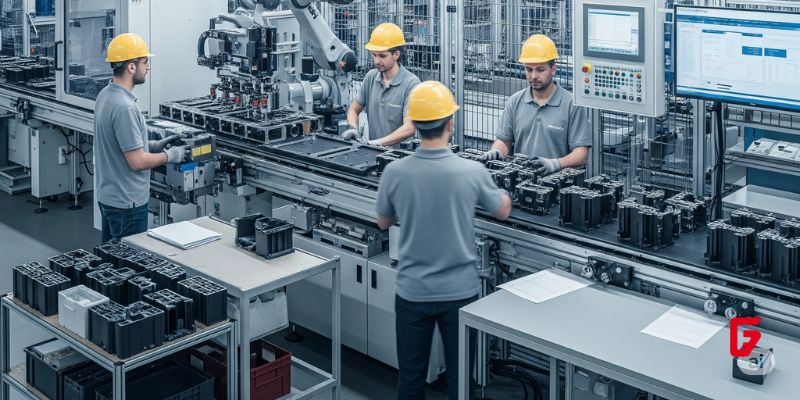
The industrial sector is facing a wave of digital transformation, and 36ZERO Vision is pushing the boundaries with its data-efficient AI inspection platform. With a recent infusion of €3.6 million in funding, this Munich-based company is on a mission to redefine how manufacturers approach quality control and defect detection.
Turning Industry Pain Points Into Disruptive AI Solutions
Many manufacturers struggle with inspection tools that demand thousands of sample images and extensive manual labeling—yet still suffer high false-positive rates. These outdated processes lead to wasted resources and significant frustration on the shop floor. 36ZERO Vision has zeroed in on this problem, introducing a modular deep learning architecture that leverages synthetic image variations to enable accurate defect detection with as few as five annotated images.
Unlike traditional inspection systems, 36ZERO Vision’s approach means:
Minimal data input: The system learns robustly from limited images, significantly slashing the time and effort needed for labeling and setup.
Versatile deployment: The platform runs on low-end hardware like iPhones or NVIDIA Jetson devices, and supports common industry protocols. Installation is straightforward and hardware-agnostic.
Cloud-based onboarding: Manufacturers can handle labelling, training, and validation directly on the platform, skipping the need for on-site integration and allowing rapid scalability.
Proven Performance Across Sectors
36ZERO Vision is already trusted by global leaders including Siemens, Bosch Rexroth, and LEONI, integrating its inspection solution into diverse production lines. The technology excels where others falter: in benchmarks using just 10 images, the system achieved nearly perfect accuracy—with no missed defects or false alarms—while leading competitors showed a 9% error rate.
Key advantages that stand out:
Dramatic reduction in false positives, minimizing waste and unnecessary rework.
Self-serve platform: No specialized coding knowledge required. Users can train and validate models with a few clicks, directly from a laptop or workstation.
Continuous improvement: The AI platform evolves through human feedback, adapting to new defect patterns and production nuances.
Industry Reach and Ambition
While 36ZERO Vision’s initial success was in automotive, adoption is now expanding to electronics, machinery, building materials, and defense. The next frontier is semiconductor inspection—covering wafer and chip applications—with plans for further expansion on the horizon.
Fundraising will empower the team to deepen deployments across Europe and ramp up sales, customer success, and product development, alongside global ambitions. The goal: to establish a software-first industrial AI standard that raises the bar for quality, speed, and efficiency in visual inspection.
A Glimpse into the Future of Manufacturing
36ZERO Vision’s trajectory highlights a broader shift: putting advanced AI and computer vision tools directly in the hands of manufacturing teams—eliminating technical barriers, reducing operational friction, and delivering actionable insights in real time.
In an era where data efficiency, hardware flexibility, and cloud-based collaboration are mandatory for success, 36ZERO Vision is setting a new benchmark for industry-ready AI inspection. This is not just efficiency; it’s a paradigm shift in how factories deliver quality at scale.

futureTEKnow
Editorial Team
Discover the companies and startups shaping tomorrow — explore the future of technology today.
Most Popular
Trending Companies
Latest Articles
futureTEKnow is focused on identifying and promoting creators, disruptors and innovators, and serving as a vital resource for those interested in the latest advancements in technology.
© 2026 All Rights Reserved.