





















By futureTEKnow | Editorial Team
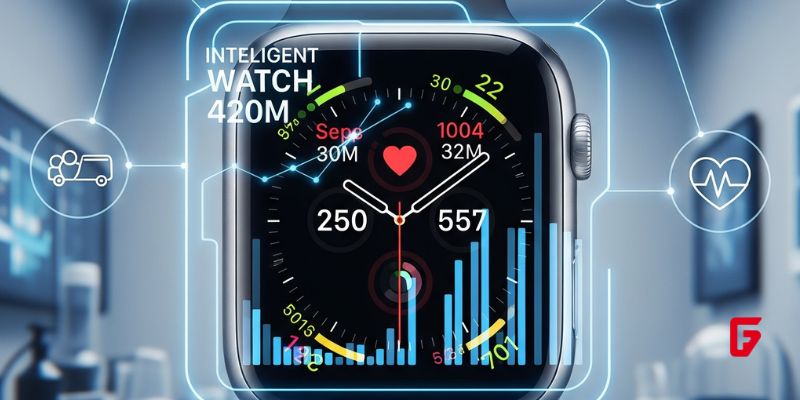
Apple’s latest breakthrough in health technology is a new artificial intelligence model that leverages behavioral data from Apple Watch users to predict health conditions more accurately than ever before. Instead of relying solely on raw sensor outputs like heart rate or blood oxygen, this model—dubbed the Wearable Behavior Model (WBM)—analyzes patterns in how users move, sleep, and exercise over time.
Behavioral Metrics: The WBM focuses on high-level metrics such as physical activity, cardiovascular fitness, mobility, exercise time, standing time, and sleep quality.
Data Scale: Trained on data from over 160,000 participants and more than 2.5 billion hours of Apple Watch usage, the model draws on a massive dataset to spot subtle health trends.
Health State Detection: The model excels at identifying both static health states (like whether someone is a smoker or on beta blockers) and transient conditions (such as pregnancy or sleep changes).
Pregnancy Detection: When combined with biometric data, the model achieved up to 92% accuracy in detecting pregnancy, outperforming traditional sensor-based approaches.
Hybrid Approach: The best results came from combining the WBM with traditional sensor models (like PPG), especially for conditions where behavior and physiology both matter.
Task Versatility: Tested across 57 different health-related tasks, the WBM consistently outperformed older models in predicting long-term and behavioral health changes.
Behavior metrics—such as physical activity, sleep patterns, and daily routines—significantly improve disease detection by providing continuous, real-world data that capture subtle lifestyle changes often linked to the early stages of illness. These metrics are particularly valuable because many chronic and infectious diseases develop gradually and are influenced by long-term habits and behaviors.
Key ways behavior metrics enhance disease detection:
Early and Accurate Diagnosis: Studies show that machine learning models trained solely on daily behavioral data can accurately diagnose conditions like diabetes, hypertension, and hyperlipidemia, sometimes outperforming traditional clinical measurements. For example, behavioral data alone enabled over 80% accuracy in diagnosing diabetes and hypertension, and outperformed standard blood pressure monitoring for hypertension detection.
Detection Before Symptoms Appear: Wearable devices can identify physiological and behavioral anomalies—such as changes in heart rate, activity levels, or sleep—before individuals notice or report symptoms. This allows for earlier intervention and better management of infectious diseases like COVID-19 and influenza.
Personalized Risk Assessment: By analyzing patterns unique to each individual, behavior metrics support more precise risk prediction for chronic diseases, enabling tailored prevention and treatment strategies.
Continuous Monitoring: Unlike occasional clinical visits, behavior data from wearables or apps provide a continuous stream of information, making it possible to detect disease onset or progression in real time.
Combinatorial Insights: High-resolution analysis of multiple behavioral parameters can reveal unique signatures for different diseases and enable earlier detection than single-measure approaches.
Beyond Raw Sensors: By focusing on interpretable, expert-validated metrics, the WBM provides insights that raw sensor data often misses, especially for health states that develop over weeks or months.
Personalized Health Monitoring: With the ability to track and predict changes in health based on daily habits, this approach opens up new possibilities for personalized wellness and early intervention.
Voluntary Data Sharing: The model was trained on data from participants in Apple’s Heart and Movement Study, all of whom voluntarily shared their health data through their devices.
Privacy Considerations: As with any AI-driven health tool, privacy remains a top concern, especially regarding sensitive data like reproductive health.
No New Sensors Required: The model works with existing Apple Watch hardware, meaning users could benefit from enhanced health predictions without needing to upgrade devices.
Potential for Broader Impact: This technology could pave the way for smarter, more proactive health features in future wearables.
This development marks a significant shift in how wearable technology can support health, moving from passive tracking to active, intelligent prediction—all powered by the behavioral patterns we generate every day.

AWS frontier agents introduce a new era of autonomous AI coders that can build, secure, and run applications for days at a time, acting like virtual teammates across dev, security, and DevOps while engineers retain final control over production changes.

Explore the cutting-edge ways AI is enhancing Lean Six Sigma, from real-time process insights to predictive controls, ushering in a new era of operational excellence and efficiency.

Facing supply chain challenges in 2025? High-performing teams leverage AI for risk management, demand forecasting, supplier analytics, and end-to-end visibility to ensure business continuity and resilience.

Craft an AI-powered supply chain Center of Excellence that unifies control tower visibility, analytics, and inventory optimization into one strategic hub. Explore this blueprint to learn how a modern supply chain CoE drives resilience, smarter decisions, and operational excellence in the age of AI.

Supply chain leadership is being redefined by AI, intelligent automation, and agentic decision-making, demanding leaders who can engineer end-to-end intelligence rather than simply manage workflows. This article explores how next-generation supply chain leaders will combine data, algorithms, and human judgment to build resilient, adaptive, and high-performing global operations.

Bridgit Mendler’s Northwood Space is pioneering mass-produced ground stations, enabling scalable, high-speed connectivity for the new era of satellite networks and megaconstellations.

SpaceX aims to nearly double launches from Vandenberg in 2025, facing support from federal agencies but strong objections from the state and local communities.

Traditional Medicare will pilot AI-assisted prior authorization in 2026 across six states, focusing on high-risk outpatient services. Clinicians retain final say, but incentives and access concerns loom as CMS tests fraud reduction and “gold card” exemptions. Here’s what providers and patients should know.

OpenArt’s new “one-click story” compresses scripting, visuals, and edits into ready-to-post short videos—fueling viral growth and a fresh IP debate. We break down how it works, adoption signals, what’s next (multi-character, mobile), and practical guardrails creators and brands should follow to stay original and compliant.

OpenAI’s o3 swept the Kaggle AI chess tournament, defeating xAI’s Grok 4–0. The victory fueled the intense rivalry between Altman and Musk, reshaping AI benchmarks.

NASA and Google’s AI-powered Crew Medical Officer Digital Assistant enables autonomous diagnoses for astronauts on Mars missions, redefining remote healthcare for space and Earth.

Pinterest’s CEO confirms that fully agentic AI shopping is years away, as the platform invests in AI-powered tools to enhance discovery, inspiration, and personalized shopping experiences for millions.
To provide the best experiences, we use technologies like cookies to store and/or access device information. Consenting to these technologies will allow us to process data such as browsing behavior or unique IDs on this site. Thanks for visiting futureTEKnow.