
Startups & Business News
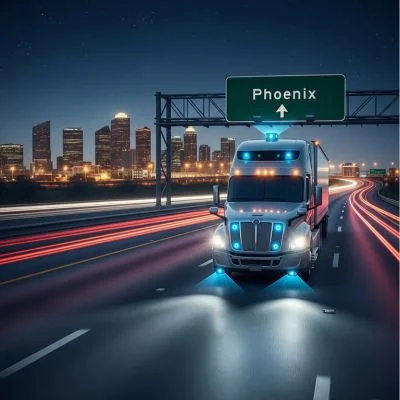
24-Hour Autonomous Trucking: A Reality, Not a Prototype
The world of trucking just woke up to a game-changer—Aurora Innovation’s driverless trucks now run around the clock, both day and night. After years of technical promises, this expansion means reliable autonomous transport isn’t just coming; it’s already hauling freight down I-45 from Dallas to Houston and branching out west to Phoenix.
Why is nighttime so important? For one, it unlocks continuous truck utilization, potentially doubling delivery capacity over human-driven hauls, which are restricted by strict service limits. Human drivers deal with fatigue and must stop by law after 11 hours. Aurora’s system tirelessly pushes on, resetting the rules of efficiency.
The Night Driving Breakthrough
Night comes with its own hazards: 37% of all fatal crashes involving large trucks happen after dark, despite lower overnight traffic. Most accidents trace back to human error, fatigue, or poor visibility. Aurora’s solution? Its proprietary FirstLight lidar—a long-range sensor that sees more than 450 meters ahead, sharply recognizing pedestrians, other vehicles, and debris even in pitch black. The system boasts the capability to spot hazards up to 11 seconds faster than a human driver.
Safer, more reliable night hauls now mean freight can keep moving, customers get deliveries faster, and highways could become less dangerous for everyone.

Phoenix Terminal: A Gateway to the Future
Aurora’s Phoenix terminal, launched in June, does more than add another dot on the map. It anchors the company’s push along the critical Fort Worth–El Paso–Phoenix corridor—over 1,000 miles, half the famed Atlanta–Los Angeles freight route. This expansion enables autonomous 15-hour runs that human drivers would have to split into two or more days.
For shippers like Hirschbach and Werner, Aurora’s infrastructure-light approach means integration with existing logistics operations and faster onboarding for tech-powered haulage. It is a direct move toward delivering end-to-end, autonomous cold-chain freight.
Resilient Finances, Aggressive Roadmap
Even as Aurora celebrates technical and operational milestones—over 20,000 driverless miles just since April and three trucks in active commercial service—it is also keeping an eye on its runway. In Q2 2025, Aurora reported $1 million in revenue but a net loss of $201 million. Still, $1.3 billion in cash and short-term investments allow the company to pursue its ambitious roadmap through 2027.
Next? Aurora’s teams are working to prove their trucks in adverse weather, like heavy rain and wind, aiming for near-total operational reliability on U.S. highways by year’s end.
Trucking is being reshaped, right now, by machines that don’t need the sun to see the road. Aurora’s aggressive push into 24/7 autonomous operations and critical infrastructure growth signal that the future of freight is being built—mile by self-driven mile.

futureTEKnow
Editorial Team
Discover the companies and startups shaping tomorrow — explore the future of technology today.
Most Popular
Trending Companies
Latest Articles
futureTEKnow is focused on identifying and promoting creators, disruptors and innovators, and serving as a vital resource for those interested in the latest advancements in technology.
© 2026 All Rights Reserved.