
Startups & Business News
China’s Industrial Robot Makers Go Global: The IPO-Fueled Expansion Revolution
KEY POINTS
China’s industrial robot exports surged 60% in early 2025, now ranking second globally by market share.
Leading Chinese robotics companies—Estun Automation, Zhaowei Machinery & Electronics, and RobotPhoenix—are turning to Hong Kong IPOs to fuel global expansion.
Core growth strategies include intensive R&D, overseas acquisitions, and the creation of international manufacturing and sales networks.
Despite remarkable progress, Chinese robot makers face challenges in advanced technologies, global branding, and competition from established foreign firms.
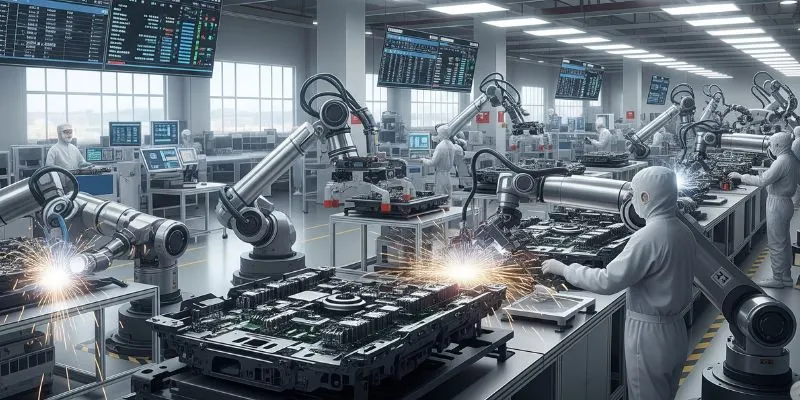
How Are Chinese Industrial Robot Makers Expanding Globally in 2025?
The world is witnessing a robotics revolution led by China, a country once traditionally focused on low-cost manufacturing but now sprinting ahead with strategic innovation. In 2025, China’s industrial robot makers are not just content with domestic dominance—they’re charging onto the global stage, and they have their sights set high.
Why Are Chinese Robotics Companies Pursuing IPOs?
Why the IPO rush? Chinese robotics companies are grappling with rapid sector growth and fierce competition, which puts consistent pressure on cash flow and demands continuous R&D. Listing on Hong Kong’s stock exchange has become a favored route, offering access to fresh capital, international investors, and more flexible listing requirements compared to mainland exchanges. In the first half of 2025, companies like Estun Automation, Zhaowei Machinery & Electronics, and RobotPhoenix have joined the IPO frenzy, aiming to bankroll overseas expansion and stay ahead in the innovation race.
What Is Driving China’s Robotics Export Boom?
China’s prowess is reflected in exploding export numbers: In the first half of 2025 alone, China exported more than 94,000 industrial robots, a staggering 60% increase compared to the previous year. This surge follows China’s climb to the world’s second-largest market share in industrial robot exports by 2024, demonstrating a dramatic shift from its previous reliance on imports.
At home, this mirrors a mature market, where Chinese brands are outpacing foreign competitors in core areas, especially in cost-effective deployment across automotive, electronics, and new energy sectors. Estun Automation, for instance, became the first local brand to surpass foreign rivals in domestic shipments in early 2025.
How Are IPO Proceeds Powering Global Ambitions?
IPO funding is unlocking bold expansion strategies for Chinese firms:
Estun Automation is channeling funds into R&D, global service centers, and international acquisitions (notably UK’s Trio and Germany’s Cloos). In 2024, international markets already accounted for over a third of its revenue—a trend set to accelerate.
Zhaowei Machinery & Electronics is building new facilities in Southeast Asia and Europe, aimed at reducing logistics time and following global automotive clients abroad.
RobotPhoenix is expanding its agent network to 20+ regions, building a Hong Kong base, and investing in R&D for next-gen robotics.
Each of these companies is sharpening its global edge by developing proprietary technology, expanding manufacturing abroad, and strengthening international sales and support teams.
| Statistic | Value |
|---|---|
| Industrial robots exported by China (H1 2025) | 94,200 units |
| Export value (H1 2025) | USD 746 million |
| Year-on-year export increase (H1 2025) | 59.74% |
| Full-year export value (2024) | USD 1.13 billion |
| China’s rank in global industrial robot export | 2nd largest market share (2024) |
| Annual industrial robot installations (2023) | 276,288 units |
| Industrial robots operating in China factories | 1,755,132 units |
| Industrial production index growth (Dec 2024) | 6.2% year-on-year |
What Challenges Do Chinese Robot Makers Face in Global Markets?
Despite aggressive growth, Chinese robot makers don’t have a clear path. They encounter:
Critical reliance on foreign technology: Chinese robots often depend on imported AI chips and high-precision components, leaving them vulnerable to export controls and supply chain disruptions.
Brand and trust-building: Even with rapid technical progress, convincing global manufacturers to switch from established players (like ABB, Fanuc, or Kuka) remains daunting. Challenges in the high-end segment, especially for complex tasks and precision, are persistent.
Intense price competition: The crowded marketplace means thinner margins and profitability struggles for many, including RobotPhoenix, which narrowed losses but still ended 2024 in the red.
Geopolitical and regulatory pressures: Trade tensions, compliance hurdles, and technology transfer restrictions further complicate expansion into North America and Europe.
How Are Chinese Robotics Firms Innovating for the Future?
To overcome these barriers, leading Chinese companies are:
Investing heavily in R&D: Estun’s R&D spend has reached over 12% of revenue with dedicated teams across China and Europe.
Building global manufacturing and sales infrastructure: Multiple firms are establishing overseas plants and subsidiaries for localization, cost efficiency, and better alignment with global clients.
Specializing for competitive advantage: Zhaowei, for instance, focuses on miniature drive systems for smart vehicles and healthcare, carving out leadership in a niche.
Accelerating technology self-sufficiency: China’s government and industry are racing to develop domestic supply chains for critical components, aiming to reduce reliance on foreign suppliers.
Key Drivers for Global Leadership in Robotics
Export growth and international revenue are soaring.
R&D and overseas expansion are core strategies.
IPO capital is funding rapid innovation and infrastructure.
Challenges remain in high-end technologies, brand building, and geopolitical terrain.
China’s industrial robot revolution is no longer just about numbers—it’s about capturing new markets, out-innovating global incumbents, and building a lasting presence on the world stage. The IPO wave powering this ambition marks a turning point, but whether Chinese robotics companies can vault over the trust, technology, and profitability hurdles will define the next era of global manufacturing.

futureTEKnow
Editorial Team
Discover the companies and startups shaping tomorrow — explore the future of technology today.
Most Popular



Trending Companies
Latest Articles
futureTEKnow is focused on identifying and promoting creators, disruptors and innovators, and serving as a vital resource for those interested in the latest advancements in technology.
© 2026 All Rights Reserved.