
Startups & Business News
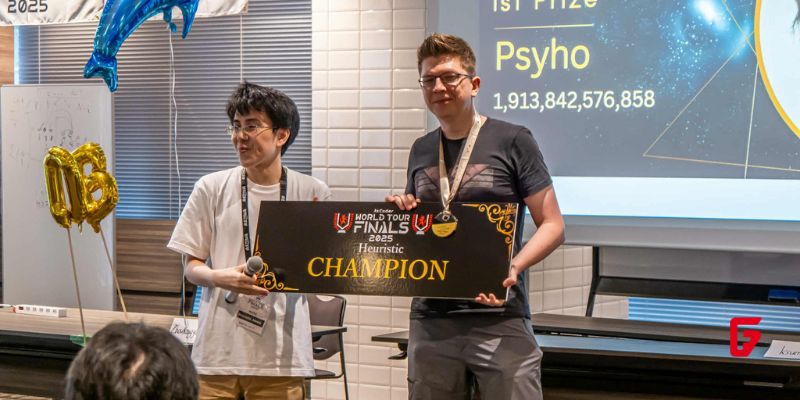
The perception that AI always triumphs in programming was challenged this week, thanks to an extraordinary display of human grit, creativity, and endurance at the AtCoder World Tour Finals 2025 in Tokyo.
Przemysław Dębiak: The Programmer Who Pushed Back
Polish coder Przemysław Dębiak, aka Psyho, a former OpenAI employee, secured a stunning victory over OpenAI’s cutting-edge AI at the event’s prestigious Heuristic Contest. In a marathon 10-hour coding battle, Dębiak wasn’t just fighting for a trophy; he was an emblem of what human ingenuity can achieve in the age of advanced automation.
“I was so tired. I actually felt at some point that I should take a break,” Dębiak later admitted, describing a state familiar to anyone who’s ever pushed their limits for a breakthrough. But the AI’s performance pushed him into overdrive, making him “dig deep” and tap “all the remaining energy” to edge out the machine. Without this pressure, he acknowledges, “my score would be much, much lower”.
Update: I'm alive and well
— Psyho (@FakePsyho) July 17, 2025
The results are official now and my lead over AI increased from 5.5% to 9.5%😎
Honestly, the hype feels kind of bizarre. Never expected so many people would be interested in programming contests. Guess this means I should drop in here more often👀 pic.twitter.com/RsLD8lECNq
A Win That Made Headlines — And History
The showdown was more than just man versus machine. OpenAI, a sponsor of the competition, unleashed its internal model as a direct challenger. Despite an early advantage, the AI model ultimately finished second. Dębiak’s final score surpassed the AI by 9.5%, sealing his place in programming lore.
OpenAI CEO Sam Altman recognized the feat with a simple “good job psyho” on X (formerly Twitter), highlighting the mutual respect between creators—human and artificial. The organizer of the contest, Yoichi Iwata, summed up the moment: while AI excelled at classic optimization, Dębiak “arrived at a completely different solution,” showing that human creativity still matters.
good job psyho https://t.co/CDPUOaF9qn
— Sam Altman (@sama) July 16, 2025
The Key Factors Behind Dębiak’s Success
Endurance Over 10 Hours: The structure of the contest favored a coder who could strategize, adapt, and optimize on the fly—something AI still struggles with in unscripted, open-ended environments.
No AI Tools Used: Dębiak relied only on Visual Studio Code and basic autocomplete, not sophisticated AI assistants.
Unique Approach: Rather than following standard optimization algorithms—where the AI shined—he found a creative solution no machine anticipated.
Experience Matters: Dębiak has a celebrated career in competitive programming. His instincts, honed over years, played a crucial role.
What Does This Mean for Coding and AI?
The world took notice—this wasn’t just a niche community event. In an era where tech giants automate code and predict waning demand for ordinary software engineers, Dębiak’s win is a reminder: there’s still space for human problem-solving, especially when tasks require deep insight and improvisation.
As Dębiak pointed out, “AI will win in cases that require straightforward engineering … because it’s simply faster.” But in scenarios requiring original thinking, especially when building everything “from scratch,” humans remain a step ahead—for now.
Humanity Has Prevailed—For Now
After the win, Dębiak quipped, “Humanity has prevailed (for now!),” capturing both the pride and the realism that comes with victory in the shadow of rapid technological progress.
The biggest takeaway? AI is closing in, but there’s no substitute for human creativity and resilience—especially when the clock is ticking and the pressure is on.
Programming contests are no longer just a measure of technical prowess. They’re proving grounds for the very future of work, pitting efficiency against ingenuity—and sometimes, the underdog still wins.

futureTEKnow
Editorial Team
Discover the companies and startups shaping tomorrow — explore the future of technology today.
Most Popular
Trending Companies
Latest Articles
futureTEKnow is focused on identifying and promoting creators, disruptors and innovators, and serving as a vital resource for those interested in the latest advancements in technology.
© 2026 All Rights Reserved.