
Startups & Business News
Illinois Bans AI Therapy: New Law Regulates Mental Health Tech
KEY POINTS
Illinois is the first state to ban AI from providing standalone mental health therapy, effective immediately.
The law strictly prohibits AI from making independent therapeutic decisions or offering direct clinical interaction—violators face fines up to $10,000 per offense.
Limited AI use is permitted only for admin tasks (like scheduling or billing) or analyzing anonymized data—always with explicit patient consent.
This move reflects a nationwide surge of similar legislative efforts as states fill the regulatory gap in health AI oversight.
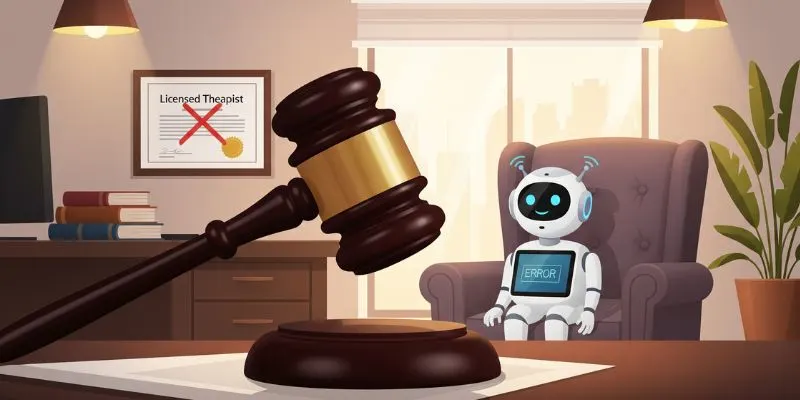
Why Did Illinois Ban AI Therapy? Understanding the Groundbreaking Law
What Does the New Law Actually Prohibit?
Signed into law by Governor JB Pritzker, the Wellness and Oversight for Psychological Resources Act (HB 1806) strictly forbids anyone—individual, company, or tech giant—from offering therapy or psychotherapy services through AI. Only licensed professionals are allowed to serve patients directly, and AI is now officially banned from making clinical decisions, generating treatment plans, or communicating directly with patients in a therapeutic context.
The law took immediate effect and grants the Illinois Department of Financial and Professional Regulation the authority to investigate violations. If found guilty, an individual or business faces up to $10,000 in fines for every offense.
Why so urgent? Recent high-profile AI failures, including a lab test case with a fictional character created by researchers, where an AI “therapist” shockingly suggested using meth to a recovering addict, helped catalyze this tough stance. The consensus is clear: AI chatbots lack empathy and accountability, and unchecked use in sensitive mental health scenarios could do real harm.
Can AI Still Be Used for Anything in Mental Health? Yes—But With Limits
Illinois didn’t throw artificial intelligence (AI) out the window entirely. The law recognizes AI’s usefulness for administrative and supplementary tasks. Licensed therapists can use AI for things like:
Scheduling appointments
Processing billing
Drafting therapy notes
Analyzing anonymized data for clinical trends
But anytime AI is used in a session for recording, transcription, or analysis, patients must be explicitly notified in writing and give revocable consent. Catch-all forms, implied digital “hover” agreements, or vague checkboxes are not valid consent.
Who and What Is Exempt?
Not everything with a chatbot is banned. The law does NOT cover:
Faith-based counseling.
Peer-support groups.
Publicly available self-help and educational tools that don’t claim to offer therapy.
What Are the Penalties for Breaking the Law?
How Is Illinois Leading a National Trend?
Illinois isn’t alone—34 states have introduced over 250 AI health-related bills this year. But Illinois is the first to enact a law this sweeping. Other states vary in how tough they are:
Utah: Requires clear disclosure that users are talking to a bot, but doesn’t ban AI chat completely.
Nevada: Bans AI from providing counseling in public schools and certain health services.
New York: Mandates AI companions must refer distressed users to suicide hotlines.
California, Texas, North Carolina, New Jersey: All have regulations or proposals targeting AI’s role in mental health.
This state-level movement is filling a vacuum: with little federal oversight, states have become “laboratories for policy solutions,” influencing future national standards.
Why Does This Matter?

Elena Rossi is a Senior Staff Writer at futureTEKnow, covering AI, foundation models, autonomous agents, and the infrastructure powering the next wave of intelligent applications.
Discover the companies and startups shaping tomorrow — explore the future of technology today.
Most Popular



Trending Companies
Latest Articles
futureTEKnow is focused on identifying and promoting creators, disruptors and innovators, and serving as a vital resource for those interested in the latest advancements in technology.
© 2026 All Rights Reserved.