
By futureTEKnow | Editorial Team
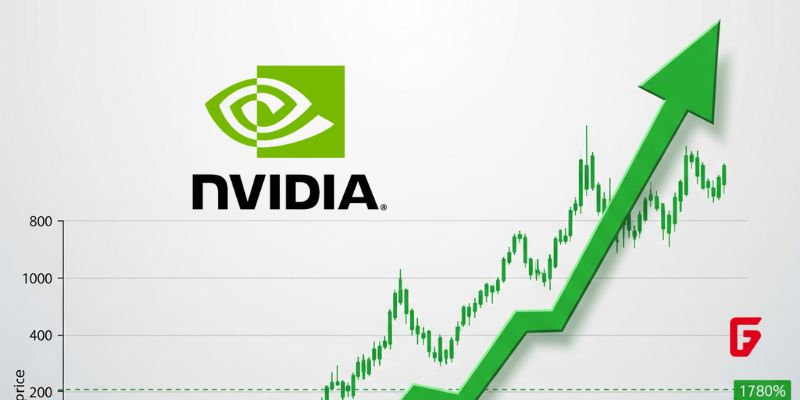
Nvidia is once again at the center of the global AI conversation, with Citi analysts boosting their price target for the semiconductor giant to $190 per share. The move signals growing confidence in Nvidia’s ability to capture the surging demand for sovereign AI infrastructure—a trend reshaping both technology and geopolitics.
Sovereign AI refers to artificial intelligence systems developed and operated under the control of national governments. As countries race to secure their own AI capabilities, Nvidia has emerged as the go-to supplier for the hardware and software powering these national projects. Citi’s analysts highlight that Nvidia is “involved in essentially every sovereign deal,” positioning the company as a critical player in the global push for digital sovereignty.
Global Appetite for AI Infrastructure: Governments worldwide are investing billions to build out AI data centers, aiming to control their own data and technological destiny.
Nvidia’s Dominance: The company’s Blackwell GB200 chips are at the heart of many new AI clusters, enabling both enterprise and government-scale deployments.
Market Expansion: Citi has revised its estimate for the total addressable market (TAM) for AI compute to $563 billion by 2028, up from $500 billion. Networking TAM is also up, now projected at $119 billion.
Revenue Growth: Nvidia’s data center revenue is expected to rise by 5% in FY2027 and 11% in FY2028. Networking revenue is forecast to grow by 12% and 27% in those years, respectively.
Nvidia’s influence is not limited to the U.S. or Europe. Recent deals span the U.K., France, Germany, Saudi Arabia, Qatar, and the U.A.E., with projects rolling out across five continents. This global footprint is a testament to the company’s ability to meet diverse regulatory and technical requirements.
Digital Sovereignty: Countries want to ensure their data and AI models remain under local control.
Security and Compliance: National AI systems are seen as vital for defense, healthcare, finance, and critical infrastructure.
Economic Growth: AI investments are expected to generate high-tech employment and spur economic development.
While the outlook is bullish, there are risks on the horizon. Potential export restrictions, especially involving China, could impact Nvidia’s ability to serve certain markets. Geopolitical tensions remain a wildcard for the entire semiconductor industry.
Nvidia’s unique position at the intersection of AI innovation and national security has made it indispensable for governments building sovereign AI capabilities. With demand showing no signs of slowing, the company looks set to maintain its leadership in the next wave of AI infrastructure.

AWS frontier agents introduce a new era of autonomous AI coders that can build, secure, and run applications for days at a time, acting like virtual teammates across dev, security, and DevOps while engineers retain final control over production changes.

Explore the cutting-edge ways AI is enhancing Lean Six Sigma, from real-time process insights to predictive controls, ushering in a new era of operational excellence and efficiency.

Facing supply chain challenges in 2025? High-performing teams leverage AI for risk management, demand forecasting, supplier analytics, and end-to-end visibility to ensure business continuity and resilience.

Craft an AI-powered supply chain Center of Excellence that unifies control tower visibility, analytics, and inventory optimization into one strategic hub. Explore this blueprint to learn how a modern supply chain CoE drives resilience, smarter decisions, and operational excellence in the age of AI.

Supply chain leadership is being redefined by AI, intelligent automation, and agentic decision-making, demanding leaders who can engineer end-to-end intelligence rather than simply manage workflows. This article explores how next-generation supply chain leaders will combine data, algorithms, and human judgment to build resilient, adaptive, and high-performing global operations.

Bridgit Mendler’s Northwood Space is pioneering mass-produced ground stations, enabling scalable, high-speed connectivity for the new era of satellite networks and megaconstellations.

SpaceX aims to nearly double launches from Vandenberg in 2025, facing support from federal agencies but strong objections from the state and local communities.

Traditional Medicare will pilot AI-assisted prior authorization in 2026 across six states, focusing on high-risk outpatient services. Clinicians retain final say, but incentives and access concerns loom as CMS tests fraud reduction and “gold card” exemptions. Here’s what providers and patients should know.

OpenArt’s new “one-click story” compresses scripting, visuals, and edits into ready-to-post short videos—fueling viral growth and a fresh IP debate. We break down how it works, adoption signals, what’s next (multi-character, mobile), and practical guardrails creators and brands should follow to stay original and compliant.

OpenAI’s o3 swept the Kaggle AI chess tournament, defeating xAI’s Grok 4–0. The victory fueled the intense rivalry between Altman and Musk, reshaping AI benchmarks.

NASA and Google’s AI-powered Crew Medical Officer Digital Assistant enables autonomous diagnoses for astronauts on Mars missions, redefining remote healthcare for space and Earth.

Pinterest’s CEO confirms that fully agentic AI shopping is years away, as the platform invests in AI-powered tools to enhance discovery, inspiration, and personalized shopping experiences for millions.
To provide the best experiences, we use technologies like cookies to store and/or access device information. Consenting to these technologies will allow us to process data such as browsing behavior or unique IDs on this site. Thanks for visiting futureTEKnow.