






Cupertino, California, USA
2020
Enterprise Software, Information Technology, Financial Services, Healthcare Technology, Telecommunications
Orkes is an enterprise software company developing technology for workflow orchestration and AI agent execution. Its platform is built around Conductor, an open-source orchestration engine originally developed at Netflix. Orkes extends this foundation with enterprise capabilities for running distributed applications and AI-powered business processes.
The company operates in the AI infrastructure and enterprise automation space, providing tools that connect AI reasoning with structured workflows, software services, and human decision-making. Its technology is designed for development teams that need to coordinate complex processes while maintaining execution history, operational visibility, and control.
Orkes provides software that helps organizations coordinate applications, microservices, APIs, AI agents, and human tasks through workflows. Development teams can define processes visually or in code, connect existing services, and manage how individual tasks execute and interact.
The platform supports durable workflow execution, including retries, timeouts, state persistence, and recovery when tasks or services fail. It can also coordinate processes that require branching decisions, parallel tasks, external workers, or human approvals.
For AI applications, Orkes enables teams to combine model-driven reasoning and tool use with predictable execution paths. This allows organizations to build processes in which AI agents perform specific tasks while the workflow engine manages execution, monitoring, and operational controls.
Orkes builds on Conductor, an open-source workflow orchestration engine that coordinates tasks across distributed services. Workflow definitions describe the sequence and dependencies of tasks, while the orchestration engine schedules execution, tracks state, and manages failures.
The platform supports durable execution, recording workflow progress so that processes can retry or resume after interruptions. Workflows can include conditional branching, loops, parallel execution, event-driven triggers, and human-in-the-loop steps.
For AI applications, Orkes treats LLM calls, tool use, and agents as workflow tasks. This makes it possible to combine probabilistic AI reasoning with deterministic execution logic, including defined retries, timeouts, approvals, and audit history.
The platform integrates with external workers and software services through APIs, SDKs, and event systems. Supported developer languages include Java, Python, Go, JavaScript, TypeScript, C#, and others. AI-related capabilities include integrations with multiple model providers and support for MCP-based tool calling.
Orkes also provides operational capabilities such as execution monitoring, analytics, access controls, audit logs, and governance features. Its enterprise platform can be deployed as a managed cloud service or in customer-controlled environments, including major cloud platforms and on-premises infrastructure.
Orkes addresses a practical challenge in enterprise AI: connecting AI-driven decisions with reliable execution across real business systems.
AI agents can reason and adapt, but business processes often require predictable handling of payments, approvals, service calls, data updates, and other operations. Orkes combines AI tasks with workflow controls that support persistence, retries, visibility, and human oversight.
Its relevance extends beyond AI agents to the broader orchestration of distributed applications and microservices. As organizations incorporate AI into existing software systems, orchestration platforms provide a way to coordinate AI components with conventional application logic and operational requirements.
Orkes is also connected to the development of Conductor, an open-source project originating at Netflix, giving developers an open-source foundation alongside enterprise deployment and management capabilities.
Orkes Conductor is a unified orchestration platform for AI agents and workflows. It enables developers to coordinate AI reasoning, software services, APIs, and human tasks within distributed applications.
The platform supports visual workflow design, code-based development, durable execution, monitoring, and governance. Teams can combine AI agents with deterministic workflow steps to manage complex application processes.
Orkes Cloud is the fully managed version of Orkes Conductor. It provides workflow orchestration without requiring customers to operate the underlying platform infrastructure themselves.
It supports enterprise application and AI workflow execution, with operational capabilities for reliability, security, monitoring, and scaling.
Conductor OSS is the open-source workflow orchestration engine that forms the foundation of Orkes Conductor. It allows developers to define and execute workflows across distributed services using a durable execution model.
The engine supports task scheduling, branching, loops, parallel execution, external workers, retries, and workflow state management. It can be self-hosted and used as the foundation for applications requiring orchestration capabilities.
Conductor SDK provides developer tools for building workflows and AI agents using supported programming languages. It allows teams to integrate application logic with the orchestration engine and build durable, framework-independent AI agents.
The SDK ecosystem supports languages including Java, Python, Go, JavaScript, TypeScript, and C#, enabling developers to work within their existing technology environments.
Orkes technology can be applied to enterprise process automation, distributed application orchestration, and AI-powered business operations.
AI agent workflows: Coordinating agents, model calls, tools, and structured execution steps.
Microservices orchestration: Managing dependencies and execution across distributed services and APIs.
Financial services: Supporting workflow patterns such as transaction processing, fraud-related decision flows, and payment operations.
Healthcare technology: Coordinating application processes that involve software services, data, and human approvals.
Enterprise operations: Automating multi-step business processes that require retries, monitoring, and exception handling.
Human-in-the-loop workflows: Incorporating manual reviews, approvals, and exception management into automated processes.
Conductor originated at Netflix as an open-source workflow orchestration engine. Orkes builds its enterprise orchestration platform on the Conductor foundation.
Conductor OSS is open source. Orkes Conductor is the enterprise platform built on that foundation, with additional enterprise capabilities and deployment options.
Yes. Orkes supports integrating agents built with frameworks such as LangGraph, OpenAI Agents SDK, Google ADK, and CrewAI, as well as custom agents.
No. Conductor supports multiple programming languages through its SDK ecosystem and can coordinate external workers implemented in different languages.
Yes. Workflows can incorporate human tasks and approval steps, allowing people to review decisions, handle exceptions, or authorize actions within an automated process.
Have an update, correction, or additional information about this company? Help us keep the futureTEKnow company database up to date by submitting the latest company information.

OpenAI’s Astra for Law combines GPT-6 Astra with specialized legal search, integrations, and governance controls. The launch shows how frontier AI is moving deeper into professional legal workflows.

AI projects often stall because business data isn’t consistent or trustworthy. Here’s how to identify data gaps before they become an AI roadblock.
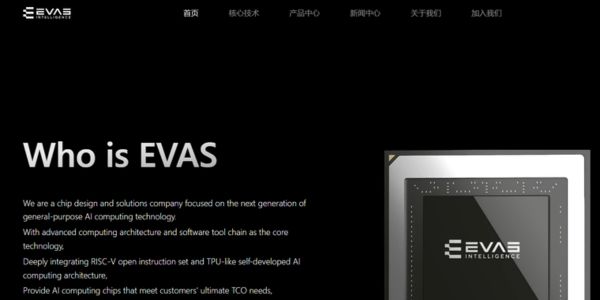
EVAS Intelligence has raised 1.5 billion yuan to mass‑produce its RISC-V Epoch AI chips, deepen its full‑stack platform, and accelerate global expansion, signaling rising investor confidence in alternative AI compute.
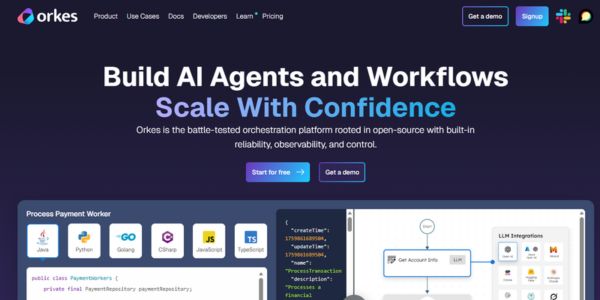
Orkes has raised 60 million dollars to turn its Netflix‑born workflow engine into a control plane for enterprise AI agents. The piece unpacks how its orchestration platform works, why investors are backing it now, and what this means for companies trying to move AI from pilots into production.
Paris-based Sillage has raised €1.7 million to launch an AI signal engine that helps enterprise sales teams follow the right buying signals, prioritize high-intent accounts, and improve pipeline efficiency without replacing human-led conversations.
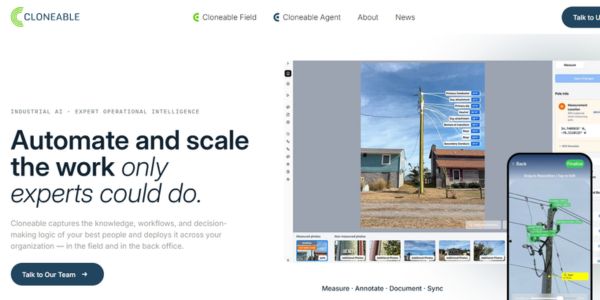
Cloneable is launching an agentic AI platform for infrastructure operations that captures institutional knowledge from retiring experts and turns it into scalable agents, targeting energy, utilities, and other asset-heavy sectors. The $4.6M seed-backed startup aims to connect field data capture with back-office execution so founders and operators can modernize infrastructure faster and with fewer bottlenecks.
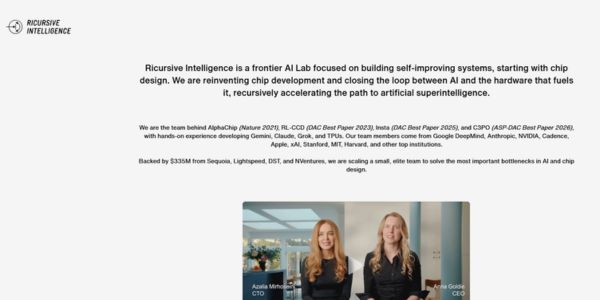
Excerpt: Ricursive Superintelligence has raised at least $500 million to build self‑improving AI, with GV and Nvidia backing a four‑month‑old lab at a $4 billion valuation. The deal crystallizes how quickly capital, talent and regulatory scrutiny are converging around autonomous AI research—and what that means for builders trying to compete outside the frontier club.
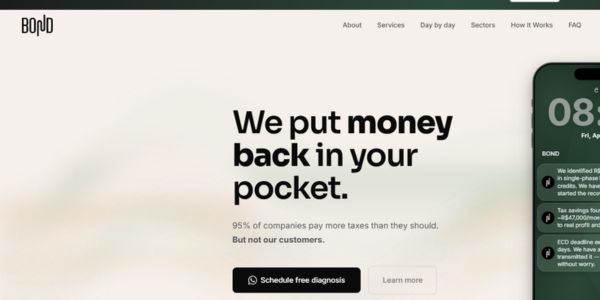
Brazilian startup BOND has raised US$2M to automate accounting for SMEs in Brazil’s complex tax system. Combining AI with human accountants, it targets a fragmented market of manual processes, aiming to turn back-office compliance into a faster, more strategic function for founders and operators.
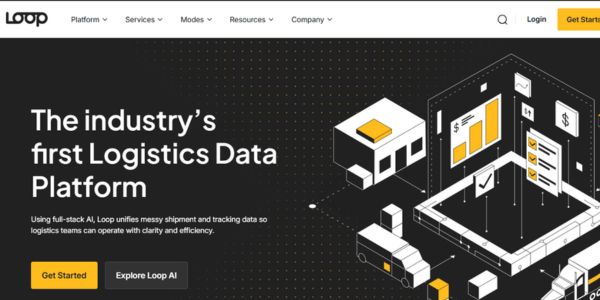
Loop just raised a $95M Series C to expand its AI-native supply chain platform, turning messy logistics data into early disruption warnings and better financial outcomes for global operators and shippers.
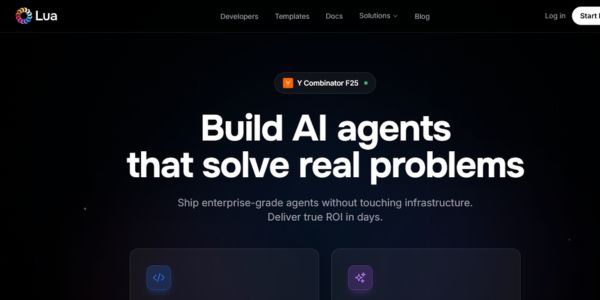
Linkedin X-twitter-square Facebook-square Startups & Business News AI agents are finally moving from demos to the day-to-day stack of real
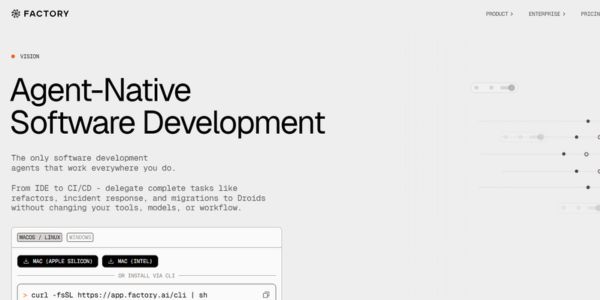
Factory has raised a $150M Series C at a $1.5B valuation to scale its autonomous “Droids” platform, betting that enterprises will standardize software engineering around agent‑native missions, governance and cost‑optimized AI infrastructure.
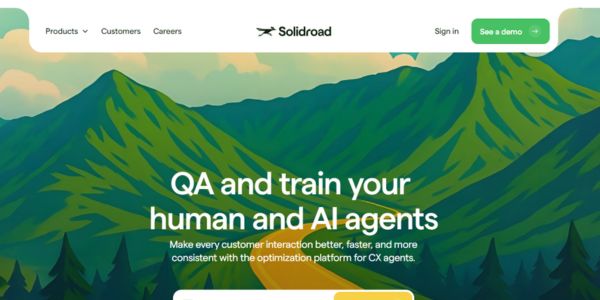
Solidroad has raised $25 million to bring AI-native quality assurance to every human and AI-powered customer interaction. The new funding will accelerate product development and expansion for support-heavy businesses leaning into automation.
futureTEKnow is focused on identifying and promoting creators, disruptors and innovators, and serving as a vital resource for those interested in the latest advancements in technology.
© 2026 All Rights Reserved.