
Startups & Business News
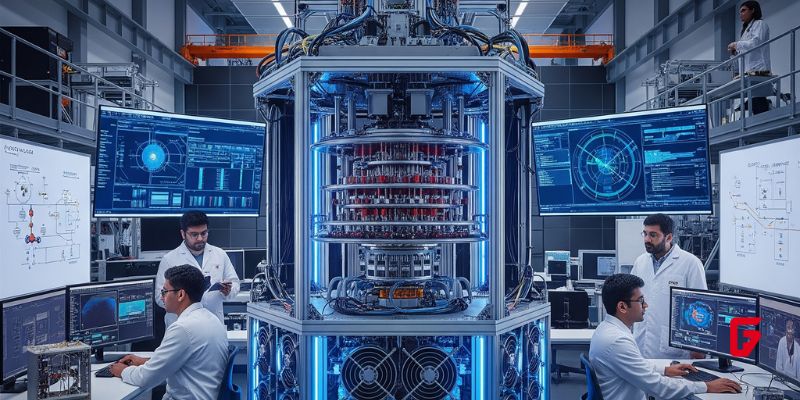
The quantum computing race is entering a new era, marked by historic investments and a clear-eyed focus on practical use cases. PsiQuantum, under CEO Jeremy O’Brien, is set to invest at least $1 billion to build the United States’ first utility-scale quantum computer right in Chicago—a city chosen for its deep talent pool and robust technological ecosystem. This is not just another moonshot or prototype demo. O’Brien’s vision is laser-focused on delivering a million-qubit, fault-tolerant system that promises to shift the landscape from proofs of concept to commercial reality.
Beyond the Quantum Hype
Quantum computing has been awash in hype and breakthrough headlines, but O’Brien stressed that true innovation demands years of hard, unglamorous work. The real breakthroughs precipitate “a decade or more of hard work, real hard technological development,” he explains.
The company leans on the exhaustive engineering expertise and decades-long investments poured into the global semiconductor industry, which PsiQuantum will leverage to scale up quantum systems rather than chasing incremental milestones.

Silicon Photonics: PsiQuantum’s Differentiator
What sets PsiQuantum apart is a relentless focus on silicon photonics, a platform more than 20 years in the making. Silicon photonics enables the company to leverage not just money but the technical know-how developed over a century of semiconductor advances. Instead of focusing on small, incremental progress, PsiQuantum is building for the “million-qubit scale”—the threshold required for tackling real-world commercial and scientific challenges.
This stands in contrast to others in the field who remain entrenched in demonstrations or applications suited to small devices.
Scale Over Speed: The PsiQuantum Approach
While companies like IBM, Microsoft, and Google position themselves in a “race” to reach meaningful quantum computing milestones, PsiQuantum takes a different stance. For them, “it’s not a race; it’s a filter”—a sorting mechanism for who can actually meet the hardware demands of the industry. O’Brien’s philosophy is clear: “ladders” may get you to the top of a skyscraper, but only bold, differentiated strategies will “get you to the moon.”
Why Chicago?
Choosing Chicago was not arbitrary. The city offers an unmatched ecosystem, with government, talent, and infrastructure all aligned to support a project of this scale. PsiQuantum’s decision to break ground here highlights the advantage of a strong local talent pool and partnerships ranging from city officials to utility providers who understand the vast energy and technical demands of a utility-scale quantum facility.
Implications and Outlook
PsiQuantum is pursuing commercial quantum utility on an unprecedented scale. If successful, the Chicago build will signal a major leap forward—moving quantum computing from lab experiments to industry-transforming applications. This move could redefine possibilities in materials science, pharmaceuticals, cryptography, and beyond.
PsiQuantum’s long-game approach—eschewing flash in favor of foundation—may just deliver the breakthrough the industry needs.

futureTEKnow
Editorial Team
Discover the companies and startups shaping tomorrow — explore the future of technology today.
Most Popular
Trending Companies
Latest Articles
futureTEKnow is focused on identifying and promoting creators, disruptors and innovators, and serving as a vital resource for those interested in the latest advancements in technology.
© 2026 All Rights Reserved.