






















Startups & Business News
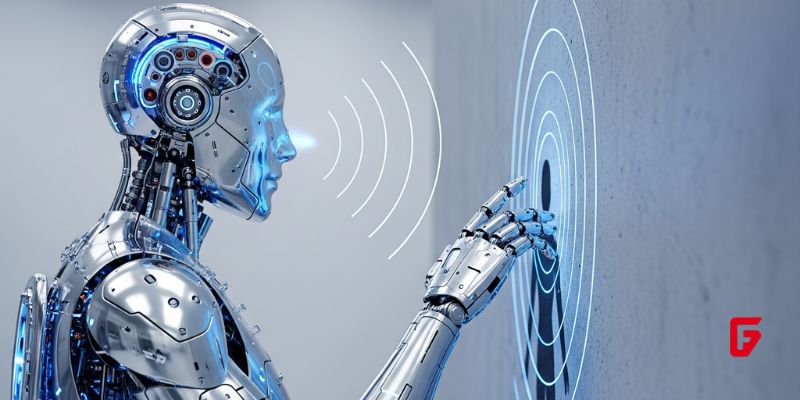
Imagine a world where humanoid robots can not only walk and talk like us but also “see” what’s hidden behind solid barriers. That’s no longer science fiction. Researchers at MIT have developed a technology that enables robots to peer through walls using advanced wireless sensing and artificial intelligence.
The secret lies in a combination of radio frequency (RF) signals and machine learning algorithms. Unlike visible light, RF signals can penetrate walls and other obstacles. The system emits low-power RF waves, which bounce off objects—even those hidden from direct view. By analyzing the returning signals, the robot’s AI reconstructs the location and movement of people or objects on the other side.
What makes this breakthrough stand out is its integration with humanoid robots. These robots are equipped with sophisticated sensors and AI, allowing them to interpret RF data and navigate complex environments autonomously. This fusion of hardware and software marks a significant leap in robotic perception.
Search and Rescue: Robots could locate survivors in disaster zones where visibility is limited.
Security: Enhanced surveillance capabilities without the need for invasive cameras.
Healthcare: Monitoring patients in home settings without breaching privacy.
The technology also raises important questions about privacy and ethical use. As robots become more capable, society will need to address how and when these abilities are deployed.
Robots with wall-perception capabilities introduce several significant ethical concerns:
Privacy invasion: The ability to “see” through walls can lead to unprecedented levels of surveillance, potentially violating the privacy of individuals in homes, workplaces, and public spaces. People may be monitored without their knowledge or consent, creating a Big Brother environment and undermining personal autonomy.
Consent and autonomy: Individuals should have the right to know when such technology is in use and to give or withhold consent. Vulnerable groups, such as the elderly or those with cognitive impairments, may not fully understand or be able to control when and how these robots are operating around them.
Data security and misuse: The data collected by wall-perceiving robots could be misused for unauthorized surveillance, profiling, or even criminal purposes if not properly secured and regulated.
Psychological impact: Constant awareness of being potentially observed—even through walls—can cause discomfort, anxiety, and a loss of trust in both public and private environments.
Ethical deployment: There is a need for clear guidelines and policies to ensure these robots are used in ways that respect human dignity, protect rights, and serve the public good, rather than enabling unchecked surveillance or manipulation.
This innovation is part of a broader trend in robotics and artificial intelligence. Humanoid robots are increasingly equipped with human-like cognitive functions, advanced sensors, and the ability to interact naturally with people. As their capabilities grow, so does their potential impact on industries ranging from healthcare to manufacturing.
MIT’s work is a glimpse into a future where robots are not just tools, but partners—able to understand and interact with the world in ways that were once unimaginable.

Editorial Team
futureTEKnow is a leading source for Technology, Startups, and Business News, spotlighting the most innovative companies and breakthrough trends in emerging tech sectors like Artificial Intelligence (AI), Robotics, and the Space Industry.
Discover the companies and startups shaping tomorrow — explore the future of technology today.

Loop just raised a $95M Series C to expand its AI-native supply chain platform, turning messy logistics data into early

Linkedin X-twitter-square Facebook-square Startups & Business News AI agents are finally moving from demos to the day-to-day stack of real

Factory has raised a $150M Series C at a $1.5B valuation to scale its autonomous “Droids” platform, betting that enterprises

Solidroad has raised $25 million to bring AI-native quality assurance to every human and AI-powered customer interaction. The new funding

Turion Space has raised more than $75 million in Series B funding to scale its Starfire platform and satellite fleet,

Mintlify just raised a $45M Series B led by a16z and Salesforce Ventures to turn software documentation into core AI

nEye.ai has raised an $80 million Series C to scale optical circuit switching for AI data centers. This feature unpacks

Bluefish has raised a $43 million Series B to expand its agentic marketing platform, giving Fortune 500 brands new tools

Anvil Robotics is building a physical AI modular robotics platform that replaces fragmented, bespoke stacks with composable hardware, software, and

London-based Sona has raised a $45M Series B to turn its AI-native workforce platform into core infrastructure for frontline enterprises,

San Francisco-based Noon has raised $44M to build an AI-native product design platform that sits directly on live code, promising

Copenhagen-based Financial News Systems has raised €1.5M to build a fully AI-driven financial newsroom with no journalists in the loop.
futureTEKnow is focused on identifying and promoting creators, disruptors and innovators, and serving as a vital resource for those interested in the latest advancements in technology.
© 2026 All Rights Reserved.