
Startups & Business News
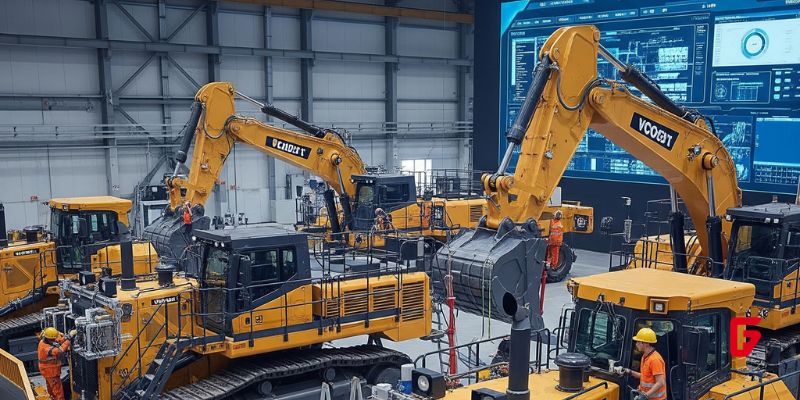
The world of heavy industry is on the edge of a transformation, and it’s not coming from Silicon Valley—it’s coming from Berlin and Potsdam. sensmore, a robotics startup founded in 2022, just secured €6.5 million in fresh funding to bring advanced Physical AI to the biggest mobile machines on earth. But what does that actually mean, and why does it matter for industries like mining, construction, and raw materials?.
Turning Giant Machines Into Robots
If you’ve ever watched a wheel loader or a haul truck in action, you know these are not your average vehicles. They’re massive, expensive, and operate in some of the harshest environments on the planet. Traditionally, they’ve required skilled human operators to navigate unpredictable conditions and complex tasks. sensmore’s vision is to change that—by retrofitting these machines with a modular platform that combines cameras, 4D radar, and AI, essentially turning them into intelligent, self-reasoning robots capable of real-time automation.
What Sets sensmore Apart?
A lot of startups talk about AI and automation, but sensmore is tackling some of the hardest problems in industrial robotics:
Physical AI for Real-World Machines: Their system isn’t just about following pre-programmed routes. It enables machines to handle complex tasks like load-and-carry cycles in dynamic production environments—tasks that have been out of reach for previous automation efforts.
No Prior Training Needed: sensmore claims its technology allows machines to adapt to new situations and environments without requiring extensive retraining, a major leap for industrial automation.
Modular, End-to-End Platform: From smart collision alerts (sensmore Machine Assist) to live site operations (sensmore Site OS) and vision-based quality control (sensmore Eye), their platform is designed to be robust, scalable, and field-ready.
The Brains Behind the Bots
At the core of sensmore’s tech is a two-layer intelligence system:
Thinking Fast: An end-to-end network that lets machines react instantly, much like a person instinctively dodging an obstacle.
Thinking Slow: Adds a reasoning layer, allowing machines to understand tasks, solve problems, and even handle scenarios they’ve never encountered before. This is powered by Vision-Language-Action Models (VLAMs), similar in spirit to what’s being done in humanoid robotics.
Backed by Industry and Investors
The €6.5 million round was led by Point Nine Capital, with participation from notable US and UK investors and industry veterans from companies like Wayve, Forto, BHP, and Thyssenkrupp Mining. Support also comes from the State of Brandenburg and the European Union—a sign of confidence from both the private and public sectors.
Real-World Impact
sensmore’s tech is already being put to the test. Companies like CEMEX and Lhoist are among its early adopters, and the first fully automated Load-Haul-Dump (LHD) machine is currently undergoing field testing, performing entire cycles without human intervention.
Why Now?
Europe’s foundational industries are facing a perfect storm: labor shortages, rising costs, and increasing pressure to modernize. Automation that’s robust, adaptable, and truly intelligent isn’t just a nice-to-have—it’s becoming a necessity for competitiveness and sustainability.
sensmore is betting that the future of heavy industry will be built on intelligent machines that can learn, adapt, and operate autonomously in the toughest conditions. If they’re right, the days of manually operated mega-machines may soon be numbered, replaced by fleets of smart, self-reasoning robots that keep our world running—quietly, efficiently, and with a lot less human intervention than ever before.

futureTEKnow
Editorial Team
Discover the companies and startups shaping tomorrow — explore the future of technology today.
Most Popular
Trending Companies
Latest Articles
futureTEKnow is focused on identifying and promoting creators, disruptors and innovators, and serving as a vital resource for those interested in the latest advancements in technology.
© 2026 All Rights Reserved.