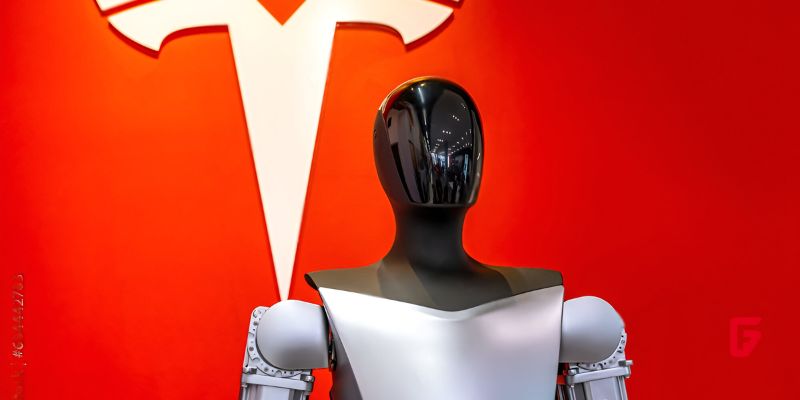
The race to build the future of robotics is hitting a wall for Tesla’s much-hyped Optimus humanoid robot. Recent revelations from inside the company paint a picture of a project facing intense technical setbacks, leadership tumult, and mounting financial pressure—all fueling skepticism about whether Elon Musk’s bold promises can truly materialize.
Production Grinds to a Halt Amid Redesign
Despite initial claims of rapid progress, Tesla’s Optimus program encountered a major roadblock in mid-June when production was abruptly paused for a full-scale, two-month redesign. The company had managed to assemble nearly 1,000 units by May, and secured parts for 1,200 robots, but systemic bottlenecks halted further work. Component procurement from key suppliers, especially in China, has been suspended, signaling deep-rooted engineering issues and logistical headaches.
Original targets called for 5,000–10,000 units in 2025, but with production at a standstill and only a fraction of robots actually completed, even reaching a few thousand now looks unlikely.
Persistent Technical Bottlenecks
The heart of the challenge? Engineering the robot’s hands and movement systems. Tesla has hundreds of nearly complete Optimus bodies, but they’re missing hands and forearms due to low durability and limited functional capacity in these critical parts. Joint motors have been overheating, battery life falls short of what’s needed for extended work, and transmissions are wearing out too quickly.
In public, the robots have struggled—recent demonstrations included a robot freezing and losing connection while serving food, despite being teleoperated by humans. These incidents highlight just how far Tesla still has to go before achieving true autonomous, human-like competence.
Leadership Shake-ups Compound the Chaos
If the technical issues weren’t enough, the Optimus program recently lost its longtime leader Milan Kovac, who’d been at the helm since 2016. His departure is one of several high-profile exits, creating management upheaval when stability is needed most. Ashok Elluswamy, a Tesla AI veteran, is now tasked with guiding the initiative—but the impact of so much churn at the top is raising concerns inside and outside the company.
To make matters worse, legal battles are brewing—Tesla has initiated a lawsuit against a robotics startup formed by a former employee, accusing them of trade secret theft related to robot hand technology.
Financial Pressure and Moving Targets
All of this comes at a time when Tesla is under the greatest financial strain in over a decade. The company has just posted slumping revenues and shrinking automotive sales, with stock taking a significant hit. Elon Musk, typically the optimist-in-chief, sounded unusually cautious on recent investor calls and has started talking about “aspirations” rather than guarantees.
His original targets for commercializing Optimus have evaporated from the roadmap. The new, redesigned “Optimus 3” is now unlikely to hit even pilot production before 2026. Ambitions of a million units per year are, for now, just that—ambitions.
Is the Robot Revolution on Pause?
Tesla’s quest to build a humanoid workforce that could reshape industries (and maybe even our daily lives) has entered a tough, sobering phase. Technical dead ends, leadership turnover, and financial headwinds have all converged, pushing timelines out and casting doubt on the near-term viability of Optimus.
Still, if there’s one thing the world has learned about Elon Musk and his ventures, it’s to expect the unexpected. For now, though, those dreaming of a robotic revolution led by Tesla will have to wait a little longer for truly game-changing results.