
Startups & Business News
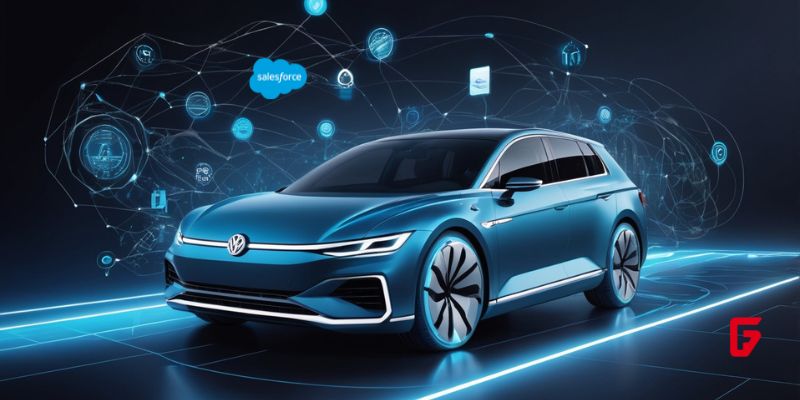
In the rapidly evolving landscape of automotive technology, the Volkswagen Group is revving up its digital transformation, not just under the hood of its vehicles, but in its very operational core. The automotive giant has strategically partnered with Salesforce to revolutionize its customer engagement and streamline efficiency across its diverse portfolio of brands.
The Challenge: A Fragmented Digital Landscape
Facing the intricate challenge of disparate data and disconnected customer views across its marques, Volkswagen recognized the imperative for a unified approach. This fragmentation risked brand trust, revenues, and sales in a highly competitive market, prompting the need for a comprehensive digital overhaul.
The Solution: A Unified Salesforce Ecosystem
The answer to this challenge was a “one tech stack” philosophy powered by Salesforce. This strategic adoption aimed to weave a seamless, personalized experience from initial inquiry through sales and after-sales support, creating a consistent journey for every customer.
Key highlights include:
Breaking down traditional data silos for a holistic customer view
Leveraging Salesforce’s integrated clouds for seamless pre-sales, sales, and after-sales personalization
Embedding AI with Agentforce to enhance communication and customer service
Rapid multinational deployment with measurable improvements in customer satisfaction and operational efficiency
Volkswagen’s strategy underscores the critical role of technological integration and AI in redefining the modern customer journey in highly competitive industries.
Key Salesforce Technologies in Action
Volkswagen’s deployment of Salesforce spans several crucial products. Currently, Marketing Cloud, Sales Cloud, and Service Cloud are actively enhancing their customer relationship management. A pivotal component in their strategy is Data Cloud, described as the “holy grail” for achieving a 360-degree customer view. This powerful tool facilitates the effortless integration of varied data models, enabling a holistic understanding of each customer that can be shared across the entire organization.
Looking ahead, the group is embracing Artificial Intelligence with the rollout of Einstein for Sales & Service. This advanced AI integration into their CRM processes promises hyper-personalization at every customer touchpoint, signaling a significant leap in tailored customer interactions.
Transformative Impact and Global Reach
The impact of this technological overhaul extends beyond mere operational improvements. The adoption of Salesforce has fostered a profound mindset shift within the Volkswagen Group, breaking down previously siloed organizational structures and encouraging collaborative synergy. The global rollout has been impressive, with successful implementation in 10 European markets within two years, and after-sales services now covering 52 countries.
Enhancing the Agent and Organizational Experience
Critically, this transformation has demonstrably improved the agent experience. Service agents report that Salesforce has made their work considerably easier by consolidating essential tools, empowering them to deliver superior customer service. Ultimately, the Volkswagen Group’s journey with Salesforce is not just a technological upgrade; it’s an organizational metamorphosis that is redefining how the automotive behemoth connects with its customers and operates its vast enterprise.

futureTEKnow
Editorial Team
Discover the companies and startups shaping tomorrow — explore the future of technology today.
Most Popular
Trending Companies
Latest Articles
futureTEKnow is focused on identifying and promoting creators, disruptors and innovators, and serving as a vital resource for those interested in the latest advancements in technology.
© 2026 All Rights Reserved.