The Next Leap in Space-Based Innovation
TITLTwo Groundbreaking Experiments Onboard
E-H2
At the heart of this mission are two highly innovative experiments set to change the way we approach space communication and navigation:
High-bandwidth, inter-satellite laser communications: The X-37B will demonstrate high-capacity, secure laser links between satellites—offering increased data transport speeds, resilience, and security compared to traditional radio frequency systems.
Quantum inertial sensor: This device, described as “the highest performing quantum inertial sensor ever tested in space,” will enable precise navigation without GPS, a game-changer for operations in GPS-denied or electromagnetically contested environments. Quantum inertial sensors use the quantum properties of atoms to detect rotation and acceleration, paving the way for robust space navigation well beyond Earth’s orbit.
Why These Technologies Matter
In today’s space domain, competition and congestion are rising. The ability to operate autonomously and maintain secure communications is crucial.
Laser communications offer greater bandwidth, faster speeds, and enhanced resistance to jamming.
Quantum sensors provide unprecedented navigational accuracy, ensuring spacecraft can maintain trajectory—even when denied access to GPS.
Space Force leaders highlight that operational resilience, the adaptability to face interference or technological denial, is essential for the future of military and scientific missions in space. These new technologies are designed to keep pace with emerging threats and the demands of missions extending from low Earth orbit to cis-lunar space and beyond.
Enhanced Capacity and Collaboration
This mission’s expanded service module allows the X-37B to host a wider array of experiments than previous flights, including collaborative projects with the Air Force Research Laboratory and the Defense Innovation Unit. The flexible, modular design means the spaceplane can rapidly adapt its payload to emerging needs and partners, positioning the program at the forefront of next-generation space research and operational capability.
A Legacy of Reusability and Adaptability
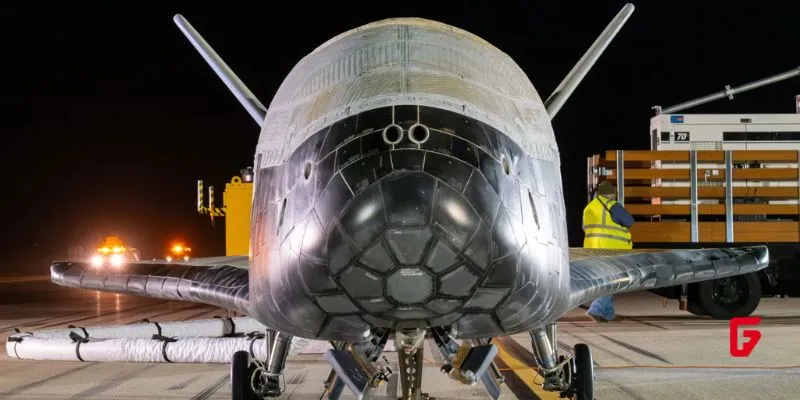
Since its first flight in 2010, the X-37B has spent over 4,200 days in space, demonstrating the value of reusability, rapid turnaround, and technological evolution. Notable past achievements include extended orbital missions, advanced maneuvering like aerobraking, and even pioneering the autonomous landing of a spaceplane. The OTV-8 mission builds on this legacy, reinforcing the vital role of flexible, rapid experimentation in shaping the future space landscape.
The Road Ahead
With the world watching, the X-37B’s new journey will test the limits of space-based laser communication and quantum navigation in the most challenging environment known to humankind. The insights gained will guide the design of resilient, adaptable space systems for years to come—and inspire a new era of space exploration, cooperation, and security.