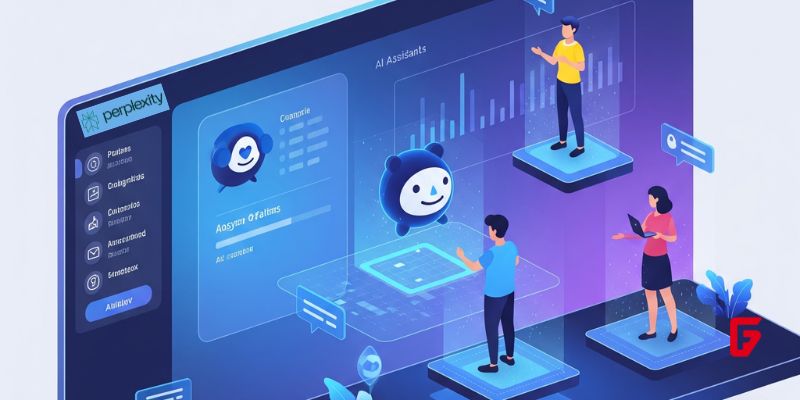
The landscape of online search and browsing is evolving rapidly, and at the forefront of this shift is Perplexity, the brainchild of Aravind Srinivas. At a recent AI Startup School session in San Francisco, Srinivas detailed Perplexity’s trajectory from humble beginnings to being a product now used by millions. The company is betting big on a fundamental transformation: moving beyond simple chatbots to create an AI-powered, agentic browser experience.
“We see the browser and agents—not just chatbots—as the next big step, the goal? Turn the browser from a passive tool into an active cognitive operating system.”
-Aravind Srinivas
The Next Evolution: AI Agents in the Browser
Rather than just providing answers, Perplexity’s vision is built around the concept of the browser as a personal assistant. Imagine opening a new tab and having one central place—the “omnibox”—where you can:
Ask informational questions.
Delegate complex, agentic tasks.
Connect with your calendar, email, e-commerce accounts, and social media.
Launch multiple research processes in parallel.
This transforms the ordinary task of online browsing into an intelligent, asynchronous workspace. Instead of hopping between tabs and services, the browser orchestrates tasks—whether you’re researching real estate, managing your inbox, or monitoring the markets.
Competing With the Giants
Srinivas is under no illusions: Google, OpenAI, and Anthropic are all racing to shape the future of search and AI-driven assistance. Yet he stresses that the only path to standing out is a relentless focus on speed, innovation, and accuracy. The fact that well-funded competitors are emulating Perplexity’s innovations is validation—“If something is really worth doing, the biggest players will try to do it,” he asserted.
Where Perplexity looks to differentiate itself is in the browser-centric, agent-driven experience, a much bigger technical challenge than building another chatbot. By focusing on orchestrating various tools and prioritizing accuracy at both the answer and task levels, Perplexity aims to carve out a space that can’t be easily replicated.
A Founder’s Perspective: Building from Scratch
Srinivas’s journey is marked by a combination of technical focus and iterative development. Perplexity began as an experimental tool converting natural language queries into SQL for searching relational databases like Twitter’s data. The “aha moment” came when combining large language models with search, resulting in early positive user feedback and impressive retention.
The path wasn’t clear-cut. The Perplexity team leaned into rapid prototyping and continuous improvement, earning momentum not by chasing established blueprints, but by chasing real user needs and feedback.
The Broader Impact: Redefining Online Interactions
Perplexity’s ambitions align with a broader movement across tech: browsers as intelligent hubs, orchestrating not just access to information, but direct task completion. The idea is to personalize web interactions, making them faster, more intuitive, and far more productive.
In this intensive competitive landscape, motivation and focus become non-negotiable. In Srinivas’s own words, it’s like “running a marathon at extremely high velocity”—adapting faster than tech giants with deeper pockets.
Key Takeaways
Agentic browsers are seen as the future, blending search, workflow, and automation.
Integration of personal digital assets—like email, calendar, and online accounts—will define the next wave of user experience.
Continuous innovation and speed are critical to staying ahead in a space watched—and copied—by the biggest names in tech.
Perplexity’s journey is a reminder that great technology comes from relentless experimentation, technical humility, and a willingness to challenge entrenched paradigms. As the battle for the future of browsing heats up, agentic search could well be the defining breakthrough for how we access and use the web.