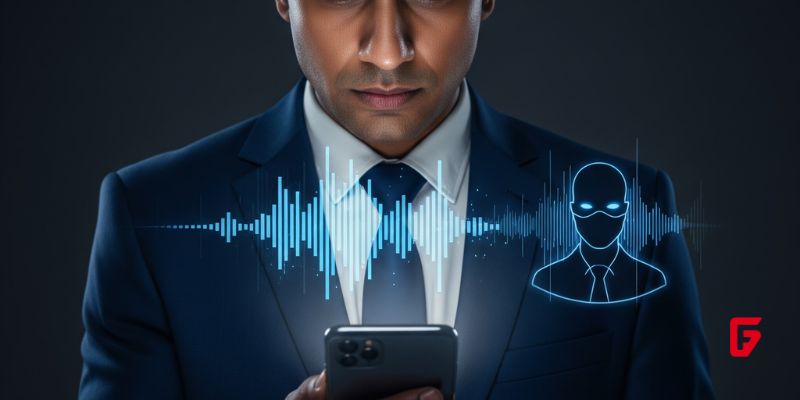
The End of Voiceprint Authentication
Altman’s message was blunt: “AI has fully defeated that.” In front of Federal Reserve policymakers and Wall Street insiders, he warned that banks still using voiceprints for security are wide open to sophisticated AI fraud. Modern voice cloning tools can replicate anyone’s speech patterns in just seconds, allowing cybercriminals to drain accounts or access sensitive data by mimicking your voice almost perfectly.
In practice, authentication systems once thought secure are now shockingly vulnerable. As recent experiments have shown, an AI-generated clone can bypass voice ID systems—sometimes using as little as three seconds of sample audio. According to Consumer Reports, even major banks have seen these methods breached by journalists conducting controlled penetration tests.
“A thing that terrifies me is apparently there are still some financial institutions that will accept the voiceprint as authentication. That is a crazy thing to still be doing. AI has fully defeated that.”
– Altman emphasizes that voiceprint-based verification is now easily compromised by AI-generated
The Numbers: From Fraud to Financial Meltdown
The scale of the AI-driven fraud threat is staggering:
Estimated deepfake-related losses are set to jump from $12 billion in 2023 to $40 billion by 2027.
The average voice deepfake scam now costs banks $600,000 per incident, with 23% losing $1 million or more.
In recent, high-profile attacks, fraudsters have used voice cloning to trigger unauthorized crypto transfers worth tens of millions of dollars.
As banks rush to digitize, the exposure to AI-powered attack vectors is accelerating beyond traditional fraud defenses.
Inside the Regulatory Response
Why Voice Cloning Fraud Works So Well
What makes this new wave of fraud especially insidious is its low barrier to entry and high success rate. Anyone online can access a voice-cloning algorithm; all that’s required is a short clip of your speech. Attackers then use the clone to:
Bypass phone-based banking authentication.
Impersonate executives or clients to initiate wire transfers.
Conduct social engineering that capitalizes on trust in familiar voices.
Financial institutions are now forced to rethink authentication entirely, moving beyond voice or even traditional biometrics. Next-generation solutions may need to blend multiple data points—behavioral biometrics, device forensics, and even dynamic, risk-based authentication algorithms—to truly stay ahead.
“AI voice clones, and eventually video clones, can impersonate people in a way … indistinguishable from reality and will require new methods for verification.”
– He warns that both voice and face biometrics are vulnerable, and institutions need to update their security protocols.
The Urgent Need for Proactive Security
The message couldn’t be clearer: Proactive investment in anti-fraud measures is not just a reputational safeguard but a necessity for survival. As advanced AI continues to democratize access to deception, the most successful banks will be those that:
Invest aggressively in new anti-deepfake technologies.
Train staff and clients to spot suspicious behavior—even when the “voice” sounds authentic.
Collaborate across the industry, tech, and regulation to evolve standards in real time.
Banking security is at a crossroads. The era where your voice was your password is over—AI voice cloning has rewritten the rulebook. Whether you manage corporate treasury or your own personal accounts, demand stronger, multi-factor protections and stay vigilant for these new attack vectors. The old tools won’t protect you from the threats of tomorrow.