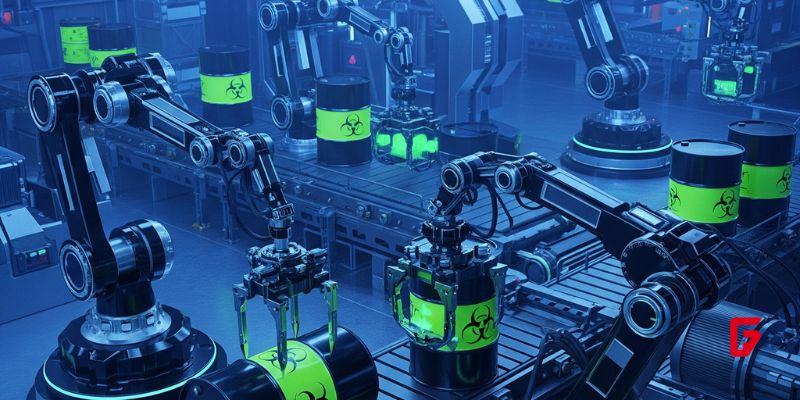
The safe handling of radioactive waste has long been one of the most challenging—and dangerous—jobs in the energy sector. Traditionally, these tasks have relied heavily on human workers, exposing them to hazardous environments and the risk of radiation exposure. But a new wave of autonomous robots is set to change the game, bringing a blend of artificial intelligence, robotics, and advanced automation to one of the world’s most pressing environmental problems.
Why Robots for Radioactive Waste?
Radioactive waste segregation is a meticulous process. It requires careful sorting, identification, and handling of materials, often in environments that are not only hazardous but also difficult for humans to access. The stakes are high: improper segregation can lead to environmental contamination, regulatory violations, or even catastrophic accidents.
Enter autonomous robots. These machines are equipped with advanced sensors, AI-driven decision-making, and precision manipulators. They can navigate complex environments, identify different types of waste, and sort materials with a level of accuracy and speed that’s tough for humans to match. By reducing the need for direct human intervention, these robots dramatically lower the risk to workers and improve overall safety.
How the Technology Works
At the core of these robotic systems are machine vision and AI algorithms. Robots scan and analyze waste materials using cameras and sensors, then use machine learning models to classify and sort items based on type, radioactivity level, and required disposal method. Some systems even employ robotic arms capable of delicate, precise movements, allowing them to handle fragile or irregularly shaped objects.
The integration of automation, process control, and robotics enables real-time data collection and process verification. This not only boosts efficiency but also ensures compliance with stringent safety and environmental regulations. The result: less human exposure, fewer errors, and a more streamlined waste management process.
Benefits Beyond Safety
Efficiency: Robots can work continuously, without fatigue, and often at a faster pace than human crews.
Accuracy: Advanced sensors and AI reduce the chances of misclassification or mishandling.
Cost Reduction: Over time, automation can lower operational costs by reducing labor needs and minimizing costly accidents or regulatory fines.
Scalability: As the technology matures, it can be adapted to different waste streams and facility layouts.
The Bigger Picture: Automation in Hazardous Industries
The deployment of autonomous robots in radioactive waste management is part of a broader trend toward automated manufacturing and process automation in hazardous industries. From aerospace to chemical manufacturing, automation is enabling safer, more efficient operations by minimizing human-machine interaction in high-risk environments. However, these advances also bring challenges, including the need for robust cybersecurity and the high upfront investment in technology.
Looking Ahead
As robotics, AI, and automation technologies continue to evolve, expect to see even more sophisticated systems tackling the toughest jobs in waste management and beyond. The future of hazardous material handling is not just safer—it’s smarter, faster, and more sustainable.
For those tracking the intersection of emerging tech and environmental stewardship, the rise of autonomous robots in radioactive waste management is a clear signal: the Fourth Industrial Revolution isn’t just about efficiency—it’s about protecting people and the planet.