By futureTEKnow | Editorial Team
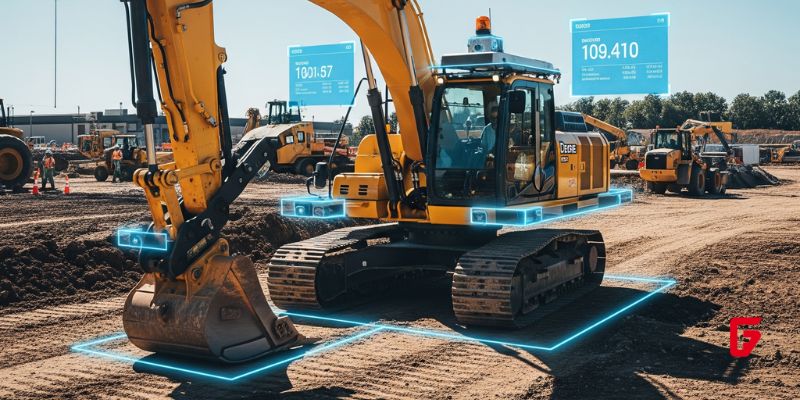
Bedrock Robotics has officially stepped out of stealth mode, introducing its vision for autonomous construction technology and announcing a remarkable $80 million funding round to back its ambitions. In an industry valued at a staggering $13 trillion globally, Bedrock seeks to bridge the widening gap between the surging demand for critical infrastructure and the escalating shortage of skilled construction labor.
Unlike the traditional approach of introducing brand-new, costly machinery, Bedrock’s strategy stands out:
Upgrade existing heavy equipment fleets with reversible hardware and intuitive software.
Enable fully autonomous operations with same-day installations.
Seamless integration with current machines, starting with excavators at active construction sites in Arizona, Texas, and Arkansas.
The result? Builders can operate equipment around the clock, accelerate project schedules, improve profitability, and enhance worksite safety.
The United States is in the midst of a manufacturing renaissance, marked by a record $238 billion investment in new facilities in 2024 and a shortage of 500,000 construction workers. With 40% of the workforce nearing retirement, it’s clear that something transformative is needed.
Bedrock’s autonomous systems are designed to increase labor availability, efficiency, and reliability at a time when 1.25 billion hours are spent annually operating heavy machinery.
The Bedrock founding team boasts an impressive background:
Three ex-Waymo leaders (including the previous head of Waymo’s trucking program).
Deep expertise in machine learning and system architecture.
A fourth co-founder who led large engineering teams at Segment.
Recently joined by Laurent Hautefeuille, formerly at Uber Freight, as COO.
This collective experience in building and deploying real-world autonomy is now channeled into solving construction’s toughest challenges.
Bedrock is not working in a vacuum. It’s collaborating with established industry players like:
Sundt Construction (Phoenix-based).
Three Texas-headquartered firms: Zachry Construction, Champion Site Prep, and Capitol Aggregates.
Feedback from leaders at these companies has highlighted Bedrock’s commitment to safety, pragmatic deployment, and ability to address real field needs.
Looking ahead, Bedrock’s roadmap includes:
Expanding engineering, operations, and commercialization teams.
Deepening partnerships for operator-less machine deployment by 2026.
Ramping up deployment across more regions and machine types.
Bedrock Robotics aims to be at the core of America’s new infrastructure era—where intelligent automation makes construction faster, safer, and more resilient for decades to come.

AWS frontier agents introduce a new era of autonomous AI coders that can build, secure, and run applications for days at a time, acting like virtual teammates across dev, security, and DevOps while engineers retain final control over production changes.

Explore the cutting-edge ways AI is enhancing Lean Six Sigma, from real-time process insights to predictive controls, ushering in a new era of operational excellence and efficiency.

Facing supply chain challenges in 2025? High-performing teams leverage AI for risk management, demand forecasting, supplier analytics, and end-to-end visibility to ensure business continuity and resilience.

Craft an AI-powered supply chain Center of Excellence that unifies control tower visibility, analytics, and inventory optimization into one strategic hub. Explore this blueprint to learn how a modern supply chain CoE drives resilience, smarter decisions, and operational excellence in the age of AI.

Supply chain leadership is being redefined by AI, intelligent automation, and agentic decision-making, demanding leaders who can engineer end-to-end intelligence rather than simply manage workflows. This article explores how next-generation supply chain leaders will combine data, algorithms, and human judgment to build resilient, adaptive, and high-performing global operations.

Bridgit Mendler’s Northwood Space is pioneering mass-produced ground stations, enabling scalable, high-speed connectivity for the new era of satellite networks and megaconstellations.

SpaceX aims to nearly double launches from Vandenberg in 2025, facing support from federal agencies but strong objections from the state and local communities.

Traditional Medicare will pilot AI-assisted prior authorization in 2026 across six states, focusing on high-risk outpatient services. Clinicians retain final say, but incentives and access concerns loom as CMS tests fraud reduction and “gold card” exemptions. Here’s what providers and patients should know.

OpenArt’s new “one-click story” compresses scripting, visuals, and edits into ready-to-post short videos—fueling viral growth and a fresh IP debate. We break down how it works, adoption signals, what’s next (multi-character, mobile), and practical guardrails creators and brands should follow to stay original and compliant.

OpenAI’s o3 swept the Kaggle AI chess tournament, defeating xAI’s Grok 4–0. The victory fueled the intense rivalry between Altman and Musk, reshaping AI benchmarks.

NASA and Google’s AI-powered Crew Medical Officer Digital Assistant enables autonomous diagnoses for astronauts on Mars missions, redefining remote healthcare for space and Earth.

Pinterest’s CEO confirms that fully agentic AI shopping is years away, as the platform invests in AI-powered tools to enhance discovery, inspiration, and personalized shopping experiences for millions.
To provide the best experiences, we use technologies like cookies to store and/or access device information. Consenting to these technologies will allow us to process data such as browsing behavior or unique IDs on this site. Thanks for visiting futureTEKnow.