By futureTEKnow | Editorial Team
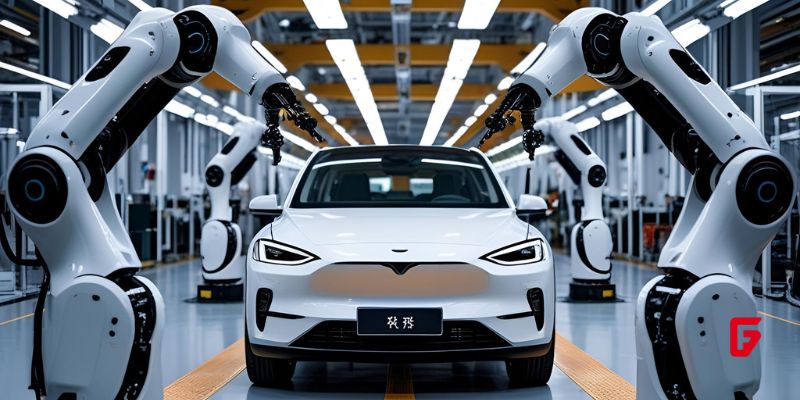
When you think of Chinese manufacturing, you might picture endless rows of workers assembling gadgets at breakneck speed. That image is now outdated. Photographer Edward Burtynsky’s latest series, captured inside one of BYD’s electric vehicle plants near Shanghai, reveals a new reality: factories where robots outnumber humans, and automation runs the show.
Burtynsky, known for his sweeping industrial landscapes, was granted rare access to BYD’s Changzhou facility. What he found was striking: a space designed and built by people, but operated almost entirely by machines. In his words, “the human role is primarily to maintain the robots and ensure the software operates smoothly.” This is the essence of the so-called “dark factory”—a production line that could function without lights, since machines don’t need to see.
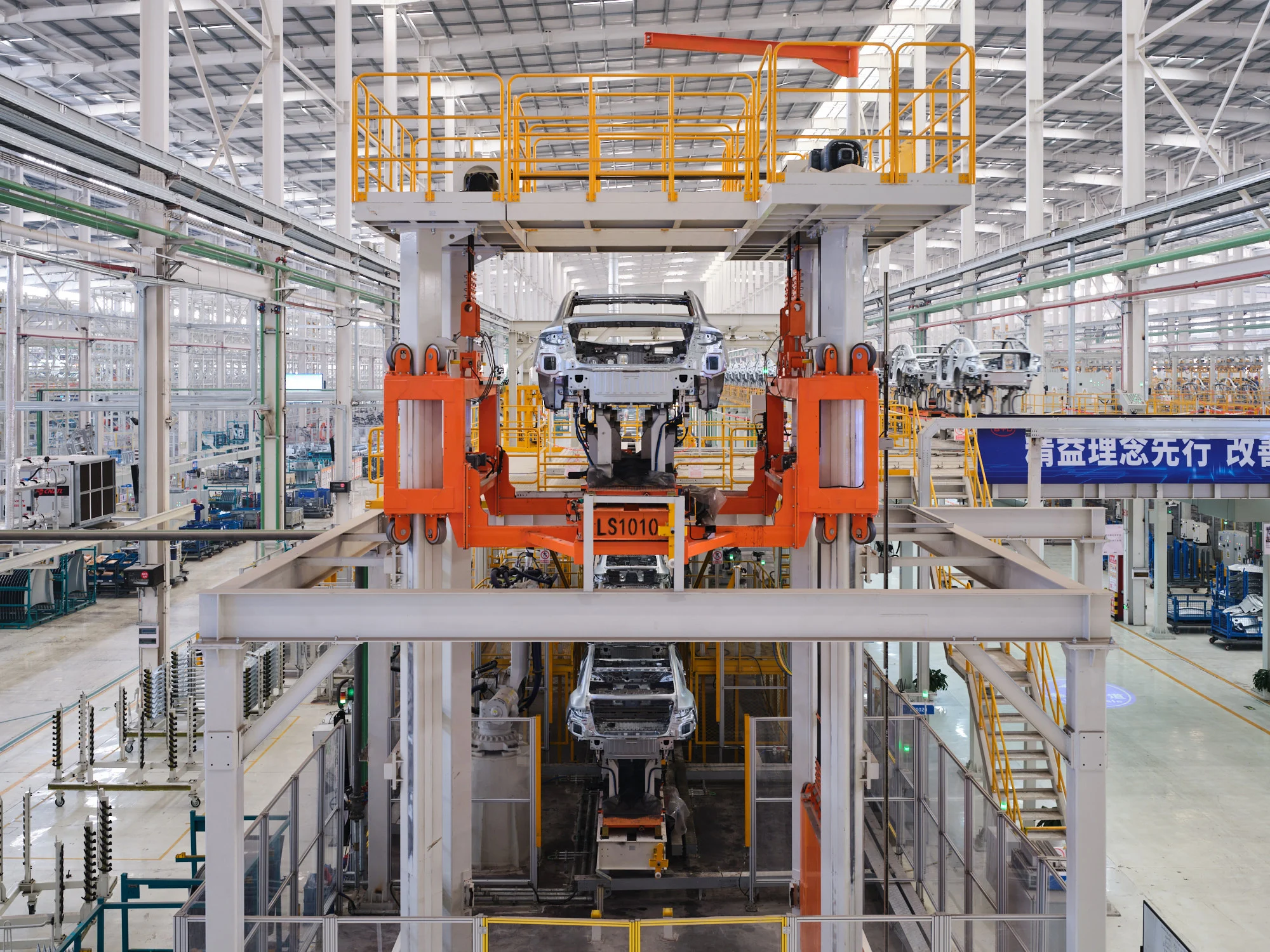
The centerpiece of Burtynsky’s visit, “BYD Manufacturing Facility #2,” captures a nearly surreal scene: an unfinished vehicle on a spotless, symmetrical line, surrounded by columns and beams. The effect is almost cathedral-like, a testament to the scale and precision of modern automation.
BYD’s embrace of automation isn’t just about technological prowess—it’s a business strategy. In 2024, BYD’s vehicle sales soared, outpacing Tesla’s annual earnings and making headlines for their affordable EVs. The entry-level Seagull, for example, starts at just $10,000 in China, compared to Tesla’s $32,000 Model 3. This price advantage is possible because of highly automated production lines, which slash labor costs and boost efficiency.
For corporations, the benefits are clear:
No unions or sick pay
24/7 operation as long as machines have power
Consistent quality and output
Burtynsky’s work doesn’t just document China’s transformation. It also explores how this shift impacts the global supply chain and labor markets. While robots now dominate Chinese mega-factories, human labor hasn’t disappeared—it’s been relocated. His broader project, “China in Africa,” contrasts these automated plants with Chinese-owned factories in Ethiopia and Namibia, where manual labor still reigns.
This reflects a new phase of globalization, with China vertically integrating its supply chain by securing mineral rights in places like Brazil and building infrastructure across Africa.
Burtynsky’s images often highlight the moral complexity of industrial progress. Electric vehicle factories are resource-intensive, but they also symbolize hope for a lower-carbon future. As Burtynsky notes, these spaces can be seen as both monuments to consumption and potential agents of ecological recovery.
Burtynsky’s factory series isn’t just art—it’s a window into the future of manufacturing. Automation is rapidly reshaping not only how products are made, but also who makes them, and where. As China continues to lead this transformation, the ripple effects will be felt across industries and continents.
Burtynsky’s photographs challenge us to rethink our assumptions about industry, labor, and the environment. In the age of automation, the factory floor is no longer crowded with people—it’s a landscape of machines, meticulously choreographed, and eerily beautiful.

Founded in 2018, futureTEKnow is a global database dedicated to capturing the world’s most innovative companies utilizing emerging technologies across five key sectors: Artificial Intelligence (AI), immersive technologies (MR, AR, VR), blockchain, robotics, and the space industry. Initially launched as a social media platform to share technology news, futureTEKnow quickly evolved into a comprehensive resource hub, spotlighting the latest advancements and groundbreaking startups shaping the future of tech.

Explore the cutting-edge ways AI is enhancing Lean Six Sigma, from real-time process insights to predictive controls, ushering in a new era of operational excellence and efficiency.

Facing supply chain challenges in 2025? High-performing teams leverage AI for risk management, demand forecasting, supplier analytics, and end-to-end visibility to ensure business continuity and resilience.

Craft an AI-powered supply chain Center of Excellence that unifies control tower visibility, analytics, and inventory optimization into one strategic hub. Explore this blueprint to learn how a modern supply chain CoE drives resilience, smarter decisions, and operational excellence in the age of AI.

Supply chain leadership is being redefined by AI, intelligent automation, and agentic decision-making, demanding leaders who can engineer end-to-end intelligence rather than simply manage workflows. This article explores how next-generation supply chain leaders will combine data, algorithms, and human judgment to build resilient, adaptive, and high-performing global operations.

Bridgit Mendler’s Northwood Space is pioneering mass-produced ground stations, enabling scalable, high-speed connectivity for the new era of satellite networks and megaconstellations.

SpaceX aims to nearly double launches from Vandenberg in 2025, facing support from federal agencies but strong objections from the state and local communities.

Traditional Medicare will pilot AI-assisted prior authorization in 2026 across six states, focusing on high-risk outpatient services. Clinicians retain final say, but incentives and access concerns loom as CMS tests fraud reduction and “gold card” exemptions. Here’s what providers and patients should know.

OpenArt’s new “one-click story” compresses scripting, visuals, and edits into ready-to-post short videos—fueling viral growth and a fresh IP debate. We break down how it works, adoption signals, what’s next (multi-character, mobile), and practical guardrails creators and brands should follow to stay original and compliant.

OpenAI’s o3 swept the Kaggle AI chess tournament, defeating xAI’s Grok 4–0. The victory fueled the intense rivalry between Altman and Musk, reshaping AI benchmarks.

NASA and Google’s AI-powered Crew Medical Officer Digital Assistant enables autonomous diagnoses for astronauts on Mars missions, redefining remote healthcare for space and Earth.

Pinterest’s CEO confirms that fully agentic AI shopping is years away, as the platform invests in AI-powered tools to enhance discovery, inspiration, and personalized shopping experiences for millions.

Shopify’s new AI shopping tools are transforming e-commerce, letting agents and chatbots deliver smooth, personalized shopping and checkout experiences across platforms. Learn how these innovations reshape online retail.
To provide the best experiences, we use technologies like cookies to store and/or access device information. Consenting to these technologies will allow us to process data such as browsing behavior or unique IDs on this site. Thanks for visiting futureTEKnow.