By futureTEKnow | Editorial Team
The worlds of artificial intelligence and crypto mining just collided in a big way. CoreWeave, the AI infrastructure powerhouse, is back at the negotiating table to acquire Core Scientific, a company that’s gone from post-bankruptcy underdog to one of the hottest data center stories of 2025. This isn’t just another M&A headline—this is a glimpse into how digital infrastructure is being reimagined for a new era.
On June 26, Core Scientific’s stock rocketed as much as 35% after reports surfaced that CoreWeave is reviving its acquisition bid. Trading was briefly halted as investors digested the news, and by the end of the day, Core Scientific’s market cap was flirting with $5 billion—a staggering leap from last year’s $1 billion offer from CoreWeave.
Meanwhile, CoreWeave’s shares dipped slightly, a typical move for the acquirer in these scenarios, but the bigger story is what this deal could mean for the future of both companies—and the industry at large.
Both CoreWeave and Core Scientific started their journeys in the crypto mining trenches. But as Bitcoin mining margins tightened and the AI boom took off, they pivoted hard. Core Scientific now runs 10 data centers with 1,300 megawatts of capacity, and has shifted its focus to high-performance computing for AI workloads. The company’s recent earnings show a profit of $580 million in Q1, even as mining revenues fell short due to the latest Bitcoin halving.
CoreWeave, on the other hand, has transformed itself into a go-to provider for AI cloud infrastructure, serving big names like Microsoft. The company’s appetite for power is massive, and that’s where Core Scientific comes in: the two already have a 12-year partnership worth over $10 billion, with CoreWeave contracted for nearly 600 megawatts of Core Scientific’s capacity.
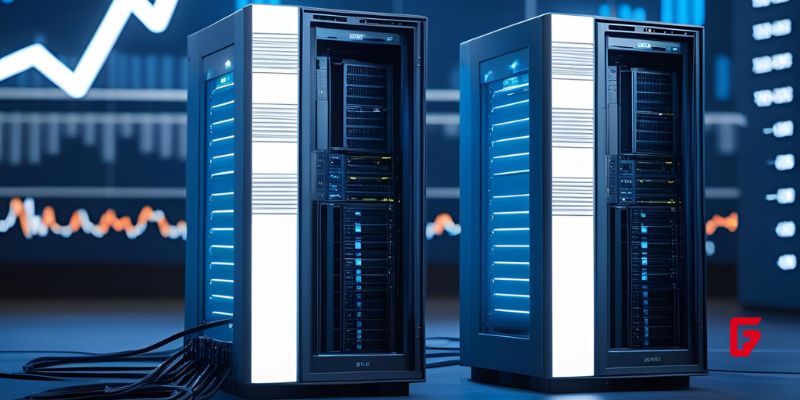
This isn’t just about one company buying another. The real story is the convergence of AI and crypto mining infrastructure. Data centers built for Bitcoin are being rapidly repurposed—or rebuilt—to host the GPU clusters that power generative AI, machine learning, and cloud computing. The demand for electricity and cooling is off the charts, and companies like CoreWeave are racing to secure every available megawatt.
But it’s not as simple as swapping out mining rigs for GPUs. Analysts warn that true AI workloads often require new facilities, not just retrofits. Still, Core Scientific’s real estate and power contracts make it a prime target for anyone looking to scale up AI operations fast.
Sources say a deal could be finalized in the coming weeks, assuming negotiations stay on track. The terms aren’t public yet, but with Core Scientific’s valuation now several times higher than last year’s bid, expect a hefty price tag.
For the rest of the industry, this is a wake-up call: the lines between crypto and AI are blurring, and the battle for data center dominance is just heating up.

Explore the cutting-edge ways AI is enhancing Lean Six Sigma, from real-time process insights to predictive controls, ushering in a new era of operational excellence and efficiency.

Facing supply chain challenges in 2025? High-performing teams leverage AI for risk management, demand forecasting, supplier analytics, and end-to-end visibility to ensure business continuity and resilience.

Craft an AI-powered supply chain Center of Excellence that unifies control tower visibility, analytics, and inventory optimization into one strategic hub. Explore this blueprint to learn how a modern supply chain CoE drives resilience, smarter decisions, and operational excellence in the age of AI.

Supply chain leadership is being redefined by AI, intelligent automation, and agentic decision-making, demanding leaders who can engineer end-to-end intelligence rather than simply manage workflows. This article explores how next-generation supply chain leaders will combine data, algorithms, and human judgment to build resilient, adaptive, and high-performing global operations.

Bridgit Mendler’s Northwood Space is pioneering mass-produced ground stations, enabling scalable, high-speed connectivity for the new era of satellite networks and megaconstellations.

SpaceX aims to nearly double launches from Vandenberg in 2025, facing support from federal agencies but strong objections from the state and local communities.

Traditional Medicare will pilot AI-assisted prior authorization in 2026 across six states, focusing on high-risk outpatient services. Clinicians retain final say, but incentives and access concerns loom as CMS tests fraud reduction and “gold card” exemptions. Here’s what providers and patients should know.

OpenArt’s new “one-click story” compresses scripting, visuals, and edits into ready-to-post short videos—fueling viral growth and a fresh IP debate. We break down how it works, adoption signals, what’s next (multi-character, mobile), and practical guardrails creators and brands should follow to stay original and compliant.

OpenAI’s o3 swept the Kaggle AI chess tournament, defeating xAI’s Grok 4–0. The victory fueled the intense rivalry between Altman and Musk, reshaping AI benchmarks.

NASA and Google’s AI-powered Crew Medical Officer Digital Assistant enables autonomous diagnoses for astronauts on Mars missions, redefining remote healthcare for space and Earth.

Pinterest’s CEO confirms that fully agentic AI shopping is years away, as the platform invests in AI-powered tools to enhance discovery, inspiration, and personalized shopping experiences for millions.

Shopify’s new AI shopping tools are transforming e-commerce, letting agents and chatbots deliver smooth, personalized shopping and checkout experiences across platforms. Learn how these innovations reshape online retail.
To provide the best experiences, we use technologies like cookies to store and/or access device information. Consenting to these technologies will allow us to process data such as browsing behavior or unique IDs on this site. Thanks for visiting futureTEKnow.