
Startups & Business News
China’s Guowang Satellite Surge: A New Era for Global Space Internet
KEY POINTS
China launched its sixth Guowang satellite batch on July 30, 2025 via Long March 8A from Hainan.
Guowang aims for a 13,000-satellite constellation to rival Starlink and support China’s internet, security, and global ambitions.
Major challenges persist, including satellite production scaling, launch bottlenecks, and space sustainability.
China is rapidly commercializing space operations, pushing technological boundaries, and shaping the future of satellite-powered internet.
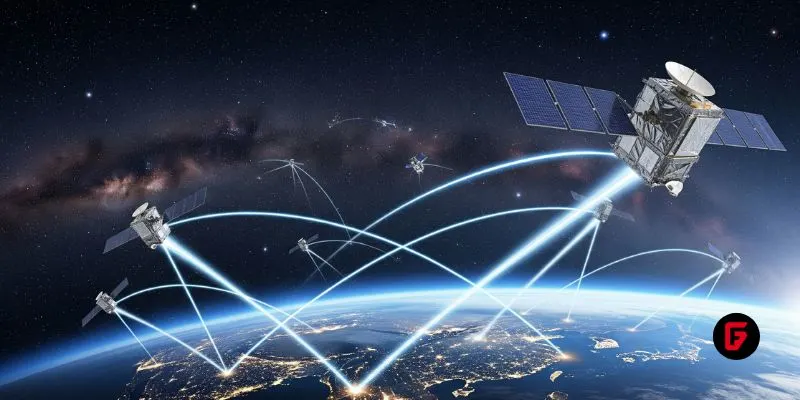
The race for global satellite internet supremacy has just taken an electrifying new turn. On July 30, 2025, China successfully launched its sixth batch of Guowang megaconstellation satellites using a Long March 8A rocket from the Hainan commercial spaceport. With this launch, China underscores its unwavering commitment to compete on the world stage and accelerate toward a future where space-based internet blankets the globe.
The Rapid Expansion of the Guowang Megaconstellation
China’s Guowang project, often dubbed its answer to SpaceX’s Starlink, is nothing short of ambitious. The full constellation aims for nearly 13,000 satellites in low Earth and geostationary orbits, targeting massive, secure broadband coverage for both domestic and international markets. The July 30 launch alone carried nine new Guowang communication satellites into orbit, a part of the critical push required to meet regulatory milestones and leap ahead to real operational scale.
But this is not just about numbers. Each satellite, equipped with advanced phased-array antennas, laser cross-links, and RF communications, helps knit together a robust, intricate network designed for resilience—and tremendous reach. The Guowang project, officially led by China SatNet, is central to China’s stated vision of becoming a true “network power”, bridging digital divides in remote areas and projecting influence through its Digital Silk Road initiative.
Commercial Spaceports Mark a Strategic Shift
The use of the Hainan commercial spaceport for this milestone launch is notable in itself. It highlights China’s growing commercialization of its launch infrastructure, following trends seen in the U.S. and Europe, and showcasing the entry of newly upgraded rockets like the Long March 8A. This rocket, boasting a new hydrogen-oxygen upper stage and a larger payload fairing, is pivotal for China’s rapidly increasing launch cadence.
This evolution isn’t just about national prestige. By fostering a competitive commercial ecosystem, China aims to scale up rocket production and satellite manufacturing, racing to hit International Telecommunication Union requirements: at least 10 percent of planned satellites in orbit by 2026, or face spectrum rights challenges.
The Technical Hurdles and Lofty Goals
Despite political will and growing technical muscle, China faces enormous hurdles:
Production bottlenecks: Manufacturing thousands of satellites a year is a daunting scale-up, with state-owned giants and private players alike shifting from bespoke hardware to assembly-line mass production.
Launch capacity: While China has logged over 33 orbital launches in 2025 so far, matching the rapid tempo of SpaceX’s reusable Falcon 9 remains a challenge. Most Long March rockets are still expendable, raising cost and logistics pressures.
Space sustainability: With tens of thousands of satellites planned, issues of orbital debris and collision risk are moving to the forefront. International coordination and technological advances for debris mitigation will be crucial.
Technical readiness: From mastering laser inter-satellite links to integrating communications with China’s coast guard and military, the learning curve is steep. The hardware isn’t just for broadband internet: it supports remote sensing, navigation (PNT), meteorology, and security applications.
Strategic and Global Implications
The global space internet race is about more than just streaming movies in the Gobi Desert. China’s use of Guowang for national defense, emergency response, and economic growth could rival—if not surpass—America’s Starlink in key strategic areas. Meanwhile, projects like Amazon’s Kuiper and Europe’s IRIS2 are racing to catch up, ensuring this is a truly international sprint.
From the South China Sea to Africa, Guowang’s impact is poised to ripple far beyond China’s borders. Yet, with only around 40–50 satellites operational as of mid-2025, China must shift into high gear to hit its targets—and make the entire system a sustainable business (and policy) success.
The world has entered a new era where space is no longer just the realm of astronauts, but the backbone of tomorrow’s digital infrastructure. With its latest Guowang launch, China is making it abundantly clear: the race for the skies—and the data streams that flow across them—has only just begun.

futureTEKnow
Editorial Team
Discover the companies and startups shaping tomorrow — explore the future of technology today.



Trending Companies
Latest Articles
futureTEKnow is focused on identifying and promoting creators, disruptors and innovators, and serving as a vital resource for those interested in the latest advancements in technology.
© 2026 All Rights Reserved.