By futureTEKnow | Editorial Team
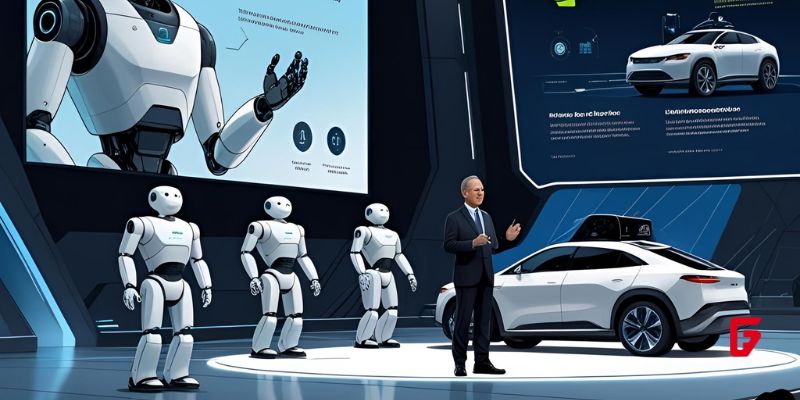
Nvidia’s annual shareholder meeting this week wasn’t just another corporate update—it was a declaration of intent. CEO Jensen Huang made it clear: while Nvidia’s AI infrastructure has fueled a meteoric rise in revenue and market value, robotics is now the company’s next multitrillion-dollar opportunity.
For years, Nvidia was synonymous with high-performance graphics chips. But that identity is now history. Huang told shareholders that Nvidia is no longer a “chip company”—it’s an “AI infrastructure” and “computing platform” provider. The company’s portfolio now spans hardware, AI software, cloud services, and advanced networking, making it the backbone for everything from generative AI to autonomous vehicles.
So, what’s driving Nvidia’s robotics ambitions? It starts with the same AI chips that power ChatGPT and other generative models. Nvidia is leveraging this technology to enable robots—starting with self-driving cars and expanding toward humanoid robotics. The automotive and robotics business unit, though currently just 1% of total revenue, surged 72% year-over-year last quarter, reaching $567 million. That kind of growth is why robotics is now Nvidia’s second-biggest focus after AI.
Nvidia Drive: Already used by automotive giants like Mercedes-Benz, this platform is the foundation for Nvidia’s self-driving ambitions.
Cosmos AI Model: Launched this year, Cosmos is designed specifically for humanoid robotics, underscoring Nvidia’s commitment to integrated hardware and AI solutions.
Cloud-to-Robot Computing: Nvidia is building infrastructure to train and deploy robotics software both in the cloud and on physical machines, ensuring scalability for billions of robots and millions of autonomous vehicles.
Nvidia’s pivot isn’t a gamble—it’s a calculated expansion. The company is positioning itself as the essential infrastructure provider for the coming wave of automation. As enterprises race to adopt AI and robotics, Nvidia’s end-to-end solutions are set to power everything from industrial robots to next-gen vehicles.
Huang’s vision is clear: “The age of AI is here… Nvidia is ready.” With robotics now firmly in its sights, Nvidia is building the digital rails for a future where intelligent machines aren’t just a novelty—they’re everywhere.

AWS frontier agents introduce a new era of autonomous AI coders that can build, secure, and run applications for days at a time, acting like virtual teammates across dev, security, and DevOps while engineers retain final control over production changes.

Explore the cutting-edge ways AI is enhancing Lean Six Sigma, from real-time process insights to predictive controls, ushering in a new era of operational excellence and efficiency.

Facing supply chain challenges in 2025? High-performing teams leverage AI for risk management, demand forecasting, supplier analytics, and end-to-end visibility to ensure business continuity and resilience.

Craft an AI-powered supply chain Center of Excellence that unifies control tower visibility, analytics, and inventory optimization into one strategic hub. Explore this blueprint to learn how a modern supply chain CoE drives resilience, smarter decisions, and operational excellence in the age of AI.

Supply chain leadership is being redefined by AI, intelligent automation, and agentic decision-making, demanding leaders who can engineer end-to-end intelligence rather than simply manage workflows. This article explores how next-generation supply chain leaders will combine data, algorithms, and human judgment to build resilient, adaptive, and high-performing global operations.

Bridgit Mendler’s Northwood Space is pioneering mass-produced ground stations, enabling scalable, high-speed connectivity for the new era of satellite networks and megaconstellations.

SpaceX aims to nearly double launches from Vandenberg in 2025, facing support from federal agencies but strong objections from the state and local communities.

Traditional Medicare will pilot AI-assisted prior authorization in 2026 across six states, focusing on high-risk outpatient services. Clinicians retain final say, but incentives and access concerns loom as CMS tests fraud reduction and “gold card” exemptions. Here’s what providers and patients should know.

OpenArt’s new “one-click story” compresses scripting, visuals, and edits into ready-to-post short videos—fueling viral growth and a fresh IP debate. We break down how it works, adoption signals, what’s next (multi-character, mobile), and practical guardrails creators and brands should follow to stay original and compliant.

OpenAI’s o3 swept the Kaggle AI chess tournament, defeating xAI’s Grok 4–0. The victory fueled the intense rivalry between Altman and Musk, reshaping AI benchmarks.

NASA and Google’s AI-powered Crew Medical Officer Digital Assistant enables autonomous diagnoses for astronauts on Mars missions, redefining remote healthcare for space and Earth.

Pinterest’s CEO confirms that fully agentic AI shopping is years away, as the platform invests in AI-powered tools to enhance discovery, inspiration, and personalized shopping experiences for millions.
To provide the best experiences, we use technologies like cookies to store and/or access device information. Consenting to these technologies will allow us to process data such as browsing behavior or unique IDs on this site. Thanks for visiting futureTEKnow.