




























Miami, Florida, USA
2025
Information Technology, Managed IT Services, Cybersecurity, Software, Business Services
Flamingo is an AI and open-source software company building technology specifically for managed service providers. Its primary product, OpenFrame, brings multiple IT management and security functions into a unified platform, including remote monitoring, remote access, patch management, professional services automation, security information and event management, mobile device management, and documentation.
The company sits at the intersection of AI, IT operations, cybersecurity, and open-source infrastructure, using AI agents to automate routine MSP workflows rather than treating AI as a separate add-on.
Flamingo develops software designed to consolidate the tools MSPs use to manage customer IT environments. OpenFrame combines functions that are traditionally handled through separate products, including RMM, remote support, patching, PSA, SIEM, MDM, documentation, and security operations.
The platform also uses AI agents to handle operational tasks such as ticket intake, support requests, diagnostics, scripting, patching, and endpoint operations. Flamingo’s approach is aimed at reducing the number of disconnected systems MSP teams need to operate while giving them greater automation and control over their IT stack.
Flamingo combines artificial intelligence, agentic AI, open-source software, unified data architecture, IT automation, and cybersecurity tooling.
A central part of the platform is the use of AI agents that can perform operational tasks instead of simply generating recommendations. Flamingo identifies two built-in AI copilots, Fae and Mingo, which are embedded into OpenFrame and support MSP activities ranging from client intake to backend execution.
The company’s architecture also emphasizes a unified data model and API for IT and security workflows. This allows automation to operate across multiple areas of an MSP’s technology stack rather than being confined to an individual point solution.
Flamingo also describes itself as an AI-native company internally, using a shared database and codebase across its operational hubs. Its internal FlamingoOps architecture applies AI agents to areas such as marketing, product operations, reporting, revenue, and people operations.
Flamingo is relevant to the emerging AI landscape because it applies agentic AI to IT operations rather than limiting AI to conversational assistance. Its OpenFrame platform combines IT management and security capabilities with AI agents that can perform operational work, creating a model in which software agents become part of the day-to-day MSP infrastructure.
The company’s open-source approach is another important part of its positioning. Instead of requiring MSPs to assemble numerous proprietary tools, Flamingo is building a unified environment around open technology, automation, and AI. In September 2026, the company says it has raised $4.5 million in seed funding, bringing total funding to $6.7 million, to develop its open-source AI-driven operating system for autonomous MSPs.
For futureTEKnow, Flamingo is a good example of the broader movement toward AI agents becoming operational software, particularly in IT service management and cybersecurity.
OpenFrame is Flamingo’s primary MSP platform. It combines multiple IT management and security capabilities into a single environment, including:
– Remote Monitoring and Management (RMM)
– Remote access and support
– Patch management
– Professional Services Automation (PSA)
– Security Information and Event Management (SIEM)
– Secure remote access for security operations
– Mobile Device Management (MDM)
– Documentation and password management
The platform also incorporates AI copilots and is positioned around open-source technology and reduced vendor lock-in.
Fae is one of OpenFrame’s embedded AI agents. Flamingo describes it as an AI system that can resolve IT requests and automate support activities before they reach an MSP technician.
Mingo is Flamingo’s second embedded AI copilot. Along with Fae, it is designed to automate day-to-day MSP operations and execute tasks across the OpenFrame environment.
Flamingo’s technology is primarily applicable to managed IT service providers and managed security service providers (MSSPs).
Its platform can be used for IT support, endpoint management, remote troubleshooting, software patching, security monitoring, documentation, ticket handling, and other recurring MSP operations. The AI agents extend these applications by automating portions of support and backend execution.
The broader technology is relevant to organizations that manage large numbers of endpoints and customer IT environments, particularly where multiple IT management and security tools create fragmented workflows.
OpenFrame is Flamingo’s unified IT platform for MSPs, combining RMM, remote access, patching, PSA, SIEM, MDM, documentation, and other IT operations capabilities with built-in AI copilots.
Fae and Mingo are AI copilots embedded in OpenFrame. They are designed to automate routine MSP activities, including support requests, client intake, diagnostics, and backend IT operations.
OpenFrame is primarily designed for managed service providers (MSPs) and organizations operating managed IT and security services.
Flamingo uses AI agents to move beyond assistance toward execution. Its agents can participate in activities such as ticket handling, diagnostics, scripting, patching, and endpoint operations within the MSP environment.
Yes. Flamingo describes itself as an AI and open-source company and positions OpenFrame around open-source technology, unified IT operations, automation, and reduced vendor lock-in.
Have an update, correction, or additional information about this company? Help us keep the futureTEKnow company database up to date by submitting the latest company information.

OpenAI’s Astra for Law combines GPT-6 Astra with specialized legal search, integrations, and governance controls. The launch shows how frontier AI is moving deeper into professional legal workflows.

AI projects often stall because business data isn’t consistent or trustworthy. Here’s how to identify data gaps before they become an AI roadblock.
EVAS Intelligence has raised 1.5 billion yuan to mass‑produce its RISC-V Epoch AI chips, deepen its full‑stack platform, and accelerate global expansion, signaling rising investor confidence in alternative AI compute.
Orkes has raised 60 million dollars to turn its Netflix‑born workflow engine into a control plane for enterprise AI agents. The piece unpacks how its orchestration platform works, why investors are backing it now, and what this means for companies trying to move AI from pilots into production.

Paris-based Sillage has raised €1.7 million to launch an AI signal engine that helps enterprise sales teams follow the right buying signals, prioritize high-intent accounts, and improve pipeline efficiency without replacing human-led conversations.

Cloneable is launching an agentic AI platform for infrastructure operations that captures institutional knowledge from retiring experts and turns it into scalable agents, targeting energy, utilities, and other asset-heavy sectors. The $4.6M seed-backed startup aims to connect field data capture with back-office execution so founders and operators can modernize infrastructure faster and with fewer bottlenecks.
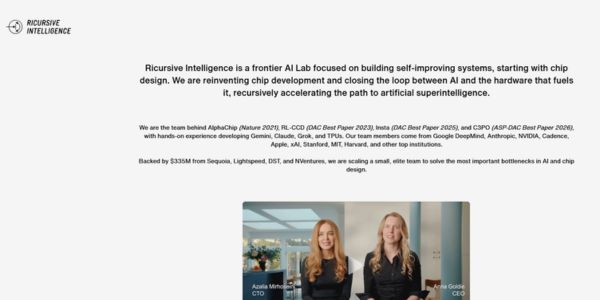
Excerpt: Ricursive Superintelligence has raised at least $500 million to build self‑improving AI, with GV and Nvidia backing a four‑month‑old lab at a $4 billion valuation. The deal crystallizes how quickly capital, talent and regulatory scrutiny are converging around autonomous AI research—and what that means for builders trying to compete outside the frontier club.

Brazilian startup BOND has raised US$2M to automate accounting for SMEs in Brazil’s complex tax system. Combining AI with human accountants, it targets a fragmented market of manual processes, aiming to turn back-office compliance into a faster, more strategic function for founders and operators.

Loop just raised a $95M Series C to expand its AI-native supply chain platform, turning messy logistics data into early disruption warnings and better financial outcomes for global operators and shippers.
Linkedin X-twitter-square Facebook-square Startups & Business News AI agents are finally moving from demos to the day-to-day stack of real
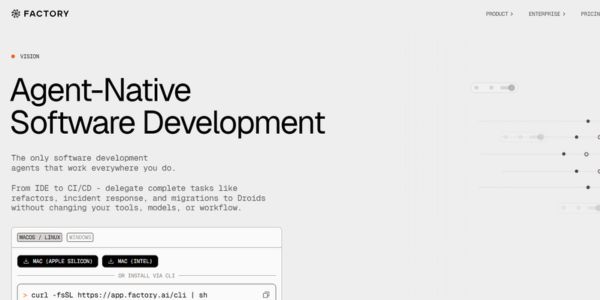
Factory has raised a $150M Series C at a $1.5B valuation to scale its autonomous “Droids” platform, betting that enterprises will standardize software engineering around agent‑native missions, governance and cost‑optimized AI infrastructure.

Solidroad has raised $25 million to bring AI-native quality assurance to every human and AI-powered customer interaction. The new funding will accelerate product development and expansion for support-heavy businesses leaning into automation.
futureTEKnow is focused on identifying and promoting creators, disruptors and innovators, and serving as a vital resource for those interested in the latest advancements in technology.
© 2026 All Rights Reserved.