
















futureTEKnow | Editorial Team
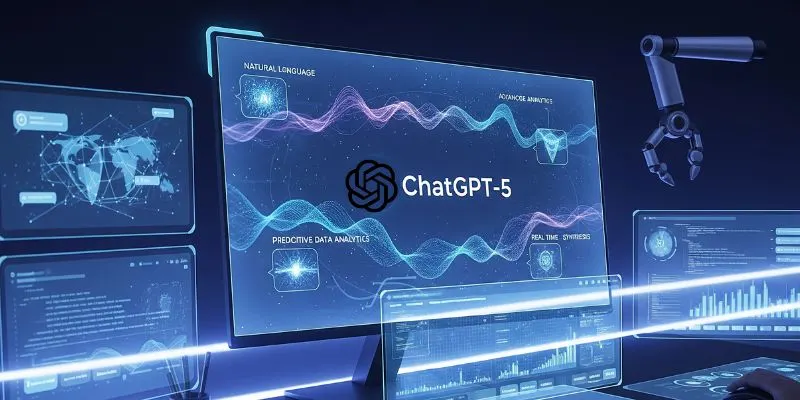
GPT-5 is now available for all ChatGPT users, including those on the free plan, ushering in a new standard for accessible AI tools.
OpenAI claims GPT-5 performs at “PhD-level” in reasoning, writing, and coding, making it more intelligent, faster, and less prone to errors or “hallucinations”.
The model features a massive 256,000-token context window and new “reasoning mode,” enabling generation of entire software solutions and deeper conversations.
Safety has taken center stage, with comprehensive testing and features to minimize unsupported claims and provide more transparent, honest AI responses.
On August 7, 2025, OpenAI officially rolled out GPT-5 to every ChatGPT user—no subscription required. This marks a democratization of advanced AI, making what was once premium-level technology open to the public. For millions who use ChatGPT daily for everything from brainstorming to debugging code, this is a game-changer, and the first time OpenAI’s most sophisticated “reasoning model” is available outside the paid tiers.
CEO Sam Altman did not mince words: “GPT-5 is the first time it genuinely feels like conversing with an expert in any subject, akin to a PhD-level professional.” The leap from prior models is not just about speed or complexity; it’s about how human-like and accurate the interactions feel. You’ll notice:
Sharper Reasoning: GPT-5 leverages new training approaches for better logic and inference, so it’s less likely to spin up convincing-sounding nonsense just to fill a gap.
Reduced Hallucinations: Past models sometimes fabricated information (in AI-speak, “hallucinated”). GPT-5 greatly reduces this, with a more transparent approach to error and limitation.
Massive Memory: With a 256,000-token context window, it can hold far more information from your conversations at once than before, enabling comprehensive answers and codebases.
“Vibe Coding” and Smart Software Generation: In live demos, GPT-5 built complex, multi-page web apps in moments from plain-language prompts—showing off its prowess for software development.
Imagine telling ChatGPT: “Build me a French language learning website, with quizzes and daily streak tracking.” Within moments, GPT-5 can generate two unique, feature-rich web apps—each ready for user tweaks and extensions. The model doesn’t just mimic code snippets or repeat tutorials; it constructs logical, adaptive solutions.
Professional testers at Box, a leading SaaS company, noted that GPT-5 could finally tackle the hard stuff: intricate logic, higher mathematics, and long, context-rich documents. “A complete breakthrough” is how Box CEO Aaron Levie described it.
The rollout arrives at a time when trust in generative AI is both high and fragile. With more organizations looking to AI for business, healthcare, and educational uses, the risk that AI can “make things up” or give misleading advice is under serious scrutiny. OpenAI tackled this directly:
5,000 hours of safety testing: Every scenario from potential bias, misinformation, and ethical use cases was probed.
“Safe completions” replaces refusals: Rather than simply refusing risky queries, GPT-5 offers high-level, safe responses that don’t jeopardize user trust or public safety.
Honest about limits: If the task cannot be performed or would lead to speculation, GPT-5 is trained to explicitly state its boundaries.
More expert-level responses: Feels less like a helpful student and more like consulting a true specialist.
Long-form and complex project support: Whether it’s code, legal summaries, or technical documentation, GPT-5 keeps track of more context and delivers more coherent outputs.
Broader API and developer access: In parallel, GPT-5 is deployed to Microsoft platforms and other app ecosystems. API endpoints now include three model versions for different needs—mainline, Pro, and Nano, catering to various usage and pricing tiers.
Integrated across Microsoft products: Developers and enterprise users will immediately see GPT-5 powering services such as GitHub Copilot, Microsoft 365 Copilot, and Azure AI.
The arrival of GPT-5 signifies more than a product launch:
The lines between human and machine expertise keep blurring.
OpenAI’s competitors, including Anthropic and even Elon Musk’s ventures, are racing to leapfrog each other in reasoning capabilities.
Regulatory pressures and public benefit debates are heating up, with OpenAI navigating the shift from nonprofit origins to a highly valued, scrutinized for-profit.
The bottom line? Whether you’re coding, creating, researching, or just curious about AI’s next act, GPT-5 brings powerful new abilities to your browser—for free.

Editorial Team
futureTEKnow is a leading source for Technology, Startups, and Business News, spotlighting the most innovative companies and breakthrough trends in emerging tech sectors like Artificial Intelligence (AI), Robotics, and the Space Industry.
Discover the companies and startups shaping tomorrow — explore the future of technology today.

This article explores 10 AI-driven supply chain optimization companies to watch in 2026, highlighting how their platforms improve forecasting, logistics,

AWS frontier agents introduce a new era of autonomous AI coders that can build, secure, and run applications for days

Explore the cutting-edge ways AI is enhancing Lean Six Sigma, from real-time process insights to predictive controls, ushering in a

Facing supply chain challenges in 2025? High-performing teams leverage AI for risk management, demand forecasting, supplier analytics, and end-to-end visibility

Craft an AI-powered supply chain Center of Excellence that unifies control tower visibility, analytics, and inventory optimization into one strategic

Supply chain leadership is being redefined by AI, intelligent automation, and agentic decision-making, demanding leaders who can engineer end-to-end intelligence

WisdomAI has closed a $50M Series A led by Kleiner Perkins and Nvidia’s NVentures to turn fragmented enterprise data into

Bridgit Mendler’s Northwood Space is pioneering mass-produced ground stations, enabling scalable, high-speed connectivity for the new era of satellite networks

SpaceX aims to nearly double launches from Vandenberg in 2025, facing support from federal agencies but strong objections from the

Traditional Medicare will pilot AI-assisted prior authorization in 2026 across six states, focusing on high-risk outpatient services. Clinicians retain final

OpenArt’s new “one-click story” compresses scripting, visuals, and edits into ready-to-post short videos—fueling viral growth and a fresh IP debate.

OpenAI’s o3 swept the Kaggle AI chess tournament, defeating xAI’s Grok 4–0. The victory fueled the intense rivalry between Altman
To provide the best experiences, we use technologies like cookies to store and/or access device information. Consenting to these technologies will allow us to process data such as browsing behavior or unique IDs on this site. Thanks for visiting futureTEKnow.