By futureTEKnow | Editorial Team
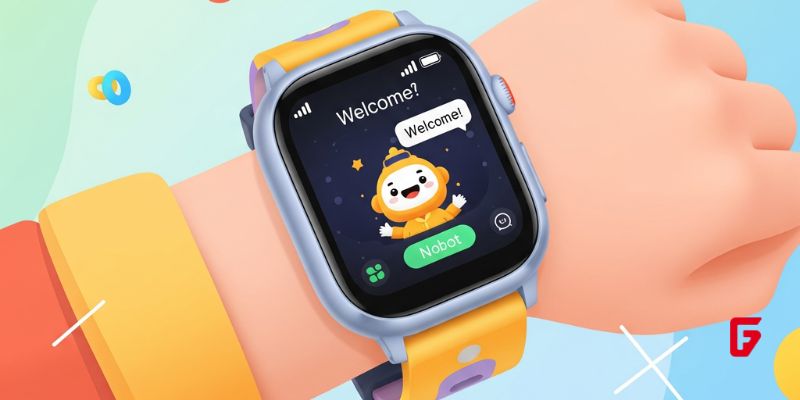
The landscape of children’s wearable tech just got a major upgrade. Pinwheel, already recognized for its kid-friendly smartphones, has introduced its first-ever smartwatch for children aged 7 to 14—and it’s packed with features that blend safety, connectivity, and a touch of AI innovation.
What sets the Pinwheel Watch apart is its voice-activated, parent-monitored AI chatbot called PinwheelGPT. Unlike most children’s wearables, which focus primarily on location tracking and basic communication, this device brings a kid-friendly version of ChatGPT directly to young users. Every interaction is age-appropriate and fully visible to parents via a dedicated dashboard, ensuring a safe digital experience.
GPS Tracking & Location Management: Parents can keep tabs on their child’s whereabouts in real time, providing peace of mind during school runs or after-school activities.
Calling & Texting: Kids can communicate only with parent-approved contacts. All calls and texts are monitored, and image texting can be enabled or disabled per contact.
Camera & Selfie Sharing: The watch includes a camera for taking photos and, soon, video calls—adding a fun, social dimension to the device.
Standalone Connectivity: With 4G LTE support and its own mobile plan, the Pinwheel Watch operates independently—no paired phone required.
Pre-Loaded Apps: Beyond communication, kids get access to a calculator, alarm, calendar reminders, games, and more, making the watch a versatile companion for daily routines.
Custom Schedules: Parents can set usage times for features like calling, texting, and the camera, tailoring access to fit family rules and routines.

Pinwheel’s approach is all about empowering kids with technology—while keeping strong guardrails in place. The PinwheelGPT AI chatbot is always under parental supervision, and if a child isn’t ready for AI interaction, parents can simply disable the feature. The parent portal also makes it easy to manage multiple devices for families with more than one child.
One of the most compelling aspects of the Pinwheel Watch is its adaptability. Designed to transition from elementary to middle school, it offers more advanced features as kids mature, helping families delay the leap to a full smartphone. When it’s time to upgrade, contacts and settings can be transferred seamlessly to a Pinwheel phone.
The Pinwheel Watch is priced at $159 with a $14.99 monthly subscription for parental controls and cellular service. It’s available now via the Pinwheel website, with broader availability expected later this year.
The Pinwheel Watch isn’t just another kids’ gadget—it’s a thoughtful response to the growing need for safe, flexible, and feature-rich wearable tech for children. By integrating AI with robust parental controls, Pinwheel is setting a new benchmark for what families can expect from children’s technology in 2025 and beyond.
Founded in 2018, futureTEKnow is a global database dedicated to capturing the world’s most innovative companies utilizing emerging technologies across five key sectors: Artificial Intelligence (AI), immersive technologies (MR, AR, VR), blockchain, robotics, and the space industry. Initially launched as a social media platform to share technology news, futureTEKnow quickly evolved into a comprehensive resource hub, spotlighting the latest advancements and groundbreaking startups shaping the future of tech.

Explore the cutting-edge ways AI is enhancing Lean Six Sigma, from real-time process insights to predictive controls, ushering in a new era of operational excellence and efficiency.

Facing supply chain challenges in 2025? High-performing teams leverage AI for risk management, demand forecasting, supplier analytics, and end-to-end visibility to ensure business continuity and resilience.

Craft an AI-powered supply chain Center of Excellence that unifies control tower visibility, analytics, and inventory optimization into one strategic hub. Explore this blueprint to learn how a modern supply chain CoE drives resilience, smarter decisions, and operational excellence in the age of AI.

Supply chain leadership is being redefined by AI, intelligent automation, and agentic decision-making, demanding leaders who can engineer end-to-end intelligence rather than simply manage workflows. This article explores how next-generation supply chain leaders will combine data, algorithms, and human judgment to build resilient, adaptive, and high-performing global operations.

Bridgit Mendler’s Northwood Space is pioneering mass-produced ground stations, enabling scalable, high-speed connectivity for the new era of satellite networks and megaconstellations.

SpaceX aims to nearly double launches from Vandenberg in 2025, facing support from federal agencies but strong objections from the state and local communities.

Traditional Medicare will pilot AI-assisted prior authorization in 2026 across six states, focusing on high-risk outpatient services. Clinicians retain final say, but incentives and access concerns loom as CMS tests fraud reduction and “gold card” exemptions. Here’s what providers and patients should know.

OpenArt’s new “one-click story” compresses scripting, visuals, and edits into ready-to-post short videos—fueling viral growth and a fresh IP debate. We break down how it works, adoption signals, what’s next (multi-character, mobile), and practical guardrails creators and brands should follow to stay original and compliant.

OpenAI’s o3 swept the Kaggle AI chess tournament, defeating xAI’s Grok 4–0. The victory fueled the intense rivalry between Altman and Musk, reshaping AI benchmarks.

NASA and Google’s AI-powered Crew Medical Officer Digital Assistant enables autonomous diagnoses for astronauts on Mars missions, redefining remote healthcare for space and Earth.

Pinterest’s CEO confirms that fully agentic AI shopping is years away, as the platform invests in AI-powered tools to enhance discovery, inspiration, and personalized shopping experiences for millions.

Shopify’s new AI shopping tools are transforming e-commerce, letting agents and chatbots deliver smooth, personalized shopping and checkout experiences across platforms. Learn how these innovations reshape online retail.
To provide the best experiences, we use technologies like cookies to store and/or access device information. Consenting to these technologies will allow us to process data such as browsing behavior or unique IDs on this site. Thanks for visiting futureTEKnow.