By futureTEKnow | Editorial Team
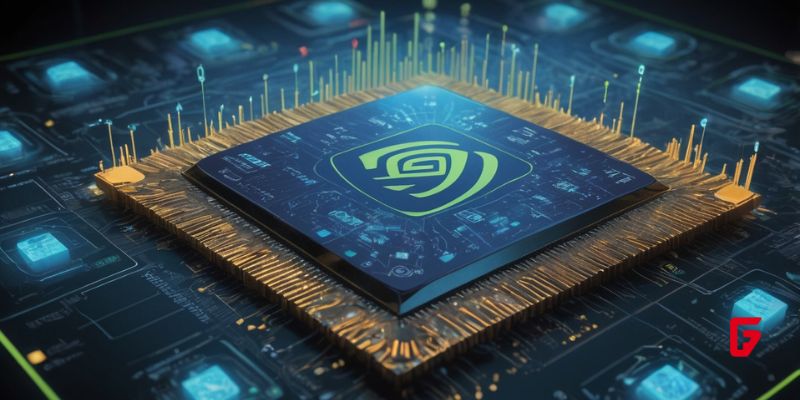
2025 has been a wild ride for the semiconductor sector, and while Nvidia remains the undisputed leader in AI chips, it’s not the top stock performer this year. Instead, competitors like Micron, KLA, and Lam Research are leading the pack in terms of stock gains. So, what’s driving this surprising shift—and does it signal a bigger change in the AI hardware landscape?
Nvidia’s dominance in AI GPUs is well established, with a commanding share of the data center and AI chip market. But after several years of explosive growth and a stock price that soared over 1700% since 2020, some investors are rotating into other semiconductor names. The reason? Opportunity. As AI adoption spreads, the demand for memory chips, semiconductor equipment, and alternative AI accelerators is surging. This broader AI infrastructure build-out is a boon for companies beyond Nvidia.
Micron, for instance, is up over 44% this year, outpacing Nvidia’s 13% gain. The reason is simple: AI models are getting bigger and hungrier for memory, and Micron’s DRAM and NAND products are in high demand. Meanwhile, KLA and Lam Research, both critical suppliers of semiconductor manufacturing equipment, are seeing their order books fill up as chipmakers race to expand capacity for AI and advanced computing.
Nvidia’s gross margins, while still robust, have started to contract as competition intensifies and pricing power is tested. At the same time, the stock’s meteoric rise in prior years means it’s no longer the “undervalued” play it once was. Investors are now looking for the next wave of growth—and some see better risk/reward profiles in companies that supply the picks and shovels for the AI gold rush.
Another factor: competition is heating up. AMD, for example, is rolling out new AI chips that rival Nvidia’s in power efficiency and memory bandwidth, targeting the same lucrative data center and AI workloads. As hyperscalers and enterprise buyers diversify their AI hardware suppliers, Nvidia’s rivals are capturing more of the market’s upside.
It’s important to note: Nvidia’s fundamentals are still strong. The company continues to post impressive revenue growth, especially in data centers and automotive partnerships. Analysts remain bullish on its long-term prospects, citing its deep moat in AI software and hardware integration. But in 2025, the story is about sector rotation, margin pressures, and the rise of alternative plays in the AI ecosystem.
Nvidia is still the king of AI chips, but in 2025, the best stock returns are coming from rivals riding the next phase of AI infrastructure growth. For investors and tech watchers, the message is clear: the AI revolution is bigger than any one company, and the opportunity set is expanding fast.

Explore the cutting-edge ways AI is enhancing Lean Six Sigma, from real-time process insights to predictive controls, ushering in a new era of operational excellence and efficiency.

Facing supply chain challenges in 2025? High-performing teams leverage AI for risk management, demand forecasting, supplier analytics, and end-to-end visibility to ensure business continuity and resilience.

Craft an AI-powered supply chain Center of Excellence that unifies control tower visibility, analytics, and inventory optimization into one strategic hub. Explore this blueprint to learn how a modern supply chain CoE drives resilience, smarter decisions, and operational excellence in the age of AI.

Supply chain leadership is being redefined by AI, intelligent automation, and agentic decision-making, demanding leaders who can engineer end-to-end intelligence rather than simply manage workflows. This article explores how next-generation supply chain leaders will combine data, algorithms, and human judgment to build resilient, adaptive, and high-performing global operations.

Bridgit Mendler’s Northwood Space is pioneering mass-produced ground stations, enabling scalable, high-speed connectivity for the new era of satellite networks and megaconstellations.

SpaceX aims to nearly double launches from Vandenberg in 2025, facing support from federal agencies but strong objections from the state and local communities.

Traditional Medicare will pilot AI-assisted prior authorization in 2026 across six states, focusing on high-risk outpatient services. Clinicians retain final say, but incentives and access concerns loom as CMS tests fraud reduction and “gold card” exemptions. Here’s what providers and patients should know.

OpenArt’s new “one-click story” compresses scripting, visuals, and edits into ready-to-post short videos—fueling viral growth and a fresh IP debate. We break down how it works, adoption signals, what’s next (multi-character, mobile), and practical guardrails creators and brands should follow to stay original and compliant.

OpenAI’s o3 swept the Kaggle AI chess tournament, defeating xAI’s Grok 4–0. The victory fueled the intense rivalry between Altman and Musk, reshaping AI benchmarks.

NASA and Google’s AI-powered Crew Medical Officer Digital Assistant enables autonomous diagnoses for astronauts on Mars missions, redefining remote healthcare for space and Earth.

Pinterest’s CEO confirms that fully agentic AI shopping is years away, as the platform invests in AI-powered tools to enhance discovery, inspiration, and personalized shopping experiences for millions.

Shopify’s new AI shopping tools are transforming e-commerce, letting agents and chatbots deliver smooth, personalized shopping and checkout experiences across platforms. Learn how these innovations reshape online retail.
To provide the best experiences, we use technologies like cookies to store and/or access device information. Consenting to these technologies will allow us to process data such as browsing behavior or unique IDs on this site. Thanks for visiting futureTEKnow.